Last year, holiday sales topped $1 trillion for the first time, up 4.1%, according to …



Cloud-native POS platform for seamless omnichannel customer experience.

A single hub for all promotions campaigns.

A comprehensive solution designed to simplify and give you ownership of the inventory lifecycle.

A native post-transaction reconciliation module built into Jumpmind Commerce.

The most advanced synchronization solution for databases and file systems.

Data configuration and batch automation across different disparate systems and vendors.
Last year, holiday sales topped $1 trillion for the first time, up 4.1%, according to …

The store is becoming a relationship, not just a transaction The store is being talked …

I spent this week at eTail Boston, and if you looked at the agenda, you’d …
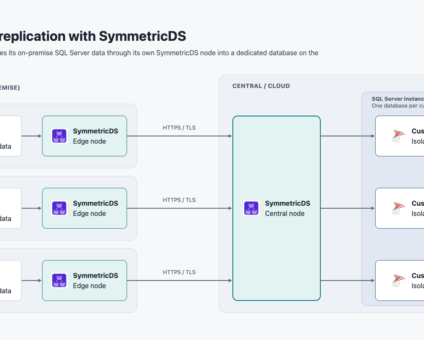
Learn how to replicate each tenant database in a central SQL Server to its own edge database with SymmetricDS. One routing rule and a matching external ID keep tenants isolated.

Quick answer: Agentic AI systems need data that is current, consistent across systems, available even …
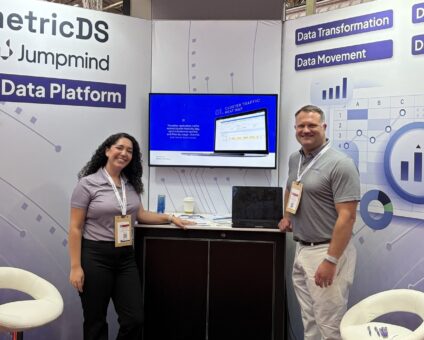
This was our second year at Big Data LDN, and attendance felt just as strong …

Introduction In retail, POS updates have traditionally been quarterly events at best. From October through …

Jumpmind Powers Point of Sale and Promotions Execution for Landmark Retail, One of the Largest …
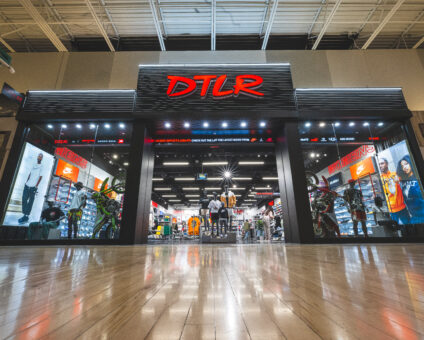
Retail Technology Leader Jumpmind to Enable Mobile Point of Sale and Inventory Management for DTLR/VILLA …
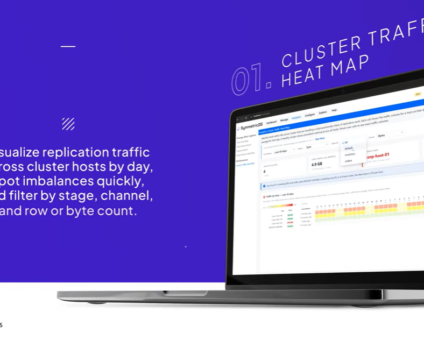
We built 3.18 because the question we kept hearing from customers changed. It used to …

The offering gives security teams a practical path to risk management and accountable AI COLUMBUS …

The insights have implications for retail technology in the store: it must help mind information …
Cloud-native POS platform for seamless omnichannel customer experience.
A single hub for all promotions campaigns.
A comprehensive solution designed to simplify and give you ownership of the inventory lifecycle.
A native post-transaction reconciliation module built into Jumpmind Commerce.
The most advanced synchronization solution for databases and file systems.
Data configuration and batch automation across different disparate systems and vendors.
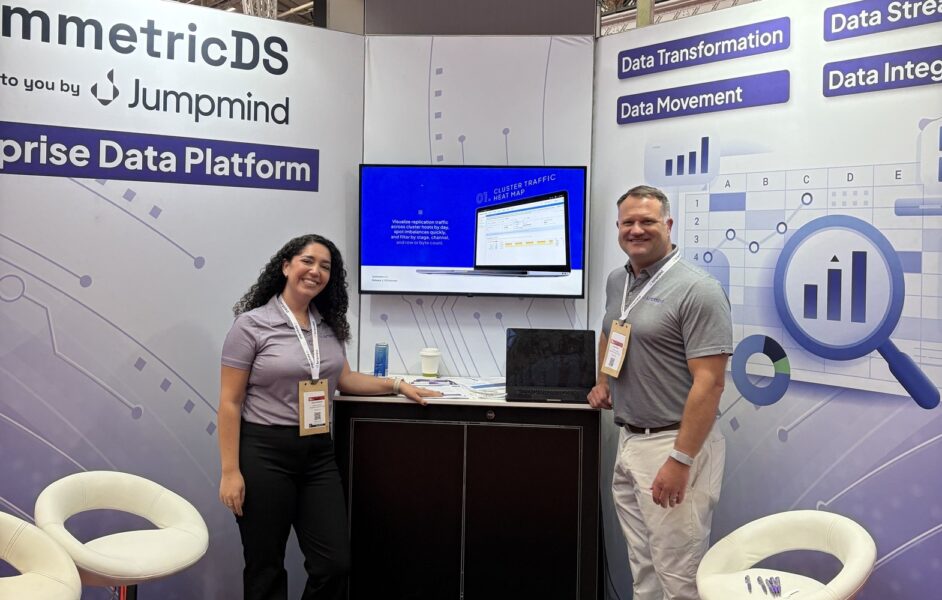
This was our second year at Big Data LDN, and attendance felt just as strong as it did in 2025. If there was one thing that stood out walking the floor, it’s how completely AI has taken over the conversation. It wasn’t just in the talks or on other booths’ signage, it came up in nearly every conversation we had. It’s clearly where the industry’s attention is right now.
What was more interesting was what people actually wanted to talk about once you got past the word “AI” itself. Almost nobody asked us to explain what AI could do. They asked whether their data could support it: was it clean, was it consistent, was it actually reaching the systems that needed it. That gap between the AI ambition and the data reality seemed to be on a lot of people’s minds this year.
Data cleansing, in particular, came up again and again in conversations at our booth, more than we expected. It’s not a new problem, but teams seem to be running into it in new ways, likely a byproduct of feeding messier, more varied data into new AI initiatives. It’s a sign that “getting the data right” is nowhere near finished as an industry problem, AI hype or not.
On-premise systems continue to surface in conversations in addition to the cloud-first narrative around AI might suggest. Plenty of the people we spoke with are still running on-prem sources alongside cloud infrastructure, and reliably streaming data between the two, rather than migrating everything to one side, is still the day-to-day reality for a lot of teams.
The exhibitor floor felt a little different from last year, too. There were plenty of new names we hadn’t seen before, right alongside longer-standing ones, which tracks with how fast this market is moving right now.
For us, conversations at the booth kept circling back to something simpler than any of that: whether the data underneath all of it can actually be trusted. That’s the question we’ve been answering for almost 20 years at SymmetricDS, and it was good to hear it’s still the right one to be asking.