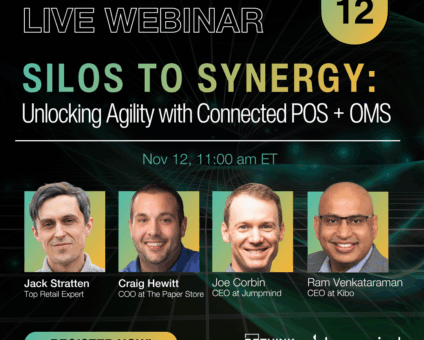
The store is becoming a relationship, not just a transaction The store is being talked …



Cloud-native POS platform for seamless omnichannel customer experience.

A single hub for all promotions campaigns.

A comprehensive solution designed to simplify and give you ownership of the inventory lifecycle.

A native post-transaction reconciliation module built into Jumpmind Commerce.

The most advanced synchronization solution for databases and file systems.

Data configuration and batch automation across different disparate systems and vendors.
The store is becoming a relationship, not just a transaction The store is being talked …

I spent this week at eTail Boston, and if you looked at the agenda, you’d …

Consumers are expected to spend more than $146 billion on back-to-school shopping this year, and …

Quick answer: Agentic AI systems need data that is current, consistent across systems, available even …
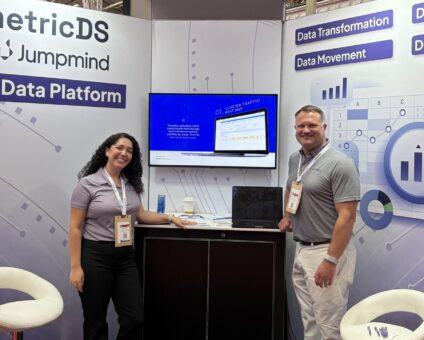
This was our second year at Big Data LDN, and attendance felt just as strong …
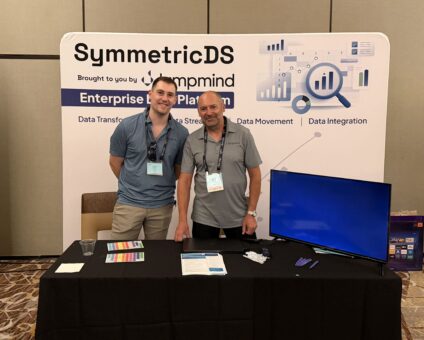
Our booth at TDWI Transform this year had a wider range of visitors than we …

Introduction In retail, POS updates have traditionally been quarterly events at best. From October through …
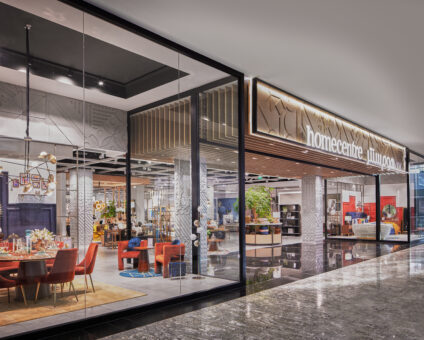
Jumpmind Powers Point of Sale and Promotions Execution for Landmark Retail, One of the Largest …
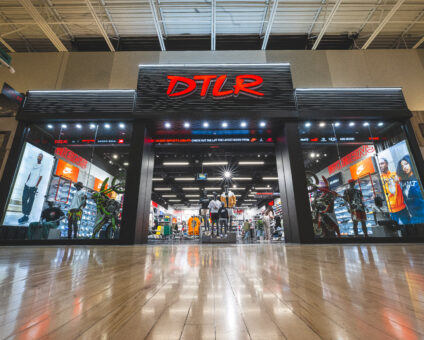
Retail Technology Leader Jumpmind to Enable Mobile Point of Sale and Inventory Management for DTLR/VILLA …
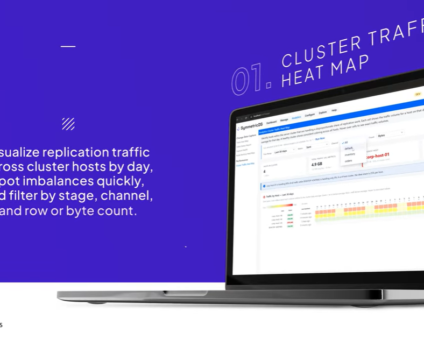
We built 3.18 because the question we kept hearing from customers changed. It used to …

The offering gives security teams a practical path to risk management and accountable AI COLUMBUS …

The insights have implications for retail technology in the store: it must help mind information …
Cloud-native POS platform for seamless omnichannel customer experience.
A single hub for all promotions campaigns.
A comprehensive solution designed to simplify and give you ownership of the inventory lifecycle.
A native post-transaction reconciliation module built into Jumpmind Commerce.
The most advanced synchronization solution for databases and file systems.
Data configuration and batch automation across different disparate systems and vendors.

Two days at ExCeL. Hundreds of vendors. Thousands of conversations. And yet, walking away from the Retail Technology Show this year, what stayed with me was not any single product demo or headline announcement. It was the mood. RTS 2026 felt like an industry collectively exhaling after years of saying “we need to do something” and finally starting to mean it.
The framing around AI at this year’s show was notably different from previous years. Rather than treating it as a future-facing concept, the emphasis was firmly on how retailers can use it to improve day-to-day performance, support teams more effectively and make better operational decisions. The vendors who cut through were not the ones with the boldest claims. They were the ones who could show a working deployment, a measurable outcome, a real store.
That shift in tone matters. AI is only as valuable as the problem it is quietly solving, and the industry seems to have arrived at that conclusion in a meaningful way.
Running alongside the AI conversation was an equally strong thread around personalisation. The sentiment that kept surfacing across the show was simple but pointed: treat every customer as an individual, not a number, not a data point.
What was interesting at RTS this year was how that sentiment was showing up in practical technology. Platforms were demonstrating how bricks-and-mortar retailers can close the in-store data gap through smarter digital touchpoints, converting the checkout moment into the start of an ongoing customer relationship rather than the end of a transaction. The idea of using the store itself as a personalisation engine, rather than relying entirely on digital channels, felt like one of the more forward-thinking threads running through the show floor. European retailers in particular have an opportunity here. The physical store is still trusted and valued by shoppers in this market. The question is how well the technology underneath it can support the experience on top.
The high-profile cyberattacks on major UK retailers in 2025 catapulted cyber resilience onto boardroom agendas in a way that few things do. RTS reflected that shift with an entirely new Cyber and Loss Prevention Zone, and the energy around it was real. But what struck me more broadly was how resilience as a theme had expanded well beyond cybersecurity. Senior retail leaders were candid about the pressure they are under, with the prevailing sentiment being that it has never been tougher to run a retail business. Cost pressures, supply chain uncertainty, and shifting consumer behaviour are all colliding at once.
The implication for technology decisions is significant. Retailers are no longer primarily asking “what is the most innovative option?” They are asking “what will still be working when things get hard?” That is a different evaluation framework, and it is pushing buyers toward platforms that are reliable, flexible, and do not require wholesale replacement every few years to keep pace.
Here is the observation that kept forming in the back of my mind.
Walking away from ExCeL, the overarching sentiment felt clear to me. AI, personalisation, and resilience are not three separate conversations. They are three expressions of the same underlying challenge: building a store operation that is coherent enough to actually deliver on them. And at the centre of that is the store associate, the person who has to bring all of it to life in a single moment with a single customer. The retailers who invest in giving that person the right foundation to work from will not just survive the current pressure. They will be the ones setting the pace when it eases.