The store is becoming a relationship, not just a transaction The store is being talked …



Cloud-native POS platform for seamless omnichannel customer experience.

A single hub for all promotions campaigns.

A comprehensive solution designed to simplify and give you ownership of the inventory lifecycle.

A native post-transaction reconciliation module built into Jumpmind Commerce.

The most advanced synchronization solution for databases and file systems.

Data configuration and batch automation across different disparate systems and vendors.
The store is becoming a relationship, not just a transaction The store is being talked …

I spent this week at eTail Boston, and if you looked at the agenda, you’d …

Consumers are expected to spend more than $146 billion on back-to-school shopping this year, and …
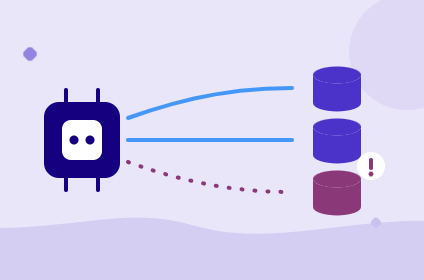
Quick answer: Agentic AI systems need data that is current, consistent across systems, available even …
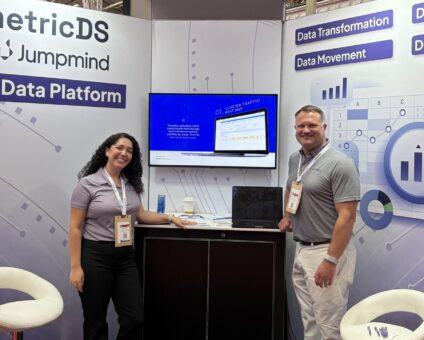
This was our second year at Big Data LDN, and attendance felt just as strong …
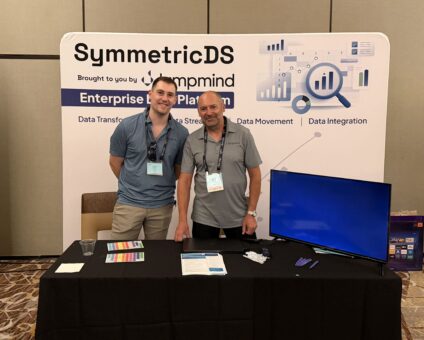
Our booth at TDWI Transform this year had a wider range of visitors than we …

Introduction In retail, POS updates have traditionally been quarterly events at best. From October through …

Jumpmind Powers Point of Sale and Promotions Execution for Landmark Retail, One of the Largest …
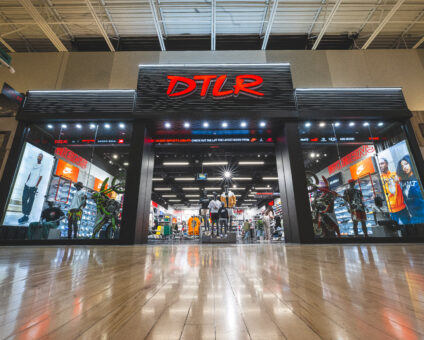
Retail Technology Leader Jumpmind to Enable Mobile Point of Sale and Inventory Management for DTLR/VILLA …
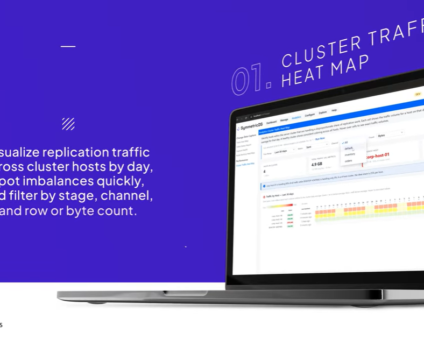
We built 3.18 because the question we kept hearing from customers changed. It used to …

The offering gives security teams a practical path to risk management and accountable AI COLUMBUS …

The insights have implications for retail technology in the store: it must help mind information …
Cloud-native POS platform for seamless omnichannel customer experience.
A single hub for all promotions campaigns.
A comprehensive solution designed to simplify and give you ownership of the inventory lifecycle.
A native post-transaction reconciliation module built into Jumpmind Commerce.
The most advanced synchronization solution for databases and file systems.
Data configuration and batch automation across different disparate systems and vendors.
Quick answer: Most RAG pipelines re-index their vector store on a nightly or hourly batch schedule, which means agents are often retrieving against data that’s already stale by the time they query it. Replacing batch re-indexing with continuous, real-time data replication keeps the retrieval layer current within seconds instead of hours.
Retrieval-augmented generation was supposed to solve the hallucination problem by grounding AI responses in real operational data. It does, as long as that data is actually current. The uncomfortable truth in most RAG deployments today is that the vector store is only as fresh as the last batch job that populated it, and that job usually runs overnight.
Here’s the pattern in most enterprise RAG setups: a scheduled job pulls from source databases like a CRM, ERP, or product catalog, regenerates embeddings for some or all of the records, and reloads the vector store. This runs nightly, sometimes hourly if the team invested extra engineering effort.
Three things go wrong with this approach as usage scales:
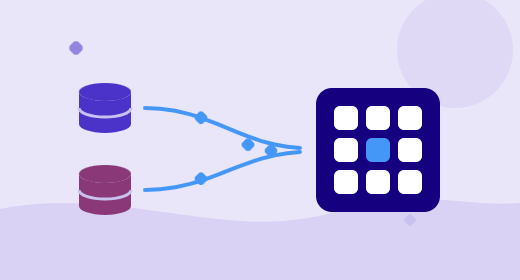
The alternative is to stop treating vector store updates as a batch job and start treating them as a stream. Change data capture at the source database identifies exactly which rows were created or updated, and only those changes flow downstream.
A lightweight consumer processes each incoming batch, generates embeddings for the changed records, and updates the vector store immediately. Instead of a nightly lag, the retrieval layer trails the operational system by seconds.
This also solves the multi-source problem more cleanly than most teams expect. Changes from heterogeneous systems, different database vendors, different schemas, can be routed to a single consolidation point, where transformation normalizes everything into a consistent structure before it ever reaches the index. The RAG pipeline ends up querying one coherent, current view instead of several conflicting ones.
For a chatbot answering FAQs, a few hours of staleness is forgivable. For an agent that’s actually taking action, approving a refund, routing a shipment, escalating a support ticket, stale retrieval isn’t a minor inconvenience. It’s the difference between an agent that’s genuinely useful and one that quietly makes bad calls with total confidence.
This is exactly why the infrastructure underneath the retrieval layer deserves as much design attention as the model or the prompt strategy sitting on top of it.
We go deeper into the mechanics of this, including how change capture, routing, and in-motion transformation combine to keep a vector store continuously current, in our full technical whitepaper. Read the full whitepaper, “SymmetricDS: Data Replication for the Agentic AI Era”.
How much fresher is real-time replication compared to nightly batch re-indexing?
Instead of a lag measured in hours, a well-configured change-data-capture pipeline can get changed records into a vector store within seconds of the source update, since only the delta is processed rather than the full table.
Does real-time RAG replication increase infrastructure cost?
Often it reduces it. Because only changed rows are processed instead of full re-indexing runs, compute usage tends to drop even as data freshness improves, since the system stops repeatedly re-embedding records that never changed.
Can this work across multiple source databases with different schemas?
Yes. Routing can direct changes from multiple heterogeneous sources to one target, and transformation can normalize differing schemas and field names before the data reaches the vector store, so retrieval reflects one consistent structure rather than several conflicting ones.