The store is becoming a relationship, not just a transaction The store is being talked …



Cloud-native POS platform for seamless omnichannel customer experience.

A single hub for all promotions campaigns.

A comprehensive solution designed to simplify and give you ownership of the inventory lifecycle.

A native post-transaction reconciliation module built into Jumpmind Commerce.

The most advanced synchronization solution for databases and file systems.

Data configuration and batch automation across different disparate systems and vendors.
The store is becoming a relationship, not just a transaction The store is being talked …

I spent this week at eTail Boston, and if you looked at the agenda, you’d …

Consumers are expected to spend more than $146 billion on back-to-school shopping this year, and …

Quick answer: Agentic AI systems need data that is current, consistent across systems, available even …
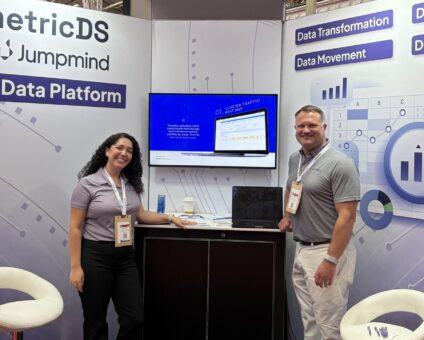
This was our second year at Big Data LDN, and attendance felt just as strong …
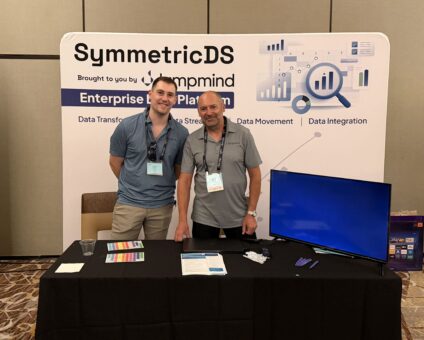
Our booth at TDWI Transform this year had a wider range of visitors than we …

Introduction In retail, POS updates have traditionally been quarterly events at best. From October through …

Jumpmind Powers Point of Sale and Promotions Execution for Landmark Retail, One of the Largest …

Retail Technology Leader Jumpmind to Enable Mobile Point of Sale and Inventory Management for DTLR/VILLA …
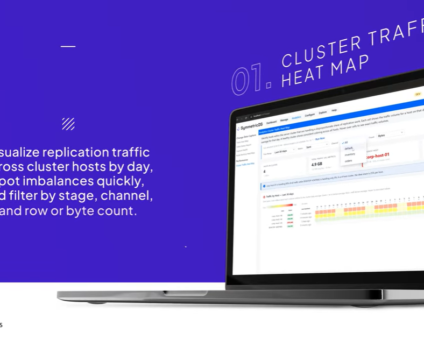
We built 3.18 because the question we kept hearing from customers changed. It used to …

The offering gives security teams a practical path to risk management and accountable AI COLUMBUS …

The insights have implications for retail technology in the store: it must help mind information …
Cloud-native POS platform for seamless omnichannel customer experience.
A single hub for all promotions campaigns.
A comprehensive solution designed to simplify and give you ownership of the inventory lifecycle.
A native post-transaction reconciliation module built into Jumpmind Commerce.
The most advanced synchronization solution for databases and file systems.
Data configuration and batch automation across different disparate systems and vendors.

I spent this week at eTail Boston, and if you looked at the agenda, you’d assume the whole show was about ecommerce and how AI is reshaping marketing and digital acquisition. For the most part, it was. But much like what we saw at Shoptalk earlier this year, the sessions that stuck with me were the ones about the store. That is where personal interaction still happens, and it is store associates who drive that experience. A handful of conversations this week made it clear: AI’s real opportunity in the store is helping associates do their jobs better, not replacing the human part of the job.
The most consistent theme I heard, across multiple sessions and hallway conversations, was retailers extending their AI investments beyond the website and into the store. The goal was not to digitize the associate. It was to get the associate out from behind the systems so they can focus on the customer standing in front of them.
That framing matched what I have heard directly from our own customers. Associates do not need more dashboards to check. They need the friction removed so the technology fades into the background and the conversation with the shopper can take the lead.
The second theme built on the first. Retailers at eTail Boston talked at length about wanting a better understanding of customer context across touchpoints, not just what someone bought last, but why. Several conversations centered on using AI to distinguish a one-off purchase from a repeatable pattern of behavior. That distinction matters. A single impulse buy tells you very little. A pattern tells you what a customer actually cares about, and that is the difference between a generic recommendation and one that lands.
This is a harder problem than it sounds. It requires connecting signals that most retailers still keep in separate systems: purchase history, loyalty activity, browsing behavior, and what happens on the floor during an actual interaction. The retailers who are furthest along are the ones treating that connective work as core infrastructure, not a side project.
The need is not building another model to generate AI signals. Retailers already have more of those than they know what to do with. The opportunity is consuming those signals well by taking the context AI can now assemble about a customer and putting it to work in the one moment retail still owns better than any other channel, the in-store interaction.
That is exactly what we have built Jumpmind Commerce to do. Engage, our AI-powered clienteling tool, takes those same signals retailers are trying to piece together and puts them directly in front of the associate, before and during the interaction, without asking the associate to stop and go dig for it. Purchase history, preferences, and engagement insights show up automatically, so the associate walks in prepared instead of improvising. On the customer-facing side, CX Connect brings that same context to the checkout moment itself, surfacing relevant offers and recommendations in real time as part of the transaction, not bolted onto the end of it.
We have been deliberate about one thing in particular: associates stay in control of when and how that information appears. The goal has never been to hand the associate a script. It is to close the information gap so they can do what they already do well, build a real connection with the customer, with the right context instead of no context at all.
What I heard this week reinforced something we talk about often internally. Checkout and the store floor are not being replaced by AI. They are becoming more valuable because of it. The retailers who win here will not be the ones with the flashiest model. They will be the ones who figured out how to get the right signal to the right associate at the right moment, without adding a single extra step to the interaction.
That is the strategic bet we are making at Jumpmind, and eTail Boston gave me one more week of evidence that it is the right one.