Last year, holiday sales topped $1 trillion for the first time, up 4.1%, according to …


Cloud-native POS platform for seamless omnichannel customer experience.

A single hub for all promotions campaigns.

A comprehensive solution designed to simplify and give you ownership of the inventory lifecycle.

A native post-transaction reconciliation module built into Jumpmind Commerce.

The most advanced synchronization solution for databases and file systems.

Data configuration and batch automation across different disparate systems and vendors.
Last year, holiday sales topped $1 trillion for the first time, up 4.1%, according to …

The store is becoming a relationship, not just a transaction The store is being talked …

I spent this week at eTail Boston, and if you looked at the agenda, you’d …
Quick answer: Agentic AI systems need data that is current, consistent across systems, available even …
This was our second year at Big Data LDN, and attendance felt just as strong …
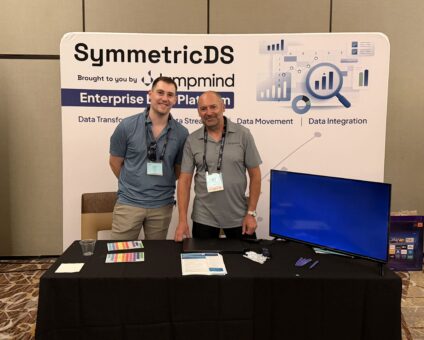
Our booth at TDWI Transform this year had a wider range of visitors than we …

Introduction In retail, POS updates have traditionally been quarterly events at best. From October through …
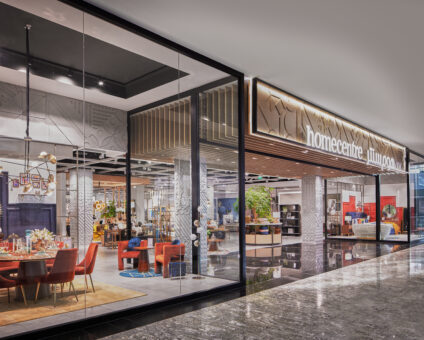
Jumpmind Powers Point of Sale and Promotions Execution for Landmark Retail, One of the Largest …
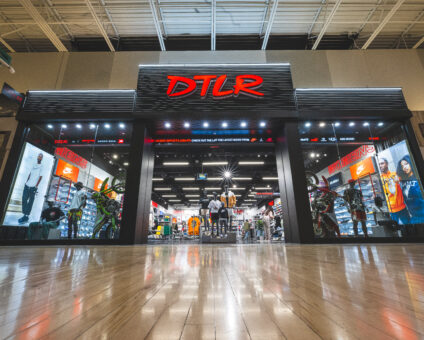
Retail Technology Leader Jumpmind to Enable Mobile Point of Sale and Inventory Management for DTLR/VILLA …
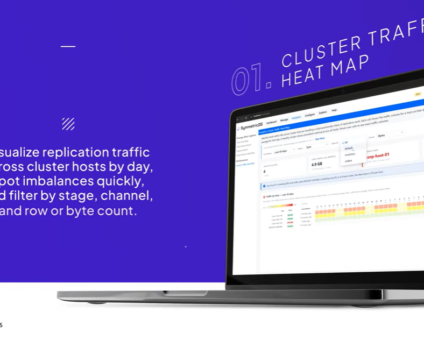
We built 3.18 because the question we kept hearing from customers changed. It used to …

The offering gives security teams a practical path to risk management and accountable AI COLUMBUS …

The insights have implications for retail technology in the store: it must help mind information …
Cloud-native POS platform for seamless omnichannel customer experience.
A single hub for all promotions campaigns.
A comprehensive solution designed to simplify and give you ownership of the inventory lifecycle.
A native post-transaction reconciliation module built into Jumpmind Commerce.
The most advanced synchronization solution for databases and file systems.
Data configuration and batch automation across different disparate systems and vendors.
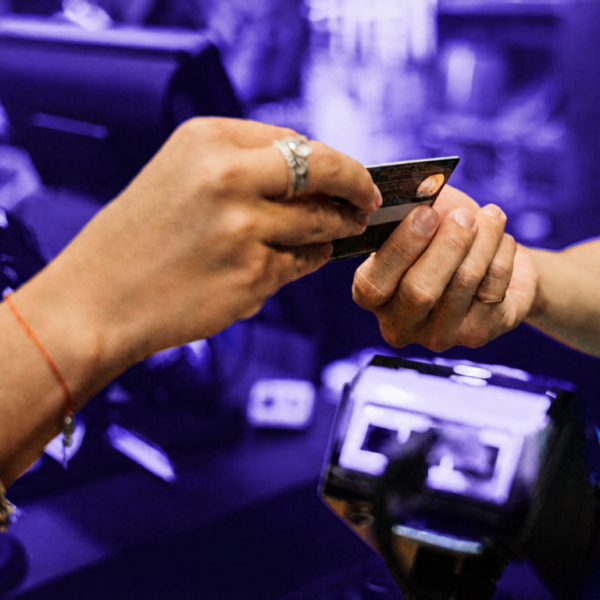
Last year, holiday sales topped $1 trillion for the first time, up 4.1%, according to the CNBC/NRF Retail Monitor. This year, NRF forecasts total retail sales growth of 4.4% to $5.6 trillion. And while digital keeps growing, Forrester expects most US retail sales to still happen in stores through 2028.
So when peak season arrives, the busiest place in retail is still the store, and the busiest spot in the store is at checkout . Most holiday planning starts with inventory, marketing and labor. The point of sale or service gets less attention, even though it is where every one of those plans turns into revenue.
These five questions can help you judge whether yours is ready.
Peak traffic is the worst time to discover a single point of failure. A network hiccup, a slow integration or a failed device should not stop a store from selling. Ask what happens when a connection drops mid-transaction, how long recovery takes, and whether associates know what to do. The best answer is one nobody in the store notices.
Lines do not form evenly. They build at a few registers, at certain hours, on certain days. Adobe reported that last year’s Black Friday and Cyber Monday set online records, with Cyber Week reaching $44.2 billion and mobile crossing 60% of Thanksgiving Day online sales. Shoppers are comfortable doing everything on a phone, and they expect the store to keep up. Can your associates check out customers on a handheld, a tablet or a fixed lane, using the same software on each? Flexibility on the floor is often limited and depends on whether your POS cares what device it runs on.
Seasonal retail hiring is projected to dip 2.5% this year, to about 450,000 jobs. Retailers are leaning more on existing teams and flexible staffing, which means the people working your registers in December may have had little time to learn them.
Forrester advises retailers to invest in associate-facing tools, and Jumpmind’s own research shows why: 42% of retailers say associates spend too much time on technology support and maintenance. An intuitive interface is a staffing strategy. When the system is simple, training takes minutes, errors drop, and associates have time to look up from the screen and talk to the customer.
A discount that works online but not in store, or that stacks differently at two registers, turns a deal into a dispute. Forrester recommends equipping store teams with “unified inventory visibility, consistent omnichannel policies, and real-time product information.” At the register, that means pricing and offers are consistent across channels, associates can see which offers apply, and loyalty benefits show up at checkout without a workaround.
Many retailers enter a code freeze from October through January because the risk of changing anything feels too high. It is a reasonable instinct, but it has a cost. A pricing error, a bug or a new integration need cannot wait four months.
The Paper Store, a Jumpmind customer, took a different approach during a cloud migration timed ahead of the holidays. With automated deployments, selective rollouts to pilot stores, and zero-downtime updates, the team was able to keep fixing and improving through peak. Updates were pushed even during Black Friday week, and a new order management integration launched in early November. “I’ve never had this level of confidence in our ability to just fix and enhance things,” said Brian McGinty, Executive Director of Technology at The Paper Store. “We pushed updates during Black Friday week. A year ago I wouldn’t have believed that was possible.” (Read the full story.)
The lesson is not to ignore risk. When small changes are routine, they are less risky than rare, large ones.
None of these questions is about features. They are about confidence: whether the technology at the register will hold up, adapt and stay out of the way when volume peaks. Retailers who can answer yes to all five are better placed to give shoppers the experience that earns a second visit.
The best time to ask is before the first big weekend. The next best time is today.