The store is becoming a relationship, not just a transaction The store is being talked …



Cloud-native POS platform for seamless omnichannel customer experience.

A single hub for all promotions campaigns.

A comprehensive solution designed to simplify and give you ownership of the inventory lifecycle.

A native post-transaction reconciliation module built into Jumpmind Commerce.

The most advanced synchronization solution for databases and file systems.

Data configuration and batch automation across different disparate systems and vendors.
The store is becoming a relationship, not just a transaction The store is being talked …

I spent this week at eTail Boston, and if you looked at the agenda, you’d …

Consumers are expected to spend more than $146 billion on back-to-school shopping this year, and …

Quick answer: Agentic AI systems need data that is current, consistent across systems, available even …
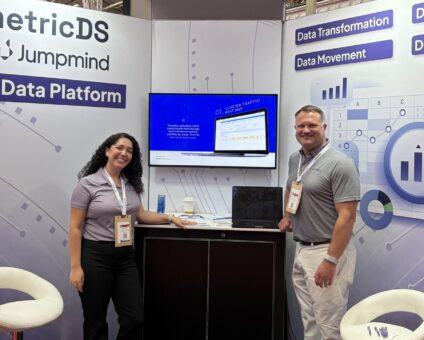
This was our second year at Big Data LDN, and attendance felt just as strong …
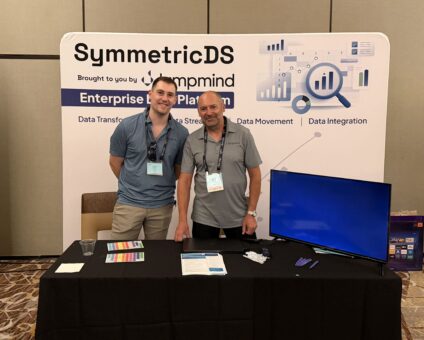
Our booth at TDWI Transform this year had a wider range of visitors than we …

Introduction In retail, POS updates have traditionally been quarterly events at best. From October through …

Jumpmind Powers Point of Sale and Promotions Execution for Landmark Retail, One of the Largest …
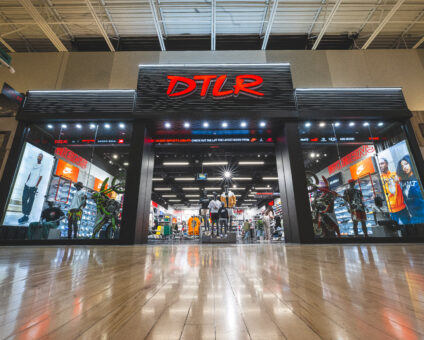
Retail Technology Leader Jumpmind to Enable Mobile Point of Sale and Inventory Management for DTLR/VILLA …
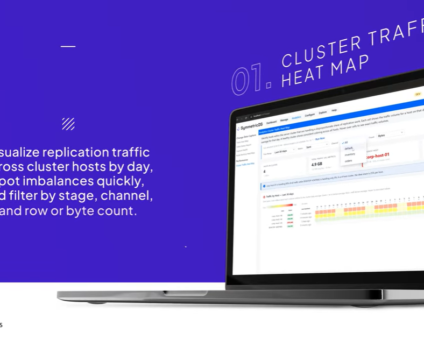
We built 3.18 because the question we kept hearing from customers changed. It used to …

The offering gives security teams a practical path to risk management and accountable AI COLUMBUS …

The insights have implications for retail technology in the store: it must help mind information …
Cloud-native POS platform for seamless omnichannel customer experience.
A single hub for all promotions campaigns.
A comprehensive solution designed to simplify and give you ownership of the inventory lifecycle.
A native post-transaction reconciliation module built into Jumpmind Commerce.
The most advanced synchronization solution for databases and file systems.
Data configuration and batch automation across different disparate systems and vendors.
Ask who the top cloud POS providers are and you get a list built for somebody else. Most roundups rank platforms on setup speed and monthly price, which is the right test for a single location and close to useless for a chain running eight hundred.
The providers of enterprise retail teams shortlisted in 2026 are Jumpmind Commerce, Oracle Retail Xstore, Aptos, NCR Voyix, Manhattan Associates, Toshiba Global Commerce Solutions, Shopify POS, and Lightspeed Retail. Square, Clover, and Toast come up in the same searches and serve a different buyer, with Toast built for restaurants rather than retail.
That list is the easy part. What separates the platforms is not the feature grid. It is five things you can only learn by asking, and this guide covers each one.
Segment fit decides more of the outcome than any capability comparison. A platform built for independent merchants is engineered against different constraints than one built for a distributed store fleet, and neither is a failure at the other’s job.
This is the question that separates cloud POS platforms, and it is the one most often answered with a reassurance rather than a demonstration.
Cloud-native and cloud-hosted are different things. Software that was moved onto cloud infrastructure often still routes every scan, price lookup, and tender through a central instance, which makes the wide area network a dependency of checkout itself. Software designed to run distributed keeps the lane working locally and reconciles afterward.
Ask to see it. Then ask four follow-ups: which tender types still work, whether promotions and loyalty lookups still resolve, how long a store can trade disconnected, and who owns the exceptions when the link returns.
Jumpmind Commerce is built for full offline support in store, with multiple deployment strategies so different store formats can be handled differently. The Paper Store’s Director of IT Operations put the outcome plainly: “With our previous system, network outages meant immediate escalation to IT, frantic calls to vendors, and manual workarounds. With Jumpmind, the stores just keep running. We usually don’t even know there was an outage until we review the system logs.”
Get recovery time and recovery point objectives in writing, along with the date of the last tested failover.
“Real time” means nothing until you define what moves. Ask each vendor to show sync behavior across five events: on-hand counts, transfers between stores, receipts from distribution, returns, and manual adjustments.
A platform that updates at checkout but batches adjustments overnight will still send an associate to the back room looking for stock that was written off yesterday.
Sales data runs on a different clock for each consumer of it. An associate needs a transaction visible for a return within seconds. Replenishment needs it before the next order cycle. Finance needs it complete rather than fast. Ask for target latency on each, then ask what those numbers become when a thousand stores post at once on the Saturday before Christmas.
Jumpmind Inventory covers the store inventory lifecycle directly: receiving against ASNs, purchase orders and transfers, cycle counts, adjustments, ticket printing, and outbound movement through RTVs, RTWs and store-to-store transfers. Smart receiving workflows and built-in discrepancy resolution keep counts accurate from the moment stock arrives. It runs the same interface as POS, so there is one login and one place to learn.
Most cloud POS comparisons stop at the system diagram and leave out the person at the counter with a line forming behind them. That person absorbs whatever the architecture gets wrong, and they absorb it every shift.
Our research with RSR found 45% of retailers believe their associates spend too much time answering customer service questions, and 42% say too much time goes to technology support and maintenance. That is not an associate problem. It is a software problem showing up in the wrong place.
So test the platform the way a store team will use it. Time a cross-channel return of a promotionally discounted item. Count the taps. Run a customer lookup that spans web and store history. Do it during a realistic shift with interruptions, not in a quiet conference room, and log the errors.
Three questions matter more than any feature list:
Build-A-Bear Workshop runs Jumpmind Commerce and Jumpmind CX Connect across more than 450 stores in the US, UK and Canada. Their Chief Technology Officer, Dara Meath, framed the requirement this way: “Our Bear Builder store associates are a vital part of the Build-A-Bear Workshop experience. Our commitment to providing our associates with the most advanced in-store retail technology ensures they are not only given a 360-degree view of our guests, their previous interactions and preferences, but also can offer a shared interactive and personalized journey to enrich each guest’s visit.”
Training time is the measurable version of the same thing. Craig Hewitt, Chief Operating Officer of The Paper Store, reported that “Jumpmind Commerce’s modern, intuitive user interface has reduced our associated training requirements from 3 hours to 15 minutes,” across staff ranging from 16 to 80 years old. Multiply your own number by annual turnover across every store.
Nobody replaces POS across a large fleet in a single weekend, so the platform has to run new cloud stores and remaining legacy stores at the same time, holding the same pricing, inventory and transaction data across both for as long as the rollout takes.
That is a data replication question before it is a checkout question. Ask which records move in both directions during the switch, who resolves the conflict when a store writes to the old system after the new one has been updated, and how pricing and promotions stay consistent while they are administered in two places.
Jumpmind builds the replication layer itself and handles multi-tier distribution across thousands of remote locations, high availability with load balancing, and live data migration with no downtime during server replacements, storage upgrades and data center relocations. It is not a retail-only product, and it runs in manufacturing, aerospace, government and education wherever data has to stay consistent across many systems.
The pace that produces is worth checking against your own plan. The Paper Store went live on more than 800 Apple iPad and iPhone devices across 105 locations in four weeks. DTLR brought its point of sale online across 200 additional City Gear stores in 24 hours, with no on-site personnel, bringing its total to more than 640 locations on the platform.
Deployment cost is a fraction of the total. Model six buckets across five years: subscription, implementation and integration, hardware and peripherals, support, payment processing, and network resilience including redundant connectivity and failover testing.
Then ask a plainer question. How do updates reach a store, and who runs them? A platform that needs a field visit to push a pricing change carries a cost that never appears on the quote.
Device independence belongs in the same calculation. When the software runs on any form factor and operating system, hardware gets chosen on merit instead of replacing working lanes to fit a software decision. Jumpmind’s own customers commonly run a mix of hardware and operating systems side by side, fit for purpose.
Three integrations disappear when promotions, inventory and reconciliation are native rather than connected. Jumpmind Promote runs all promotions campaigns from a single hub. Jumpmind Inventory owns the store inventory lifecycle. Jumpmind Sales Audit is a native post-transaction reconciliation module built into Jumpmind Commerce, so finance reads transactions exactly as they were entered, with no translation layer and no overnight batch upload.
Every interface you own is a place data can disagree and a line in the support budget.
Jumpmind Commerce is a cloud-native POS platform built for large store-led chains with distributed locations, real offline exposure, and legacy software to retire in stages. Forrester named Jumpmind a Leader in The Forrester Wave™: Point-Of-Service Solutions, Q4 2024, with top scores in practitioner UX, custom checkout flow, digital payments, clienteling and assisted selling, store promotions, loyalty, endless aisle, and offline resiliency.
Jumpmind is a platform solution rather than a quick solution for a single-market retailer with a few dozen doors and one channel needs.
Who are the top cloud POS providers? For enterprise retail: Jumpmind Commerce, Oracle Retail Xstore, Aptos, NCR Voyix, Manhattan Associates, and Toshiba Global Commerce Solutions. For smaller footprints and commerce-first brands: Shopify POS, Lightspeed Retail, Square, and Clover. Toast is a restaurant platform.
Which cloud POS vendor is best for enterprise retailers? Score three things before features: whether the lane keeps trading offline, whether data replicates cleanly at your store count, and how long an associate takes to learn it. Ask for measured numbers and named references on all three.
What is the difference between cloud-native and cloud-hosted POS? Cloud-hosted moved existing software onto cloud infrastructure, often keeping its original release cadence and its assumptions about a store server. Cloud-native was designed to run distributed, with store nodes holding their own state and releases shipping continuously.
Which cloud POS keeps working when the internet goes down? Require full function at the lane while disconnected, including promotions, loyalty lookups and returns, then automatic reconciliation on reconnect with no duplicate or orphaned transactions. Ask for a live demonstration rather than a description.
How much does cloud POS software cost? Usually quoted per store or per device per month. Model five years across subscription, implementation, hardware, support, processing, and network resilience. The cheapest quote and the lowest-risk quote are rarely the same document.
Can we convert stores in waves instead of one cutover? Yes, if the platform can hold the same data across both systems while you convert. Ask for the replication mechanism and how long the overlap can run.
Which cloud POS is easiest for new associates to learn? Ask for measured training time at a retailer your size. The Paper Store measured 15 minutes, down from 3 hours, across staff aged 16 to 80.
The provider list is public and largely settled. What is not settled is which of those platforms behaves the way your stores need on a Saturday in December, and that answer comes from five checks rather than a ranking: offline behavior at the lane, how stock counts actually move, what the associate has to do differently, how stores convert without closing, and what you still own after go-live.
Run all five with every vendor. Ask for named references at your store count and call two of them.
Explore Jumpmind Commerce or schedule a demo to work through those checks against your own store list.