The store is becoming a relationship, not just a transaction The store is being talked …



Cloud-native POS platform for seamless omnichannel customer experience.

A single hub for all promotions campaigns.

A comprehensive solution designed to simplify and give you ownership of the inventory lifecycle.

A native post-transaction reconciliation module built into Jumpmind Commerce.

The most advanced synchronization solution for databases and file systems.

Data configuration and batch automation across different disparate systems and vendors.
The store is becoming a relationship, not just a transaction The store is being talked …

I spent this week at eTail Boston, and if you looked at the agenda, you’d …

Consumers are expected to spend more than $146 billion on back-to-school shopping this year, and …

Quick answer: Agentic AI systems need data that is current, consistent across systems, available even …
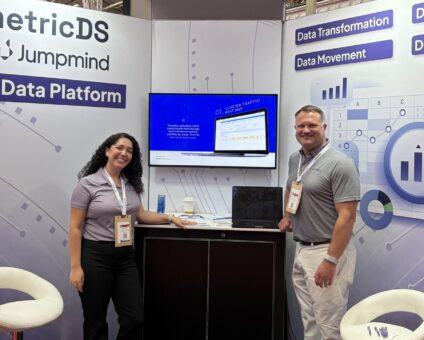
This was our second year at Big Data LDN, and attendance felt just as strong …
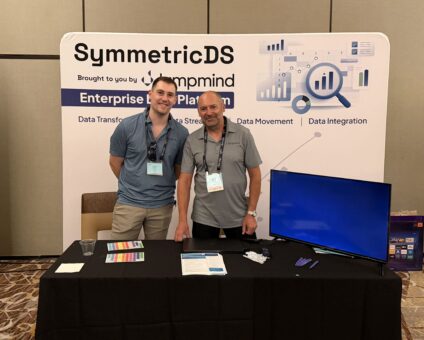
Our booth at TDWI Transform this year had a wider range of visitors than we …

Introduction In retail, POS updates have traditionally been quarterly events at best. From October through …

Jumpmind Powers Point of Sale and Promotions Execution for Landmark Retail, One of the Largest …
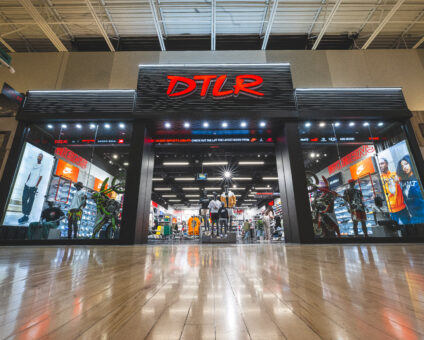
Retail Technology Leader Jumpmind to Enable Mobile Point of Sale and Inventory Management for DTLR/VILLA …
We built 3.18 because the question we kept hearing from customers changed. It used to …

The offering gives security teams a practical path to risk management and accountable AI COLUMBUS …

The insights have implications for retail technology in the store: it must help mind information …
Cloud-native POS platform for seamless omnichannel customer experience.
A single hub for all promotions campaigns.
A comprehensive solution designed to simplify and give you ownership of the inventory lifecycle.
A native post-transaction reconciliation module built into Jumpmind Commerce.
The most advanced synchronization solution for databases and file systems.
Data configuration and batch automation across different disparate systems and vendors.
A POS replacement has to clear security review, enterprise architecture, store operations, and finance at the same time, and each of those groups will reject the platform for a different reason. Feature checklists do not survive that. They describe what the software does, not what it exposes you to.
Two systems can both list EMV support, offline mode, and endless aisle while differing entirely in payment scope, subprocessor risk, upgrade control, and who owns terminal certification. “PCI compliant” alone tells you almost nothing, because the PCI Security Standards Council maintains separate standards for the payment application, the terminal, and mobile acceptance.
This guide runs seven steps, in order, and evaluates four things: the vendor, the payment path, the integration model, and the operating impact on your stores.
Write down what you are actually defending, and to whom, before a vendor gets in the room.
Assemble five things first:
The last one is usually missing and usually significant. Our research with RSR found 53% of retailers running a POS five years or older say the system is holding them back, and 65% say their current store technology cannot support where shopping is going. If that describes your stores, the cost of standing still belongs in the business case next to the cost of moving.
Ask each vendor which PCI Security Standards Council programs their proposed deployment actually touches. PCI DSS for the cardholder data environment. Point-to-Point Encryption for validated encryption solutions. PTS POI for approved terminal hardware. And the mobile acceptance standards MPoC, CPoC and SPoC if associates will take payment on phones or tablets.
Every one of those claims is checkable against a public listing, so ask for the listing ID rather than the assurance.
Terminal choice sets your scope. A validated P2PE solution running on an approved PTS POI device keeps clear-text card data off the store network and shrinks what your assessor has to review. A software-only mobile acceptance model moves that work somewhere else. Both are legitimate, and they carry different rollout math once you multiply hardware certification, firmware updates, and key injection logistics across several hundred stores.
Request evidence in three forms:
Tokenization reduces exposure after authorization, so returns, exchanges and reconciliation work without retaining card numbers. It does not cover the capture path, the terminal firmware, or your key management. Validate those separately, and confirm any scope reduction with your assessor before you count the savings.
The useful question is whether the deployment model your stores will actually run matches the posture your assessor already signed off on.
Do the security review while you can still walk away, not after the decision.
NIST gives you the shared vocabulary. The Cybersecurity Framework for control ownership, the Risk Management Framework for how risk gets accepted and by whom, SP 800-161 for supply chain risk, and SP 800-207 for zero trust architecture, which matters as soon as a vendor needs standing remote access into thousands of stores.
Put procurement, security and architecture in one room and ask one set of questions:
A security review bolted on after the decision creates operational debt. Exceptions get written, compensating controls get funded, and store teams inherit the workarounds. None of that appears in the original business case.
Expected outcome: a signed risk register naming each finding, its owner, and its remediation date.
Map your real integrations before you score anything. Inventory, loyalty, promotions, ecommerce, marketplace listings, order management, and replication between store and cloud each need a named method, a named owner, and a documented failure behavior.
Then ask the question that separates a real integration from a logo on a partner slide: what happens to each connection when a store loses network for two hours?
Expected outcome is an integration inventory where every line has an answer.
Test omnichannel with the workflows your stores actually run, not the scripted demo path:
Confirm the data stays consistent after each step, not just at the start.
One honest trade-off. Breadth cuts integration work but rarely eliminates change management. If your store process is heavily customized, expect to decide which customizations are worth carrying forward and which were workarounds for the system you are replacing.
This step usually gets folded into a benefits slide. Keep it in the requirements document instead, with numbers attached.
Time the transaction. Count the taps. Log the errors. Do it during a realistic shift with interruptions, on the floor, not in a conference room with one customer and no queue. A system that adds three screens to a return adds them ten thousand times a week, and the associate absorbs that cost before anyone else sees it.
Our research with RSR found 45% of retailers believe their associates spend too much time answering customer service questions, and 42% say too much time goes to technology support and maintenance. Store teams are not the constraint. The software in their hands is.
Score three things directly:
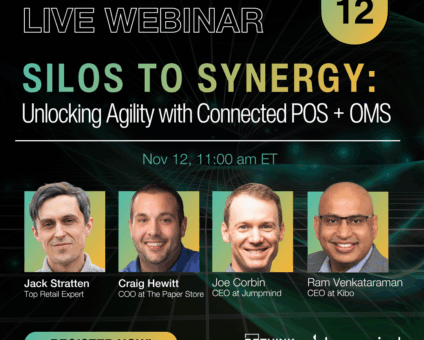
Craig Hewitt, Chief Operating Officer of The Paper Store, reported that “Jumpmind Commerce’s modern, intuitive user interface has reduced our associated training requirements from 3 hours to 15 minutes,” across staff ranging from 16 to 80 years old. Multiply your own figure by annual turnover across every store and the number gets serious.
Better associate workflows are what produce a better customer experience. The order of cause and effect matters, because it tells you which one to put in the requirements.
Define uptime the way a store experiences it rather than the way a status page reports it. Four questions, written answers required:
Expected outcome: a resilience profile you can hand to store operations for a reality check before contracting. Get recovery time and recovery point objectives in writing, with the date of the last tested failover and who witnessed it. An untested runbook is a claim.
Then build total cost of ownership across six categories: implementation and integration labor, hardware and payment terminal refresh, ongoing support, upgrade cadence, associate training, and rollout sequencing. Price the pilot, the first 50 stores, and the full deployment separately. A low license fee that requires a hardware swap across every lane is not the cheaper option.
Device independence changes this math. When the software runs on any form factor and operating system, hardware gets chosen on merit and refresh cycles stay separate from the software rollout.
Be honest about fit. A narrower platform can often be deployed faster in a single-region, single-channel environment, and for some retailers that is the right call. A broader platform earns its cost when the roadmap includes new channels, new tax jurisdictions, or fulfillment work in the store, because it reduces rework you would otherwise pay for twice. Choose for your next three years.
Rewrite everything above as scored RFP sections so IT, security and store operations evaluate the same evidence. Six sections are mandatory: security and compliance, payment architecture, integrations, rollout plan, support model, and commercial terms.
Score artifacts, not adjectives.
Implementation risk hides in three questions. How does data migration work, and who owns reconciliation of historical transactions? What test environments and store simulation tools come with the contract? How has the vendor phased a rollout across hundreds of locations, and what actually happened in the pilot stores?
On that last one, ask for specifics rather than a case study summary. The Paper Store went live on more than 800 Apple iPad and iPhone devices across 105 locations in four weeks. DTLR brought point of sale online across 200 additional City Gear stores in 24 hours with no on-site personnel, taking its total past 640 locations. Hold every vendor to that shape of answer, with a name attached.
What should I look for when selecting an enterprise POS vendor? Five things, scored in this order: PCI scope and payment architecture, vendor and supply chain risk, integration fit with your order management, inventory and payment systems, uptime and rollout control, and total cost of ownership across the full contract term. Add measured associate task time and training time to every one of them.
Which PCI standards apply to a store deployment? PCI DSS v4.0.1 is the current version. The PCI Security Standards Council also maintains PTS POI for payment terminals, P2PE for encryption solutions, and MPoC, SPoC and CPoC for software-based PIN and contactless acceptance. Ask for listing numbers.
Does tokenization take us out of scope? It narrows where cardholder data lands. The actual scope reduction depends on your implementation and your acquirer, so confirm it with your assessor before counting the savings.
How should we structure the vendor security review? Map questions to the NIST Cybersecurity Framework and Risk Management Framework, then request SOC 2 Type II reports, penetration test summaries, subprocessor lists, and breach notification terms in writing.
What counts as real omnichannel fit? Consistent product, price, promotion and customer data across store, ecommerce and marketplace, plus defined offline behavior at the lane. Test it with a cross-channel return of a discounted item.
How do we evaluate uptime honestly? Ask what happens mid-basket when the network drops, how much data stays available offline, how the register reconciles on reconnect, and who answers at peak. Then ask for the date of the last tested failover.
Where does associate experience belong in the evaluation? In the requirements document, with numbers. Task time, training time and error rates are all measurable, and they belong next to your uptime targets.
The platform you can defend is the one where every claim came with an artifact: a listing ID, an incident report, a named reference you called, and a task time somebody on a store floor actually measured.
Score each finalist against the same seven steps and you leave with a shortlist you can take to security, architecture, finance and store operations in a single meeting.
Explore Jumpmind Commerce or schedule a demo and run this checklist against your own stores.