The store is becoming a relationship, not just a transaction The store is being talked …



Cloud-native POS platform for seamless omnichannel customer experience.

A single hub for all promotions campaigns.

A comprehensive solution designed to simplify and give you ownership of the inventory lifecycle.

A native post-transaction reconciliation module built into Jumpmind Commerce.

The most advanced synchronization solution for databases and file systems.

Data configuration and batch automation across different disparate systems and vendors.
The store is becoming a relationship, not just a transaction The store is being talked …

I spent this week at eTail Boston, and if you looked at the agenda, you’d …

Consumers are expected to spend more than $146 billion on back-to-school shopping this year, and …

Quick answer: Agentic AI systems need data that is current, consistent across systems, available even …

This was our second year at Big Data LDN, and attendance felt just as strong …
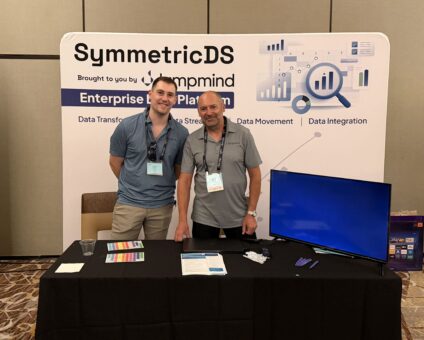
Our booth at TDWI Transform this year had a wider range of visitors than we …

Introduction In retail, POS updates have traditionally been quarterly events at best. From October through …

Jumpmind Powers Point of Sale and Promotions Execution for Landmark Retail, One of the Largest …

Retail Technology Leader Jumpmind to Enable Mobile Point of Sale and Inventory Management for DTLR/VILLA …
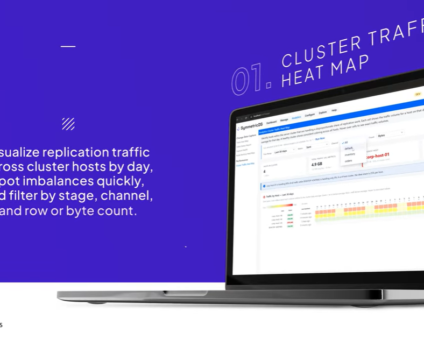
We built 3.18 because the question we kept hearing from customers changed. It used to …

The offering gives security teams a practical path to risk management and accountable AI COLUMBUS …

The insights have implications for retail technology in the store: it must help mind information …
Cloud-native POS platform for seamless omnichannel customer experience.
A single hub for all promotions campaigns.
A comprehensive solution designed to simplify and give you ownership of the inventory lifecycle.
A native post-transaction reconciliation module built into Jumpmind Commerce.
The most advanced synchronization solution for databases and file systems.
Data configuration and batch automation across different disparate systems and vendors.

Imagine this: your POS vendor only supports Windows, but your store associates prefer iPads, your self-checkout kiosks run Android, and your mobile POS needs to work on both. That means three different solutions — or compromising on hardware. Neither is acceptable.
This is why device independence has become a critical requirement for modern retailers. Your POS software should adapt to your hardware preferences, not the other way around.
A device-agnostic POS system runs consistently across multiple operating systems and hardware platforms — no separate versions, no compromised functionality. True device independence means:
When your POS works on any device, you choose hardware based on what actually fits your needs — not what your vendor supports.
*Real World Example: The Paper Store deployed Jumpmind Commerce across 800+ devices in 100+ stores in just four weeks — possible because the platform works across multiple device types.
Device-agnostic POS cuts costs in multiple ways:
Many retailers report 40–60% hardware cost savings by switching from proprietary POS terminals to device-agnostic systems.
Modern Web Technologies
True device independence is built on web standards: Progressive Web Apps (PWAs), responsive design, cloud architecture, and cross-platform frameworks. The “brain” lives in the cloud; devices are simply interfaces.
Offline Capabilities
A common concern is connectivity. Quality platforms handle this with local data caching, queued transactions that upload when connectivity returns, and automatic syncing — so device independence and offline resilience work together.
Peripheral Support
Modern peripherals use standard connection protocols, making platform-specific hardware increasingly obsolete. Receipt printers, barcode scanners, payment terminals, cash drawers, and scales all connect via Bluetooth, WiFi, or network — across any platform.
American Eagle and Aerie use Jumpmind Commerce’s device independence to deploy an optimal hardware mix: mobile POS on iPads for line-busting, Android self-checkout kiosks for cost-effective scaling, and traditional checkout on their preferred hardware — with consistent capabilities across all devices.
Retailers using device-agnostic platforms consistently report:
Not all vendors claiming “device independence” deliver true cross-platform capability. Ask:
Watch out for responses like “we primarily support one platform but are working on others” or “our mobile app is separate from our terminal software” — these signal you’re not getting true device independence.
Device independence isn’t just a technical feature — it’s about business agility, cost control, and staying competitive. Platform-agnostic POS gives you the freedom to choose hardware that best serves each use case, faster deployments, better user experiences, and a foundation that evolves as technology does.
Your POS software should serve your business strategy. Not constrain it.
Ready to experience true device independence? Explore Jumpmind Commerce or schedule a demo.