The store is becoming a relationship, not just a transaction The store is being talked …



Cloud-native POS platform for seamless omnichannel customer experience.

A single hub for all promotions campaigns.

A comprehensive solution designed to simplify and give you ownership of the inventory lifecycle.

A native post-transaction reconciliation module built into Jumpmind Commerce.

The most advanced synchronization solution for databases and file systems.

Data configuration and batch automation across different disparate systems and vendors.
The store is becoming a relationship, not just a transaction The store is being talked …

I spent this week at eTail Boston, and if you looked at the agenda, you’d …

Consumers are expected to spend more than $146 billion on back-to-school shopping this year, and …

Quick answer: Agentic AI systems need data that is current, consistent across systems, available even …

This was our second year at Big Data LDN, and attendance felt just as strong …
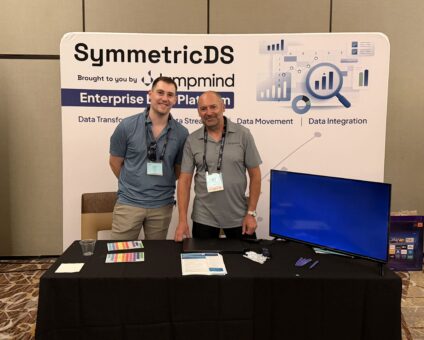
Our booth at TDWI Transform this year had a wider range of visitors than we …

Introduction In retail, POS updates have traditionally been quarterly events at best. From October through …

Jumpmind Powers Point of Sale and Promotions Execution for Landmark Retail, One of the Largest …

Retail Technology Leader Jumpmind to Enable Mobile Point of Sale and Inventory Management for DTLR/VILLA …
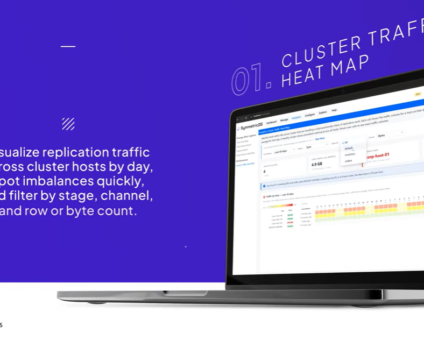
We built 3.18 because the question we kept hearing from customers changed. It used to …

The offering gives security teams a practical path to risk management and accountable AI COLUMBUS …

The insights have implications for retail technology in the store: it must help mind information …
Cloud-native POS platform for seamless omnichannel customer experience.
A single hub for all promotions campaigns.
A comprehensive solution designed to simplify and give you ownership of the inventory lifecycle.
A native post-transaction reconciliation module built into Jumpmind Commerce.
The most advanced synchronization solution for databases and file systems.
Data configuration and batch automation across different disparate systems and vendors.

SymmetricDS Pro 3.17.3 introduces HikariCP as an available connection pool alongside DBCP2 — and the performance difference is significant. Here’s what changed, why it matters, and what our benchmarks showed.
Every time SymmetricDS syncs data, it borrows a database connection from a pool, does its work, and returns it. That borrow-and-return cycle happens thousands of times per minute in an active deployment — and the speed of the pool itself directly affects how fast your data moves. Apache DBCP2, the connection pool SymmetricDS has shipped with for years, was built for a world where connection management was a secondary concern. HikariCP was built with one goal: make that borrow-and-return cycle as fast and as safe as possible, at any concurrency level.
The architectural difference shows up most clearly under load spikes — exactly the workload SymmetricDS generates. When a burst of sync requests hits a DBCP2 pool, it reacts by spawning new connections eagerly: one per request, each taking 150ms or more to establish. HikariCP takes the opposite approach. It queues waiting threads on the pool itself and reuses connections as they become free, only opening new ones when genuinely necessary. According to HikariCP’s own published benchmarks, this approach handles spikes with 85–90% fewer new connections than DBCP2 and completes the same burst of work 8–9x faster. For SymmetricDS customers running dozens or hundreds of nodes against a shared database, fewer connections means less contention, less overhead on the database server, and more headroom for the rest of the application.
We tested this directly against a live SymmetricDS Pro 3.17.3 environment running a pipeline mirroring topology on PostgreSQL 18. With both pools configured at equivalent sizes — 20 and 50 connections — HikariCP delivered 20–25% higher throughput and cut p99 latency (the worst 1-in-100 response time) roughly in half: from 36ms down to 16.5ms at 20 connections, and from 26ms down to 15.5ms at 50. That latency gap matters because p99 is what your slowest nodes feel — and in a large sync network, the slowest nodes are the ones that generate issues.

Starting in SymmetricDS Pro 3.17.3, HikariCP is available as a feature alongside DBCP2. For most deployments, switching requires only a few small configuration tweaks — no code changes, no schema changes. Customers with straightforward setups will see the improvement immediately; those running large multi-engine deployments or connecting to heavily-loaded customer databases will see the biggest gains, since those are exactly the scenarios where DBCP2’s eager connection spawning and lock-based internals create the most pressure.
Ready to see the difference in your own environment? Start a free trial of SymmetricDS Pro or talk to our team to find the right configuration for your deployment.