The store is becoming a relationship, not just a transaction The store is being talked …



Cloud-native POS platform for seamless omnichannel customer experience.

A single hub for all promotions campaigns.

A comprehensive solution designed to simplify and give you ownership of the inventory lifecycle.

A native post-transaction reconciliation module built into Jumpmind Commerce.

The most advanced synchronization solution for databases and file systems.

Data configuration and batch automation across different disparate systems and vendors.
The store is becoming a relationship, not just a transaction The store is being talked …

I spent this week at eTail Boston, and if you looked at the agenda, you’d …

Consumers are expected to spend more than $146 billion on back-to-school shopping this year, and …

Quick answer: Agentic AI systems need data that is current, consistent across systems, available even …
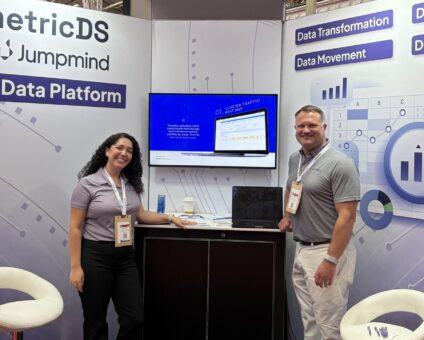
This was our second year at Big Data LDN, and attendance felt just as strong …
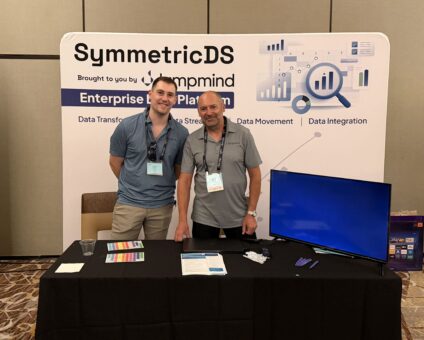
Our booth at TDWI Transform this year had a wider range of visitors than we …

Introduction In retail, POS updates have traditionally been quarterly events at best. From October through …
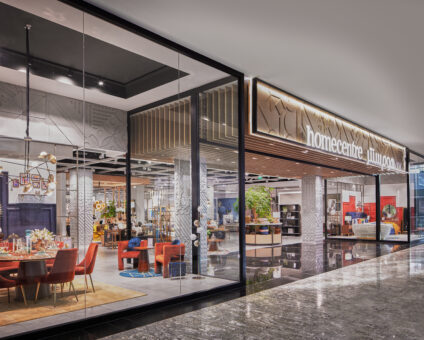
Jumpmind Powers Point of Sale and Promotions Execution for Landmark Retail, One of the Largest …
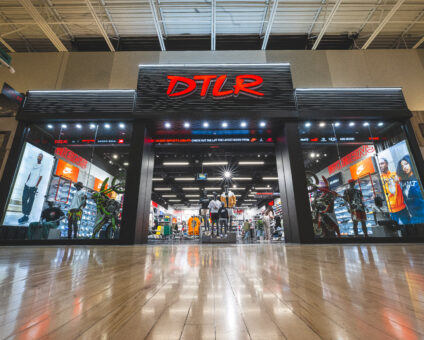
Retail Technology Leader Jumpmind to Enable Mobile Point of Sale and Inventory Management for DTLR/VILLA …
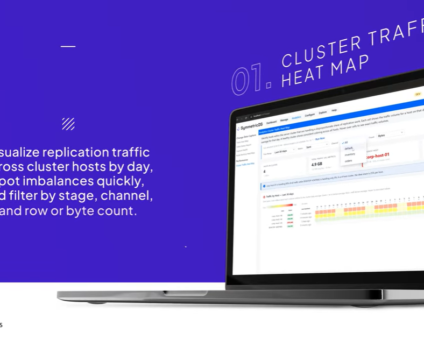
We built 3.18 because the question we kept hearing from customers changed. It used to …

The offering gives security teams a practical path to risk management and accountable AI COLUMBUS …

The insights have implications for retail technology in the store: it must help mind information …
Cloud-native POS platform for seamless omnichannel customer experience.
A single hub for all promotions campaigns.
A comprehensive solution designed to simplify and give you ownership of the inventory lifecycle.
A native post-transaction reconciliation module built into Jumpmind Commerce.
The most advanced synchronization solution for databases and file systems.
Data configuration and batch automation across different disparate systems and vendors.
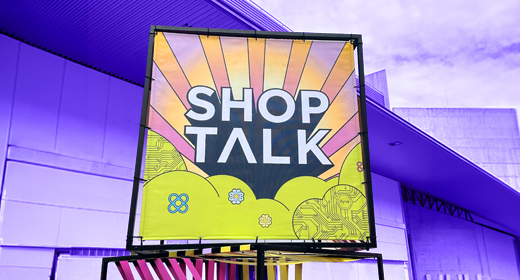
Shoptalk Europe wrapped up in Barcelona last week and I want to get a few things down while they’re still fresh. Not a summary of every session. What I’m more interested in is the pattern that kept surfacing in different rooms, in different conversations, with different retailers.
On the first day of the show, we hosted a retail safari through Barcelona with Jack Stratten of Insider Trends. Jack took a group of retail leaders through some of the city’s most compelling physical spaces, and the question he kept returning to was a deceptively simple one: what is this store actually for?
It sounds obvious. But walk through enough spaces with that question front of mind and you start to notice how many struggle to answer it cleanly. Jack was on the Woodstack Stage later in the week alongside the Chief Retail Officer of Harrods and the VP of Fashion, Home and Beauty at Disney, exploring how pop-ups and limited-time activations build emotional connections that outlast the moment. The through-line across both the safari and the session was consistent: the stores that land are the ones with a clear point of view about what they want a customer to feel, not just what they want them to buy.
That framing kept coming back to me across the rest of the show. European retailers are not investing in physical experience because they have run out of digital ideas. They are doing it because they have worked out that the store is the one channel digital cannot replicate. The transaction is not the point. The relationship is.
One of the things I noticed is that the conversation around store associates felt less abstract than it has in previous years. Less about what associates could theoretically do if given the right tools, more about the concrete gap between what retailers are asking of them and what they are actually equipped to handle.
The tension is real and most retailers know it. On one side: a push to make stores more experiential, more personal, more differentiated. On the other: a customer who has already researched six competitors before walking through the door, and an associate who may not have access to the information they need to move that conversation forward.
Research Jumpmind ran recently with RSR found that 36% of retailers identify meeting the demands of hyper-informed shoppers as one of their top challenges. Retailers surveyed almost universally agreed it is vital that store associates can provide product knowledge that surpasses what the customer already knows. That is not a training problem. It is a systems problem. Associates cannot serve as trusted advisors if the technology in their hands is not built to support that role.
The session framing at Shoptalk Europe this year, including a dedicated conversation on the workforce of the future and people and AI working side by side, suggested the industry is getting more serious about this distinction.
The conversation I kept having on the show floor, across different retailers from different markets, was a version of the same thing. The ambition is there. The existing platform is the constraint.
It came up directly and repeatedly: legacy, monolithic platforms simply cannot move at the speed the market now demands. New channels, shifting consumer behaviour, the expectation of continuous iteration. Retailers who have built their store technology on a single-vendor, single-stack model are finding that every change requires a project, every upgrade requires a cycle, and the gap between where they are and where they need to be keeps widening. The case for flexible, composable architecture has stopped being a future-state conversation. It is the conversation happening right now on the show floor.
This is the discussion I find myself having most often with European retail leaders. The European context adds its own complexity: fragmented markets, varying regulatory environments, technology estates built country by country over decades. The retailers making progress are the ones who have recognised that modernising the platform is not a back-office project. It is what makes everything else possible.
European retailers are not short of ambition or ideas. What separates the ones moving forward from the ones still workshopping is whether they have done the honest work of asking: can my current platform actually support what I am trying to build?
In most of the conversations I had last week, the answer to that question is what determined everything else.