The store is becoming a relationship, not just a transaction The store is being talked …



Cloud-native POS platform for seamless omnichannel customer experience.

A single hub for all promotions campaigns.

A comprehensive solution designed to simplify and give you ownership of the inventory lifecycle.

A native post-transaction reconciliation module built into Jumpmind Commerce.

The most advanced synchronization solution for databases and file systems.

Data configuration and batch automation across different disparate systems and vendors.
The store is becoming a relationship, not just a transaction The store is being talked …

I spent this week at eTail Boston, and if you looked at the agenda, you’d …

Consumers are expected to spend more than $146 billion on back-to-school shopping this year, and …

Quick answer: Agentic AI systems need data that is current, consistent across systems, available even …
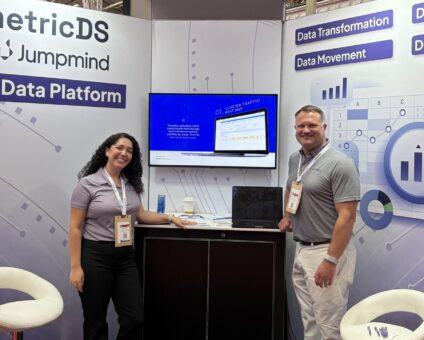
This was our second year at Big Data LDN, and attendance felt just as strong …
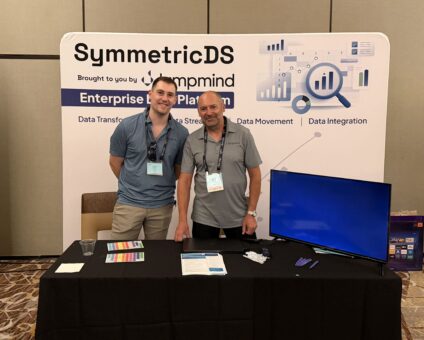
Our booth at TDWI Transform this year had a wider range of visitors than we …

Introduction In retail, POS updates have traditionally been quarterly events at best. From October through …

Jumpmind Powers Point of Sale and Promotions Execution for Landmark Retail, One of the Largest …

Retail Technology Leader Jumpmind to Enable Mobile Point of Sale and Inventory Management for DTLR/VILLA …
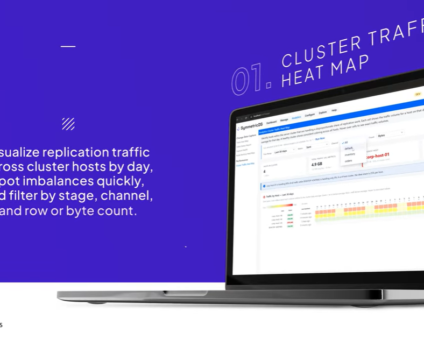
We built 3.18 because the question we kept hearing from customers changed. It used to …

The offering gives security teams a practical path to risk management and accountable AI COLUMBUS …

The insights have implications for retail technology in the store: it must help mind information …
Cloud-native POS platform for seamless omnichannel customer experience.
A single hub for all promotions campaigns.
A comprehensive solution designed to simplify and give you ownership of the inventory lifecycle.
A native post-transaction reconciliation module built into Jumpmind Commerce.
The most advanced synchronization solution for databases and file systems.
Data configuration and batch automation across different disparate systems and vendors.

Every retailer we talk to has AI on the agenda right now. Whether it shows up as a board-level priority, a vendor slide, or a question from a prospect we are engaging with, the conversation is unavoidable. And for the most part, that’s a good thing. The store associate has needed better tools for a long time.
But as we have watched AI move from conference buzzwords into actual product roadmaps, one distinction keeps coming up that the industry is not talking about: where in the associate experience does AI actually belong.
There are two very different moments to consider.
The first moment is preparation. An associate is about to start a shift. A high-value customer has an appointment booked. A shopper walks into the store, and through an interaction, the shopper is identified as a loyalty customer.
In each of these scenarios, AI has a clear and meaningful job. It can surface who that customer is, what they have purchased recently, what promotions might resonate with them, and how they prefer to be engaged. It gives the associate a concise, useful picture before the conversation even starts.
This is associate augmentation at its best. The associate does not need to tab through three systems or rely on memory. They show up to the interaction prepared. The customer feels known. The associate feels capable. Nobody had to toggle through a screen mid-sentence to make that happen.
This use case is compelling and credible because it respects how good service actually works. A sommelier does not consult a tablet while describing a wine at the table. They prepared before they walked over. AI can be the preparation.
The second moment is more complicated.
Real-time AI surfacing, the idea that as a customer is standing in front of an associate the system is dynamically pushing insights, flags, and suggestions into the interface, is where we think the industry needs to slow down and be honest.
Think about it from the customer’s perspective. You are in a store. You are having what feels like a personal conversation with an associate. And then something shifts. They glance at a screen. Begin scrolling, reading and speaking – giving a response back that feels scripted. You start to wonder: is this person talking to me, or are they simply a bot in human skin?
Retail has spent decades trying to earn trust at the frontline. AI that undermines that trust is not adding value, it’s creating an unauthentic interaction, even if the intent was to be personalized.
This does not mean real-time AI has no place in the store. In fact, it does, when done right and in a natural way that empowers store associates, lessens the cognitive load and empowers them with insights and knowledge to be better brand ambassadors, driving a higher level personalized customer engagement. Human judgment stays in the loop.
But there is a meaningful difference between AI that assists a decision the associate is already making and AI that hijacks the associate’s attention during a live customer interaction. The former adds value. The latter adds noise and sows distrust.
If you are a retail IT leader or merchant evaluating AI capabilities in your POS or associate platform, the framing above gives you a useful lens.
Ask your vendors: where in the experience does your AI surface? Is the associate in control of when and how insights appear, or does the system decide? What is the design philosophy around cognitive load? Is AI treated as an additional tool the associate can choose to use, or is it a layer the system imposes on the interaction?
The answers will tell you a lot about whether the vendor has actually thought through the store floor, or whether they have simply mapped AI features onto a product roadmap to keep up with the conversation at the conference.
We have been deliberate about how we approach this. Engage, our store associate, Clienteling interface, was designed around this from the start. The goal was always to reduce cognitive load, not add to it. That philosophy is what makes AI a natural extension of the platform rather than a bolt-on.
We believe AI should help associates show up prepared, surface relevant information at the right moments, and stay out of the way when the human connection is the point.
That is not a cautious take on AI. It is an honest one. And we think retailers are ready to have that conversation.
The hype around AI in retail is not going anywhere. But the retailers who build competitive advantage from it will be the ones who ask the harder question: not just whether they have AI, but whether the AI they have is actually making the associate’s job better. Before the interaction starts, and within it.