The store is becoming a relationship, not just a transaction The store is being talked …



Cloud-native POS platform for seamless omnichannel customer experience.

A single hub for all promotions campaigns.

A comprehensive solution designed to simplify and give you ownership of the inventory lifecycle.

A native post-transaction reconciliation module built into Jumpmind Commerce.

The most advanced synchronization solution for databases and file systems.

Data configuration and batch automation across different disparate systems and vendors.
The store is becoming a relationship, not just a transaction The store is being talked …

I spent this week at eTail Boston, and if you looked at the agenda, you’d …

Consumers are expected to spend more than $146 billion on back-to-school shopping this year, and …
Quick answer: Agentic AI systems need data that is current, consistent across systems, available even …
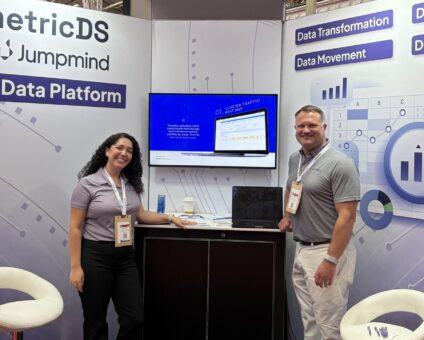
This was our second year at Big Data LDN, and attendance felt just as strong …
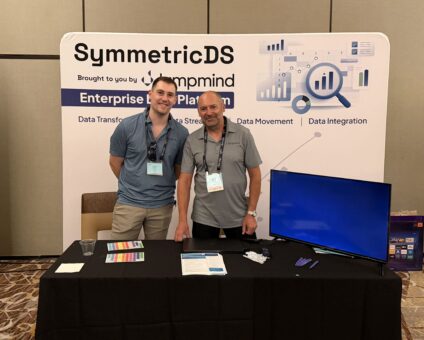
Our booth at TDWI Transform this year had a wider range of visitors than we …

Introduction In retail, POS updates have traditionally been quarterly events at best. From October through …

Jumpmind Powers Point of Sale and Promotions Execution for Landmark Retail, One of the Largest …
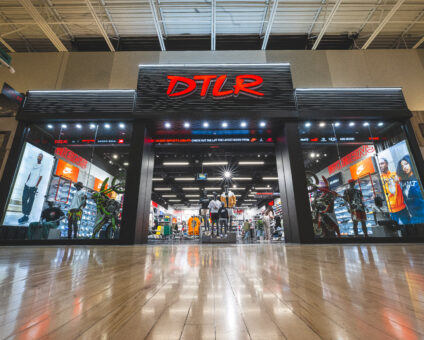
Retail Technology Leader Jumpmind to Enable Mobile Point of Sale and Inventory Management for DTLR/VILLA …
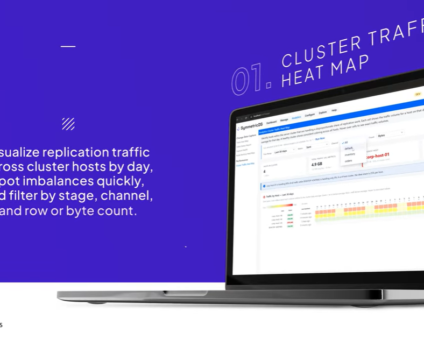
We built 3.18 because the question we kept hearing from customers changed. It used to …

The offering gives security teams a practical path to risk management and accountable AI COLUMBUS …

The insights have implications for retail technology in the store: it must help mind information …
Cloud-native POS platform for seamless omnichannel customer experience.
A single hub for all promotions campaigns.
A comprehensive solution designed to simplify and give you ownership of the inventory lifecycle.
A native post-transaction reconciliation module built into Jumpmind Commerce.
The most advanced synchronization solution for databases and file systems.
Data configuration and batch automation across different disparate systems and vendors.
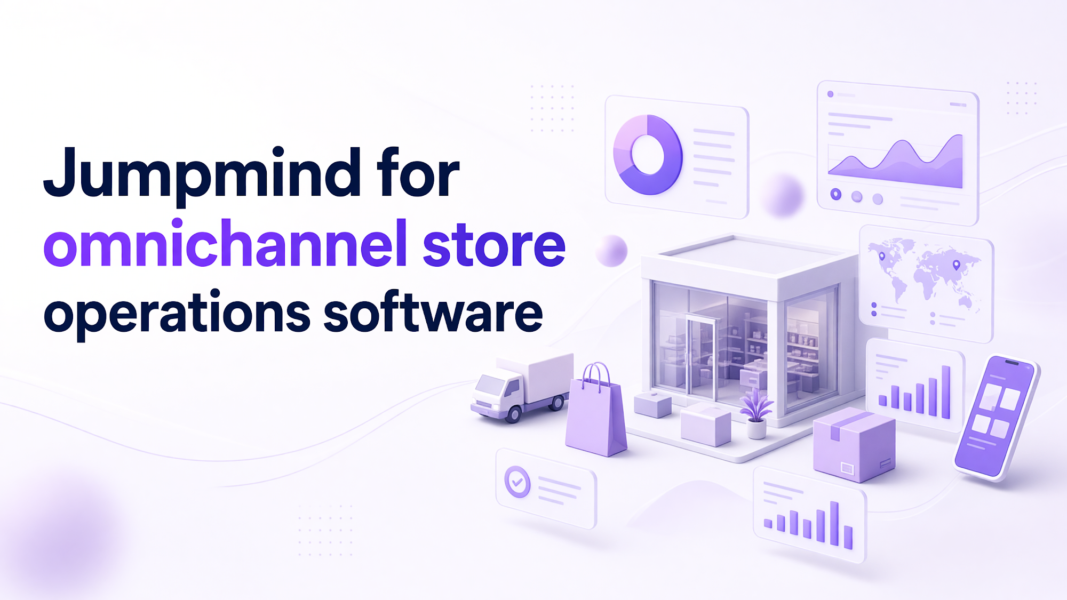
Store teams answer faster when inventory, checkout, and fulfillment live in one workflow. Jumpmind Commerce is the omnichannel store operations software that removes extra steps between them, so an associate can check stock without leaving the customer.
The software that earns its keep shortens the associate’s path. Jumpmind Commerce puts checkout, inventory, and fulfillment in one associate workflow, so a sale can continue without a second login. Store teams spend less time switching systems and more time with the customer.
Retail operations software helps manage stores when it reduces the number of screens a person must open to finish a task. On a busy floor, an associate may need to check a shelf count, process a pickup, or apply a return. Each separate login adds time and creates room for error. The platform brings those actions into one workflow rather than bolting a new dashboard onto the side of current systems.
The associate experience is the operating model. When stock checks and checkout share a screen, the customer gets an answer faster. Fewer screens and sign-ins lower cognitive load and shorten the path from question to completed sale.
Omnichannel work multiplies handoffs. A pickup order touches inventory, a customer lookup, and payment in quick sequence. A system that keeps those steps in one flow lets a store team handle more transactions without adding headcount or training.
That is the test for omnichannel store operations software. Count the screens and sign-ins required to complete a pickup. Then ask whether the platform removes any of them. It treats checkout, inventory, and fulfillment as one flow instead of three.
Inventory accuracy decides whether a ship-from-store or pickup promise is profitable. When stock counts are wrong, stores either oversell a unit twice or cancel an order after the customer has received a confirmation. The tighter the inventory position, the less room there is for that error.
US retail inventories fell 0.2% in June 2026 according to Reuters. Retail inventories excluding autos fell 0.4%, and the inventory-to-sales ratio dropped from 1.39 months in June 2025 to 1.30 months in June 2026.
Leaner stock means each miscount is more likely to turn into a stockout or an oversell. That is the exact problem omnichannel store operations software must solve before the customer reaches the register.
Meanwhile, returns keep moving through the same inventory pool. NRF’s 2025 reverse logistics research puts online returns at 19.3% of online sales. A returned item needs to be counted, made sellable, and shown as available before the next customer or online order can use it.
If inventory updates too slowly, a store turns away a sale on a unit that is actually in the back room. If it updates too quickly, a pickup order gets promised against stock that is still in receiving. Retail inventory and fulfillment checks have to be tighter than a weekly count.
Before you buy, verify how the platform handles store inventory and fulfillment checks. You want inventory and fulfillment actions on the same screen, with no separate stock application.
Jumpmind Commerce keeps inventory and checkout in one workflow. The store team confirms stock without leaving the sale, which protects the promise made to an online buyer.
Pickup, ship-from-store, and return-to-store belong in the same workflow as checkout. Jumpmind Commerce carries those actions in one store platform, and Petco runs that model across its stores. The associate can finish a pickup without switching to a separate fulfillment screen, which keeps a busy pickup queue moving.
When fulfillment lives in a separate login, associates carry the customer’s order number from one screen to another. That is where pickup times stretch and return-to-store transactions stall. A store operations platform should place the fulfillment action inside the sale instead of behind another login.
A Petco omnichannel store deployment shows a national retailer running omnichannel fulfillment at checkout on the platform. That deployment matters because it proves the workflow works across a live multi-location estate rather than only in a controlled setting.
The same platform carries ship-from-store, pickup, and return-to-store actions inside the checkout workflow. That gives the associate one path for a customer who wants to buy, collect an online order, and return another item in a single visit.
When you compare omnichannel fulfillment software, ask whether the fulfillment action can be completed at the POS terminal or only in a back-office screen. The answer changes how quickly a store can clear a pickup queue during a busy hour.
Compare vendors on the store person’s path and rollout evidence rather than a list of demo screens. A named chain that activated stores in one day says more than a polished demo. This keeps the evaluation grounded in what the store team will experience.
Start with the associate’s actual steps. Pick a common task like a pickup or return. Count the sign-ins and screen changes required. Then ask each vendor to show that same task in their system. The shorter path usually wins because it reduces training time and keeps the customer moving.
Rollout evidence matters next. One named rollout comes from DTLR: 200 stores added to a new point of sale in 24 hours on Jumpmind Commerce. That result tells you the software can scale across locations without long store-by-store projects.
The platform runs on terminals and handheld devices already in many stores. Hardware continuity changes the rollout math. If you can keep your current devices, you avoid a training project tied to new hardware.
A fair comparison of omnichannel store operations software starts with the requirements that matter on the floor. Use a comparison checklist based on modern store platform requirements instead of a feature list.
Multi-location retailers need omnichannel store operations software that gives enterprise control without forced hardware replacement. Jumpmind Commerce centralizes promotion rules while the current POS keeps running. Vitamin Shoppe has used that approach to modernize point of sale and promotions in the same pass. That gives stores a clear path to one system without the risk of replacing every register at once.
The scale involved keeps growing. The U.S. Census Bureau estimated total retail sales at $1,986.5 billion in the second quarter of 2026, up 2.9% from the first quarter. Across that volume, small differences in store execution compound quickly. Central rules matter because a rule or stock update must reach every location without a separate integration project per store.
Multi-location retail operations often struggle with local variation. A central platform should let headquarters set a rule once and let stores execute it on their existing devices. That removes the all-or-nothing risk of a full replacement.
The same central workflow that serves one store can carry a change across the chain. That is the practical benefit of running one store operations platform instead of a patchwork.
Omnichannel store operations software typically includes inventory visibility, checkout, pickup, ship-from-store, and return-to-store workflows in one system. The goal is fewer screens and sign-ins for associates. Jumpmind Commerce combines those capabilities, so store teams can confirm stock and complete fulfillment without leaving the sale.
Yes. The software can layer inventory visibility and fulfillment actions over a current POS without a full register replacement. The store team keeps familiar hardware and workflows, while enterprise teams gain one place to update rules and stock.
Returns are another fulfillment action. The platform should update available inventory as soon as a return is accepted and route the item to restock, vendor return, or damage. The checkout workflow should include return-to-store actions, so the count changes at the return desk.
A store operations platform should keep checkout and inventory lookups working through a network drop. Associates should be able to ring sales, check on-hand counts, and stage fulfillment locally while the system queues data for sync. Jumpmind Commerce runs on in-store devices and is built for that kind of continuity.
Measure the associate path before and after a change: screen changes, sign-ins, and time to complete a pickup or return. Then track fulfillment accuracy and order promise compliance. The most useful signal is whether a store confirms inventory inside the sale instead of switching to another system.
Ask for a named multi-location rollout result, the devices the software runs on, and the number of screens required for a pickup. Also ask how the platform behaves during a network drop. A vendor should be able to show the actual store workflow in a live environment.
Yes. Jumpmind Commerce handles pickup, ship-from-store, and return-to-store actions inside the checkout workflow. Petco uses that same workflow at checkout for omnichannel store operations. To see the path, ask Jumpmind for a pilot walkthrough on your current store devices.