The store is becoming a relationship, not just a transaction The store is being talked …



Cloud-native POS platform for seamless omnichannel customer experience.

A single hub for all promotions campaigns.

A comprehensive solution designed to simplify and give you ownership of the inventory lifecycle.

A native post-transaction reconciliation module built into Jumpmind Commerce.

The most advanced synchronization solution for databases and file systems.

Data configuration and batch automation across different disparate systems and vendors.
The store is becoming a relationship, not just a transaction The store is being talked …

I spent this week at eTail Boston, and if you looked at the agenda, you’d …

Consumers are expected to spend more than $146 billion on back-to-school shopping this year, and …

Quick answer: Agentic AI systems need data that is current, consistent across systems, available even …
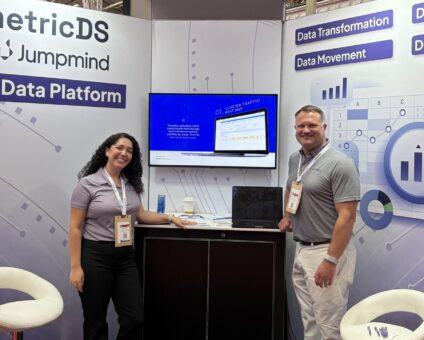
This was our second year at Big Data LDN, and attendance felt just as strong …
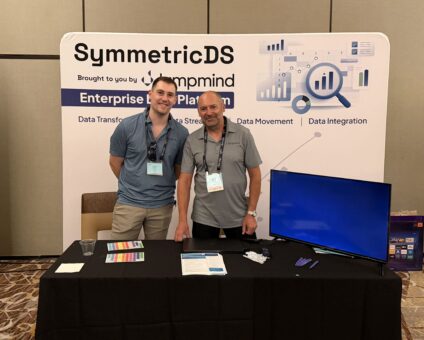
Our booth at TDWI Transform this year had a wider range of visitors than we …

Introduction In retail, POS updates have traditionally been quarterly events at best. From October through …

Jumpmind Powers Point of Sale and Promotions Execution for Landmark Retail, One of the Largest …
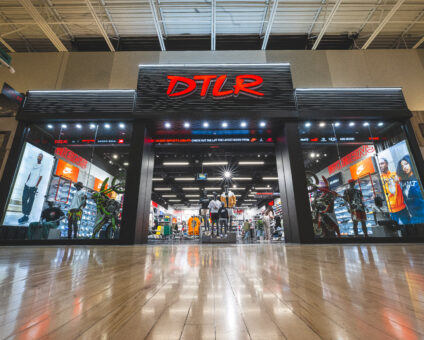
Retail Technology Leader Jumpmind to Enable Mobile Point of Sale and Inventory Management for DTLR/VILLA …
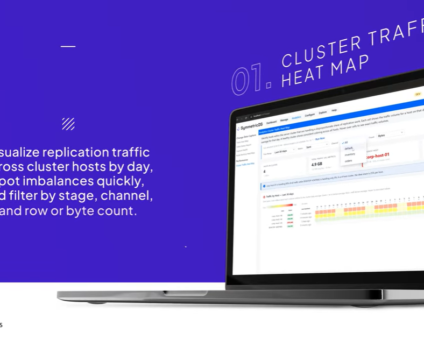
We built 3.18 because the question we kept hearing from customers changed. It used to …

The offering gives security teams a practical path to risk management and accountable AI COLUMBUS …

The insights have implications for retail technology in the store: it must help mind information …
Cloud-native POS platform for seamless omnichannel customer experience.
A single hub for all promotions campaigns.
A comprehensive solution designed to simplify and give you ownership of the inventory lifecycle.
A native post-transaction reconciliation module built into Jumpmind Commerce.
The most advanced synchronization solution for databases and file systems.
Data configuration and batch automation across different disparate systems and vendors.
For most large retailers the question is no longer which system to replace. It is which platform can run alongside the ERP, order management, ecommerce and inventory systems already carrying years of configuration and custom logic. Coexistence is the buying criterion. A greenfield rebuild is the exception.
That constraint comes from operations rather than preference. A chain running hundreds or thousands of locations measures a POS project in rollout risk, lane stability, and whether a regional support model can keep pace.
The store itself has changed shape. It fulfills, returns, services and sells across channels, which means the software has to serve the associate doing that work and not just close a transaction. Every extra screen, swivel-chair lookup, and workaround is load somebody on the floor carries for a whole shift.
There is a real difference between a POS that is connected through integrations and a platform built to sit alongside legacy systems as a modern store hub. This guide uses four lenses to tell them apart: integration fit, how data actually moves, the migration path, and the operational burden on stores.
Start with the baseline. Integrations share product, inventory, sales and customer information between systems. That is the floor, and every vendor clears it.
The ceiling is wider. POS sits inside a stack that also spans ERP, ecommerce, inventory, order management, analytics and logistics. For a retailer already running merchandising in one suite, order management in another, and its own ecommerce platform, the real question is which system stays the record of truth and which one defers to it.
That is why an API strategy matters more than a connector list. Connector lists describe what a vendor has already built. An API strategy describes what happens in year three, when the ERP upgrades and the order management system gets replaced.
Ask for four things:
There is also a difference between sharing data and orchestrating work. Sharing means the counter shows 12 units on hand. Orchestration means the associate can sell one, source another store’s unit, and settle a web return inside the same flow without leaving the screen.
Jumpmind Commerce is a cloud-native, API-driven POS platform built to run alongside existing systems rather than replacing the stack around it. Composable commerce is the mechanism: microservices that integrate into the CRM, order management and catalog you already own, so store capability can grow without a rip-and-replace program.
Three systems usually decide whether a store rollout goes quietly.
ERP. When POS and ERP stay disconnected, the gap becomes manual work and inaccurate results. Ask which ERP platforms are live in production with that vendor today, whether the connection is API-based or scheduled file transfer, how sales and tender postings reconcile, and what the register does when the ERP is unreachable mid-shift.
Ecommerce. Product, price and customer records should be mastered once and consumed everywhere. The real test is duplicate maintenance. If a promotion has to be authored twice, once for web and once for the store, the integration is incomplete no matter how many endpoints are documented. Jumpmind Promote runs all promotions campaigns from a single hub, with configurable promotion types, stackability rules, and conflict validation, so store and digital pricing execute from the same rules.
Inventory. Nightly batch counts are fine for finance and wrong for the sales floor. Ask how quickly a store-level on-hand changes after a sale, a return, or a pick for a ship-from-store order, and whether that number is what the associate sees on the handheld. Jumpmind Inventory covers the store inventory lifecycle directly, from receiving against ASNs and purchase orders through cycle counts, adjustments, and store-to-store transfers.
Then look at the counter. Bad integration shows up as rekeyed order numbers, mismatched customer records, and exceptions an associate resolves by hand while someone waits. Any evaluation should include watching a store team run those exceptions in a pilot before contract signature.
Most integration guides stop at the system diagram. They map the connections between ERP, ecommerce and inventory, then leave out the person at the counter with a line forming behind them. That person absorbs whatever the architecture gets wrong.
Our research with RSR found 45% of retailers believe their associates spend too much time answering customer service questions, and 42% say too much time goes to technology support and maintenance. Those are not associate problems. They are integration problems surfacing in the place with the least slack.
A great associate working with a fragmented set of systems will almost always deliver a worse experience than their potential would suggest. Not because they are not trying. The friction is real and it shows.
Ask vendors to demonstrate the workflows your stores actually run:
Mobile work should use the same workflow and the same promotion logic as the lane rather than a reduced version of it. Device independence is what makes that practical: Jumpmind Commerce runs across iOS, Android, Windows, Linux and Mac, and it is common for customers to run a mix of hardware and operating systems side by side, fit for purpose.
Integration quality is measurable in store terms. Fewer interruptions, fewer handoffs between systems, fewer exceptions that only a manager can clear. Build-A-Bear Workshop’s Chief Technology Officer, Dara Meath, described the requirement this way: “Our Bear Builder store associates are a vital part of the Build-A-Bear Workshop experience. Our commitment to providing our associates with the most advanced in-store retail technology ensures they are not only given a 360-degree view of our guests, their previous interactions and preferences, but also can offer a shared interactive and personalized journey to enrich each guest’s visit.”
The coexistence story rests on the data layer. Jumpmind SymmetricDS handles synchronization across databases and file systems, including multi-tier distribution to thousands of remote locations, cloud database replication capturing live changes from on-premise systems, master data management, web services integration, and live migration with no downtime during server replacements, storage upgrades and data center relocations. Those are the mechanics behind keeping a new store platform in step with an existing ERP or ecommerce catalog while both run in production.
On the store side, the capabilities map to how associates actually work. Full offline support at the lane. Self-checkout running the same software and business logic as attended fixed lanes, with toggling between the two. POS on the Go for selling outside the store’s four walls on a single configuration. Unified promotions from one hub. CX Connect, which turns the customer-facing display into an interactive engagement channel during checkout rather than a passive receipt screen. And Jumpmind Sales Audit, a native post-transaction reconciliation module built into Jumpmind Commerce, so finance reads transactions exactly as they were entered.
Petco runs Jumpmind Commerce across its store network and extended it to mobile veterinary and grooming services, with geolocation-based tax services that adjust as the mobile unit rolls. American Eagle Outfitters completed conversion across its American Eagle and Aerie stores in the US and Hong Kong before expanding into Canada, Mexico and Japan. The Vitamin Shoppe runs Jumpmind Commerce and Jumpmind Promote across nearly 700 locations.
The honest trade-off: this is architecture built for enterprise coexistence, with implementation consultants and product engineers attached to it. That takes more discovery and planning up front than a lighter standalone POS. A retailer with a few dozen lanes and no ERP dependency will get selling sooner with something simpler, and we would rather say so than win a project that does not fit. Jumpmind is also not a merchandising or order management suite, so those layers stay with your existing systems of record.
Five checks separate a real evaluation from a feature demo.
Existing-system fit. Ask each vendor to map its architecture against what you already run, and to give you a specific integration pattern for each system rather than a logo wall.
API depth. Ask which endpoints are public, which are rate-limited, whether writes are supported, and what happens during a merchandising system outage.
Data replication. Stores cannot wait on the network. Confirm how the platform keeps selling when connectivity drops, how it reconciles afterward, and whether replication is native or a separate product you also have to run.
Rollout risk. A pilot in ten stores tells you more than a reference call. Agree in advance on what a failed pilot looks like and what triggers a rollback.
Support model. Named team or ticket queue. Find out who answers at 6am on a Saturday in your busiest region.
Forrester named Jumpmind a Leader in The Forrester Wave™: Point-Of-Service Solutions, Q4 2024, with top scores including practitioner UX, custom checkout flow, digital payments, clienteling and assisted selling, and offline resiliency. Forrester also noted that all of Jumpmind’s reference customers reported their implementations were delivered on time, on or under budget, and with more functionality than expected.
Every Jumpmind customer is referenceable. Not most of them. Ask us for names at your store count and ask the same of everyone on your list.
Which retail POS platform integrates with existing retail systems? Look for documented, versioned APIs with write access, event publishing, native data replication, and named production customers running your ERP and payment processors. Jumpmind Commerce is built as a cloud-native, API-driven platform designed to run alongside an existing merchandising, ERP, order management and ecommerce stack rather than replacing it.
What should a POS connect to in an enterprise stack? ERP for item, price and financial posting. Order management for buy online pick up in store, ship from store and endless aisle. CRM or loyalty for customer identity at the register. Payment processors and terminals, including tokenization. Plus inventory and the analytics layer finance reports from.
Is a connector list the same as an integration strategy? No. A connector list describes what exists today. Ask instead about API versioning, deprecation policy, and who owns each interface after go-live, because that decides more of your five-year cost than the license does.
How do we keep selling during a phased migration? Data replication between the new platform and the systems still in place. Jumpmind Commerce supports multi-tier distribution across thousands of locations and live migration with no downtime, so converted and unconverted stores hold the same data while the rollout runs.
Which integrations disappear when capabilities are native? Promotions, store inventory, and post-transaction reconciliation. Jumpmind Promote, Jumpmind Inventory and Jumpmind Sales Audit remove three interfaces you would otherwise build and maintain, and each interface removed is one fewer place data can disagree.
Where does associate experience belong in an integration evaluation? In the scored requirements. Measure taps and screens for a cross-channel return, an endless aisle order, and a customer lookup, on a real floor during a real shift.
For a large, distributed fleet, the platform worth choosing is the one that modernizes stores while the systems around it keep running, and that treats the associate’s workflow as the thing being improved rather than a side effect.
Bring your own architecture diagram to every demo and ask each vendor to draw on it.
Explore Jumpmind Commerce or schedule a technical walkthrough using your current stack as the starting point.