The store is becoming a relationship, not just a transaction The store is being talked …



Cloud-native POS platform for seamless omnichannel customer experience.

A single hub for all promotions campaigns.

A comprehensive solution designed to simplify and give you ownership of the inventory lifecycle.

A native post-transaction reconciliation module built into Jumpmind Commerce.

The most advanced synchronization solution for databases and file systems.

Data configuration and batch automation across different disparate systems and vendors.
The store is becoming a relationship, not just a transaction The store is being talked …

I spent this week at eTail Boston, and if you looked at the agenda, you’d …

Consumers are expected to spend more than $146 billion on back-to-school shopping this year, and …
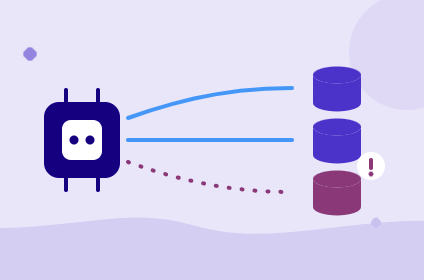
Quick answer: Agentic AI systems need data that is current, consistent across systems, available even …
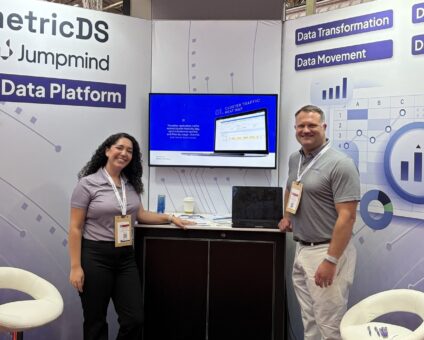
This was our second year at Big Data LDN, and attendance felt just as strong …
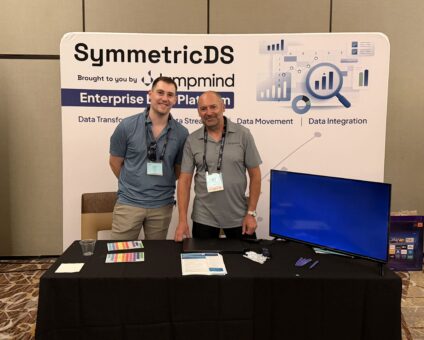
Our booth at TDWI Transform this year had a wider range of visitors than we …

Introduction In retail, POS updates have traditionally been quarterly events at best. From October through …

Jumpmind Powers Point of Sale and Promotions Execution for Landmark Retail, One of the Largest …
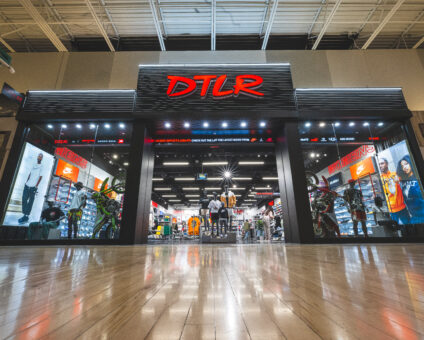
Retail Technology Leader Jumpmind to Enable Mobile Point of Sale and Inventory Management for DTLR/VILLA …
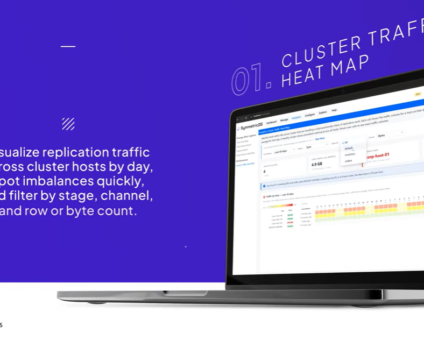
We built 3.18 because the question we kept hearing from customers changed. It used to …

The offering gives security teams a practical path to risk management and accountable AI COLUMBUS …

The insights have implications for retail technology in the store: it must help mind information …
Cloud-native POS platform for seamless omnichannel customer experience.
A single hub for all promotions campaigns.
A comprehensive solution designed to simplify and give you ownership of the inventory lifecycle.
A native post-transaction reconciliation module built into Jumpmind Commerce.
The most advanced synchronization solution for databases and file systems.
Data configuration and batch automation across different disparate systems and vendors.
Jumpmind handles modern retail operations without disrupting the systems already in your stores. It brings the sale, stock lookup, and order capture into one associate workflow and is already live with national retailers such as DTLR and Shoe Palace.
A system like Jumpmind Commerce helps by removing associate steps at the register, stock lookup, and order capture. It runs on stationary and handheld devices, so store teams finish tasks without walking to a separate terminal or signing into another system. That is the level the modern store platform requirements point to: the platform has to work where the associate already works.
In a store, the same job can jump between a point of sale, an inventory check, and a customer order screen. Each jump steals seconds and pulls attention away from the shopper. When you evaluate store operations software for a national chain, start with the associate path. Collapsing those checks into one flow matters more than adding another dashboard.
Before a pilot, watch one associate work through a cross-store inventory question. Count the logins and screens. Use that count as your baseline for improvement.
That baseline also shows why productivity gains matter. The Q2 2026 productivity data from the Bureau of Labor Statistics shows nonfarm business labor productivity increased 1.4% in the second quarter of 2026 at a seasonally adjusted annualized rate. Output increased 1.7%, while hours worked increased 0.3%. The Bureau of Labor Statistics defines labor productivity as output per hour. For modern retail operations in 2026, the useful response is to give associates tools that remove wasted motion. That is the core of in-store technology modernization: fewer steps for the associate, faster answers for the customer.
A national rollout tells you more than a vendor deck. A February 2026 Retail Customer Experience report says DTLR deployed Jumpmind Commerce on stationary and handheld registers across more than 640 DTLR and Shoe Palace locations in the United States. That result shows the platform holds up at national chain speed.
The deployment included stores that came through an acquisition and needed to run under a new brand. Those locations joined the same register environment instead of slowing the rollout. The same report describes the rollout as accelerating timelines and enabling faster deployment of new features, leaving more time for associates on the sales floor.
National rollouts expose the difference between a demo and a deployment. Acquired stores arrive with their own fixtures and habits, but they still need to run the same promotion and inventory model. The DTLR result matters because the platform absorbs that variation without a separate bespoke build.
Modern retail operations at national scale depend on rollout evidence you can verify with named stores and devices. For a national retailer POS decision, that is the evidence to ask for: named stores, real devices, and a clear timeline. A cloud-native retail POS should absorb acquired stores without a separate training project. The same method appears in a four-week rollout result and a cloud-native in-store deployment.
When you talk to a vendor, ask which locations went live, on what devices, and in what window. A real national rollout will have those answers in writing. That evidence also tells training and operations teams how much change to expect.
An enterprise retail platform supports associates by reducing the switching between systems. Jumpmind Commerce combines the sale, stock lookups, and order capture in one interface, so the associate does not juggle separate logins or tabs. Fewer steps mean less training time and less swivel-chairing.
Store associate technology should remove system switching and keep the associate in the sale. When a customer asks whether another store has an item, the associate should see that answer inside the same transaction as the sale. The platform shows that answer with the transaction, so the interaction stays with the customer.
Training time tracks the number of screens and exceptions a new hire has to learn. One flow teaches faster than three connected systems, and it also reduces the chance that an associate will turn away from the customer to work a second application. This matters for stores with newer associates or high seasonal turnover. The platform should shorten time to confidence without turning every exception into a help desk call.
Separate systems force associates to hold context in their head: the order number, the stock lookup, the customer’s original request. The platform removes that juggling by keeping the work on one screen, so the associate can confirm the answer and complete the sale without breaking the conversation.
That is the cause and effect. Less cognitive load for the associate means a shorter wait for the customer. The associate stays on the floor, and the customer gets one continuous conversation instead of a pause while the employee works through another system.
The same single transaction and inventory flow that supports associates also gives loss prevention a cleaner record. Modern retail operations include total retail loss because shrink alone leaves out too many operational risks. A 2026 National Retail Federation framework describes retailers measuring theft, fraud, inventory inaccuracies, supply-chain disruptions, and other operational breakdowns together.
Traditional shrink is a lagging indicator and may omit losses outside physical stores, including ecommerce fraud, supply-chain discrepancies, and operational breakdowns. Total-retail-loss metrics can connect sales and return anomalies with transactions spanning stores and ecommerce activities. That only works when transaction and inventory data live in one connected system.
Jumpmind Commerce holds the transaction and the inventory record in one associate flow, so loss prevention can trace a sale or return across store and digital channels. That gives loss prevention a cleaner path from a sale or return to the store and digital records behind it. It also lets operations teams spot mismatches earlier instead of waiting for a shrink report that arrives after the loss has settled.
Total retail loss covers more than store shrink. Ecommerce fraud and supply-chain discrepancies happen outside the store, but they still affect the same inventory and transaction records. Retailers that keep those records in one platform can compare store sales, returns, and digital orders without exporting files from separate systems.
Modern retail operations in 2026 describes how a chain runs checkout, inventory, fulfillment, promotions, and loss prevention as one connected set of tasks. It matters because productivity gains now come from output per hour rather than more scheduled hours. Practically, it means fewer associate steps and cleaner data across stores and digital channels.
Jumpmind Commerce reduces the number of screens and logins an associate has to learn. The sale, stock lookup, and order capture share one interface, so new hires practice one flow instead of separate systems. The shared flow also reduces the number of exceptions a new hire sees.
Jumpmind Commerce runs as an in-store commerce platform on counter and handheld registers. Retailers can modernize the associate layer without replacing every system at once. The deployment model lets you pilot on current devices first.
Yes. A February 2026 Retail Customer Experience report says DTLR deployed the platform across more than 640 DTLR and Shoe Palace locations in the United States, including newly rebranded stores from an acquisition. That rollout included stationary and handheld registers.
Fewer system steps shorten the time a customer waits for an answer. When an associate can check inventory or apply a promotion on one screen, the interaction stays with the customer. Reduced cognitive load keeps attention on service instead of software.
Jumpmind Commerce has a mobile-first architecture and runs on stationary and handheld registers. Associates can complete tasks and engage with customers throughout the store, away from a fixed checkout lane. The interface is built for the associate.
Measure one associate flow first. Track steps per transaction, training time, and time to complete a cross-store inventory answer. Compare the pilot lane to your current baseline before expanding. The goal is higher output per hour without adding labor.
Begin by mapping your current checkout and inventory steps on the devices you already operate. Request that mapping from Jumpmind to see how those steps collapse into one associate flow, then run a pilot in a few lanes before expanding.