The store is becoming a relationship, not just a transaction The store is being talked …



Cloud-native POS platform for seamless omnichannel customer experience.

A single hub for all promotions campaigns.

A comprehensive solution designed to simplify and give you ownership of the inventory lifecycle.

A native post-transaction reconciliation module built into Jumpmind Commerce.

The most advanced synchronization solution for databases and file systems.

Data configuration and batch automation across different disparate systems and vendors.
The store is becoming a relationship, not just a transaction The store is being talked …

I spent this week at eTail Boston, and if you looked at the agenda, you’d …

Consumers are expected to spend more than $146 billion on back-to-school shopping this year, and …
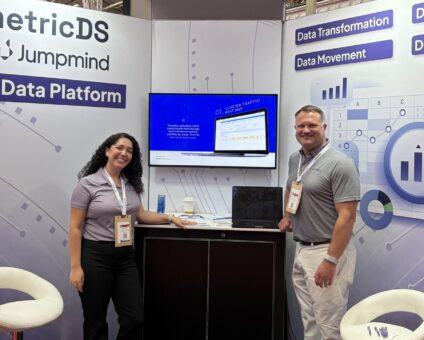
This was our second year at Big Data LDN, and attendance felt just as strong …
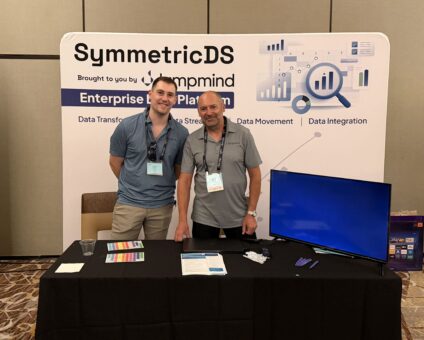
Our booth at TDWI Transform this year had a wider range of visitors than we …
Quick answer: Most RAG pipelines re-index their vector store on a nightly or hourly batch …

Introduction In retail, POS updates have traditionally been quarterly events at best. From October through …

Jumpmind Powers Point of Sale and Promotions Execution for Landmark Retail, One of the Largest …
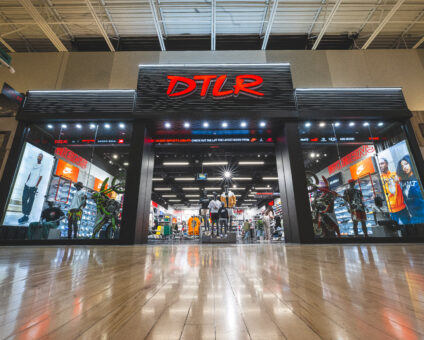
Retail Technology Leader Jumpmind to Enable Mobile Point of Sale and Inventory Management for DTLR/VILLA …
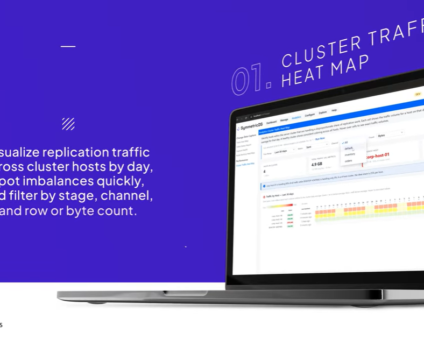
We built 3.18 because the question we kept hearing from customers changed. It used to …

The offering gives security teams a practical path to risk management and accountable AI COLUMBUS …

The insights have implications for retail technology in the store: it must help mind information …
Cloud-native POS platform for seamless omnichannel customer experience.
A single hub for all promotions campaigns.
A comprehensive solution designed to simplify and give you ownership of the inventory lifecycle.
A native post-transaction reconciliation module built into Jumpmind Commerce.
The most advanced synchronization solution for databases and file systems.
Data configuration and batch automation across different disparate systems and vendors.
Promotion management software is the system a retailer uses to build, approve, schedule and execute price promotions, discounts and offers, then apply them correctly at every point of sale and digital channel. It holds the rules for each offer, such as which items qualify, which stores and customers are included, how offers combine, and when they start and end. The engine then calculates the right price at checkout. For a retail chain, it is the difference between a promotion that runs the same way in 800 stores and online, and one that behaves differently depending on which system a customer happens to touch. Jumpmind makes promotion management software, so we have an interest in the topic, and this guide explains how the category works and what to evaluate.
Promotion management software centralizes the creation and execution of retail promotions. Merchandising and marketing teams use it to set up offers. Finance and pricing teams use it to approve them. Every selling channel uses it to decide what the customer pays.
Common promotion types it handles include:
Promotion management software and email or SMS campaign software do different jobs and usually work together. Campaign tools send the message. Promotion management defines the offer and makes sure it prices correctly when the customer shows up to buy, whether that’s at a register, on a handheld in the aisle or in a web cart.
A multi-channel campaign needs both. The email tells the customer about 25% off outerwear this weekend. The promotion engine makes sure the 25% applies to the right items, in the right stores, for the right dates, and combines correctly with anything else in the basket.
Most retail chains need a dedicated promotions engine once they sell through more than one channel or run offers that combine. Built-in POS discounting covers simple markdowns. It usually struggles when the same promotion has to run in stores, online and in an app with identical rules, or when several offers can apply to one basket.
The practical test is how many places a promotion gets built today. When Jumpmind launched Jumpmind Promote in January 2024, it noted that it’s not uncommon for retailers to have four to seven disparate promotions toolsets. Each additional tool is another place where an offer can be set up slightly differently.
Manufacturers see the same execution problem from their side. The Promotion Optimization Institute’s 2025 State of the Industry report, which surveyed more than 130 CPG manufacturers, found that 61% struggle to execute promotions as planned.
The most common promotion mistakes happen in execution, after the offer has been designed well. They tend to fall into a few patterns:
| Mistake | What causes it | What it costs |
|---|---|---|
| Shelf price and register price don’t match | Offers entered separately in pricing, signage and POS systems | Overcharges, customer complaints, regulatory exposure |
| Offers stack when they shouldn’t, or don’t when they should | Combination rules defined differently in each channel | Margin leakage or frustrated customers |
| Wrong stores included or excluded | Location lists maintained by hand | Offers missing in target markets, running in others |
| Promotion runs past its end date | Manual scheduling or a missed deactivation | Unplanned discount cost |
| No clean read on results | Promotion data split across channel systems | Next campaign planned on guesswork |
Price accuracy carries real regulatory weight. In December 2025, the Pennsylvania Attorney General announced a $1.55 million settlement with a national discount chain whose stores failed more than 40% of pricing accuracy inspections between 2019 and 2023, and the settlement requires unannounced price audits at each store twice a year. In September 2026, the Michigan Attorney General reached an agreement with another national chain over items labeled at one price that rang up higher at the register. When the price on the shelf and the price at the register come from different systems, a mismatch is always possible.
The associate is the person standing in front of the customer when a promotion fails. They hear that the offer was in the email, check the signage, try a manual override and call a manager if the override needs approval. The customer’s view of the brand in that moment depends on how quickly the associate can fix something the associate didn’t set up.
A promotion engine that applies the right price automatically removes most of those conversations. One that also shows the associate when a customer is close to qualifying for an offer, such as one more item for a mix-and-match deal, turns a promotion into a helpful moment at the lane.
You modernize promotions without replacing the POS by running a centralized, API-based promotions engine that existing store and digital channels call for pricing. The engine becomes the single source of promotion rules. Each channel sends the basket and gets back the correct price, so the same offer calculates the same way everywhere.
This approach lets a retailer fix promotion consistency first and replace the store platform on its own timeline. It also helps during a POS migration, because stores on the old system and stores on the new one can apply identical promotions while both are live.
Retail chains should look for one engine across every channel, business-user control over rules, and governance that fits how the organization approves offers. Questions to ask in an evaluation:
Promotion management software cost depends on store count, channels, transaction volume, the number of integrations and whether the engine is part of a broader commerce platform or purchased on its own. Ask vendors to separate license, implementation, integration and support, and to explain how pricing changes as you add channels or brands.
Jumpmind Promote is a cloud-native, API-first promotions engine that runs campaigns for every channel from a single hub. Merchants build offers from reusable templates, edit live campaigns, duplicate past ones, and target by location, audience and loyalty tier, with permissions and approvals built in. Promote identifies near-miss opportunities so associates can tell customers when they’re close to an offer, releases promo codes on demand to specific audiences, and resolves conflicts between offers so the customer gets the best qualifying price. It integrates with loyalty, AI and price optimization tools and runs inside Jumpmind Commerce or alongside an existing POS.
IDC named Jumpmind a Major Player in the IDC MarketScape: Worldwide Retail Promotions Management 2024–2025 Vendor Assessment, which evaluated enterprise promotions management vendors serving retailers with more than $500 million in annual revenue. Joe Corbin, President and CEO of Jumpmind, said at the time: “Most retailers are using disparate promotions tools that make it difficult to execute timely and personalized promotions, necessary to win in today’s competitive retail environment.”
What is the difference between pricing software and promotion management software? Pricing software sets base and markdown prices, often with optimization models. Promotion management software defines and executes temporary offers on top of those prices. Many retailers connect the two.
Can promotion management software run A/B tests? Many engines support running variations of an offer in different stores, regions or customer segments. Confirm how results are reported and how quickly you can see them.
Who owns promotions inside a retailer? Ownership usually spans merchandising, marketing, pricing, finance and store operations. Software with clear permissions and approval steps helps those teams coordinate.
How do promotions work during a network outage? A well-designed engine keeps promotion rules available at the store so offers apply correctly offline, then reconciles transactions when the connection returns.
How long does it take to implement promotion management software? It depends on the number of channels and integrations. An API-based engine can often start with one channel or banner and expand from there.