I spent this week at eTail Boston, and if you looked at the agenda, you’d …



Cloud-native POS platform for seamless omnichannel customer experience.

A single hub for all promotions campaigns.

A comprehensive solution designed to simplify and give you ownership of the inventory lifecycle.

A native post-transaction reconciliation module built into Jumpmind Commerce.

The most advanced synchronization solution for databases and file systems.

Data configuration and batch automation across different disparate systems and vendors.
I spent this week at eTail Boston, and if you looked at the agenda, you’d …

Consumers are expected to spend more than $146 billion on back-to-school shopping this year, and …

Shoptalk Europe wrapped up in Barcelona last week and I want to get a few …
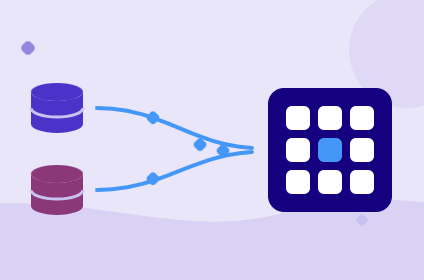
Quick answer: Most RAG pipelines re-index their vector store on a nightly or hourly batch …
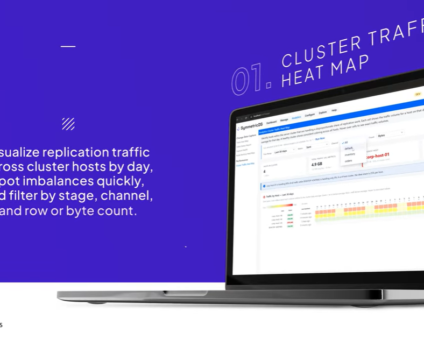
We built 3.18 because the question we kept hearing from customers changed. It used to …

Quick answer: Edge AI agents running on technician laptops, warehouse devices, or hospital workstations need …

Introduction In retail, POS updates have traditionally been quarterly events at best. From October through …

Jumpmind Powers Point of Sale and Promotions Execution for Landmark Retail, One of the Largest …
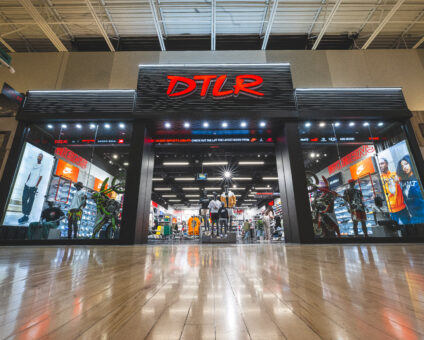
Retail Technology Leader Jumpmind to Enable Mobile Point of Sale and Inventory Management for DTLR/VILLA …
We built 3.18 because the question we kept hearing from customers changed. It used to …

The offering gives security teams a practical path to risk management and accountable AI COLUMBUS …

The insights have implications for retail technology in the store: it must help mind information …
Cloud-native POS platform for seamless omnichannel customer experience.
A single hub for all promotions campaigns.
A comprehensive solution designed to simplify and give you ownership of the inventory lifecycle.
A native post-transaction reconciliation module built into Jumpmind Commerce.
The most advanced synchronization solution for databases and file systems.
Data configuration and batch automation across different disparate systems and vendors.
The modern store sells, fulfills, returns, services, and advises. It does all of that with the same people who used to just ring transactions, on hardware bought across a decade of openings and acquisitions.
Store platform pages tend to answer that with a capability list. Long lists are easy to write and hard to evaluate, because a feature that exists is not the same as a feature an associate can reach in the middle of a conversation.
So this guide organizes the requirement the way a shift does: what has to happen at the counter, on the floor, in the stockroom, and after close.
Our research with RSR found 85% of retailers say stores remain their primary strategy for growth, while 84% of shopping journeys begin online. The store is where the journey lands rather than where it starts.
That changes what the software has to carry. A customer who researched online arrives knowing the specifications and wanting judgment. They want to collect an order, return something bought on the web, ask whether the other size exists nearby, and be treated like the brand knows them.
Meanwhile 65% of retailers say their current store technology cannot support where shopping is going, and 53% of those running a POS five years or older say it is holding them back.
The gap is not ambition. It is the platform.
Everything else in this guide depends on checkout being smooth and without incident.
A full transaction means mixed basket sales, measured items, product options like size and color, gift cards, split tendering, configurable receipts, price overrides, tax exemption, returns and exchanges. Jumpmind Commerce covers those as core capability rather than configuration projects.
Promotions belong in the same place. The promotions engine inside Jumpmind Commerce handles complex campaigns, manufacturer coupons, manual discounts and price overrides, with configurable promotion types and stackability rules, near-miss identification, and a built-in best deal algorithm. Near-miss matters on the floor: it lets an associate tell a customer they are one item away from the offer, which is a service moment rather than an upsell script.
Self-checkout runs the same software and business logic as the attended fixed lanes, with support for toggling between fixed and self-checkout modes and for dedicated self-checkout lanes. An attendant stepping in does not switch systems, and the store does not maintain two sets of rules.
CX Connect turns the customer-facing screen into an interactive channel during checkout rather than a passive receipt display, which is where purchase intent is highest and where most stores show a total and nothing else.
The store’s software has exactly one primary user, and it is the person standing on the sales floor.
In our study with RSR, 45% of retailers said associates spend too much time answering customer service questions and 42% said too much goes to technology support and maintenance. Toggling between systems. Walking to the back office to confirm stock. Relying on memory for details a shopper expected them to know instantly.
A great associate working with a fragmented set of systems will almost always deliver a worse experience than their potential would suggest. Not because they are not trying. The friction is real and it shows.
Four things remove it:
One application across every device. Fixed lanes, tablets, handhelds, self-checkout and POS on the Go run the same software, so a part-time hire in December learns one screen rather than three.
Customer context without a detour. Purchase history, loyalty tier, and relevant recommendations available where the conversation is happening, surfaced when the associate wants them rather than pushed at them. The associate stays in control of when and how information appears.
Selling anywhere. The same application and the same business processes on a mobile device outside the store’s four walls, whether that is a pop-up, a sidewalk sale, a garden centre or a mobile clinic. Petco extended Jumpmind Commerce to its mobile veterinary and grooming services, with geolocation-based tax services that adjust as the mobile unit rolls.
Visibility for the person running the shift. Shopkeeper is the store leadership tool built into Jumpmind Commerce, giving managers real-time visibility into operations, transactions and associate activity without leaving the sales floor.
The Vitamin Shoppe runs Jumpmind Commerce and Jumpmind Promote across nearly 700 locations. Chief Operating Officer Andy Laudato put the requirement in terms that include the people doing the work: “Jumpmind gives us the flexibility to deploy its highly intuitive user interface on both our existing traditional fixed till and mobile POS, for a seamless and exceptional checkout experience for both our valued customers and Health Enthusiast associates.”
Fulfillment moved into the store, which means receiving, picking and transfers are store work rather than warehouse work.
Jumpmind Inventory covers the store inventory lifecycle: receiving against ASNs, purchase orders and transfers, cycle counts, adjustments and ticket printing, and outbound movement through RTVs, RTWs and store-to-store transfers. Smart receiving workflows, in-store location awareness and built-in discrepancy resolution keep counts accurate from the moment stock arrives.
It uses the same interface as POS. Same look, single login, minimal clicks, which is what makes multitasking through a shift practical. One associate experience, every store, every inventory task.
It also works with the devices stores already use, including RFID, rather than requiring a separate handheld for stockroom work.
The day has to balance, and somebody has to do that.
Jumpmind Sales Audit is a native post-transaction reconciliation module built into Jumpmind Commerce. Every transaction from every location is captured and available the moment it closes. Because it shares the same platform as POS, it reads transactions exactly as they were entered, with no translation layer and no data lost in transit. Exception-based workflows detect discrepancies and route them rather than waiting for someone to find them.
The alternative is an overnight batch into a separate system, which means the day’s numbers are provisional until morning and exceptions surface a shift late.
None of the above survives a bad connection or a phased rollout unless the data layer is built for it.
Jumpmind Commerce is API-driven and cloud-native, deployable to any cloud or split between on-premise and cloud storage, with full offline support in store and multiple deployment strategies for different store formats. Microservices are encapsulated and reusable, so store capability extends without forking the platform.
Data replication is native to the platform: multi-tier distribution to thousands of remote locations, high availability with load balancing for continuous access, and live migration with no downtime during server replacements, storage upgrades and data center relocations. That is what lets a chain convert store by store while both generations of system stay in step.
Composable commerce is how it fits what you already own: microservices integrating into the CRM, order management and catalog already in place, rather than a rip-and-replace program around the store layer.
The pace is checkable. DTLR brought point of sale online across 200 additional City Gear stores in 24 hours with no on-site personnel, taking its total past 640 locations. American Eagle Outfitters completed conversion across its American Eagle and Aerie stores in the US and Hong Kong before expanding into Canada, Mexico and Japan.
Forrester named Jumpmind a Leader in The Forrester Wave™: Point-Of-Service Solutions, Q4 2024, with top scores including practitioner UX, custom checkout flow, digital payments, clienteling and assisted selling, store promotions, loyalty, endless aisle and offline resiliency.
Jumpmind is built for enterprise retail: distributed store fleets, real offline exposure, mixed hardware, and legacy software to retire in stages. Enterprise architecture asks more of you up front, and store profiles, payment certification, ERP mapping and rollout sequencing take planning a lighter deployment skips.
For simpler specialty retail with a few dozen doors, Lightspeed or Shopify POS will be faster and cheaper to stand up.
Jumpmind is also not a merchandising or order management suite, so those layers stay with your existing systems of record.
The platforms that come up most often in modern store platform evaluations are Jumpmind Commerce, Oracle Retail Xstore, Aptos, NCR Voyix, Manhattan Associates, Toshiba Global Commerce Solutions, Shopify POS and Lightspeed Retail. Confirm capability, offline behavior and integration coverage with each vendor directly.
Every Jumpmind customer is referenceable. Ask us for names at your store count.
What does a modern store platform need to do? Carry the full transaction, put customer context and inventory in an associate’s hand on the floor, handle store receiving and fulfillment, reconcile the day natively, and keep working when the connection drops. Everything else is configuration.
What is the difference between a POS and a store platform? A POS takes tender. A store platform runs store operations: promotions, the store inventory lifecycle, returns, associate workflows, fulfillment, and the reconciliation after the sale.
Why does the associate experience decide the outcome? Because a fragmented set of systems produces a worse experience than a capable associate would otherwise deliver. Our RSR study put numbers on it: 45% of retailers say associates spend too much time on service questions.
Should self-checkout run the same software as staffed lanes? Yes. Jumpmind Commerce runs the same software and business logic across both, with toggling between fixed and self-checkout modes, so an attendant stepping in does not switch systems and the store maintains one set of rules.
Where should store inventory work happen? On the same application and the same devices associates already use. Jumpmind Inventory shares the POS interface, so there is one login and one thing to learn.
Does reconciliation belong in the POS platform? It belongs wherever the transactions were recorded. Jumpmind Sales Audit is a module inside Jumpmind Commerce, so it reads transactions as entered with no translation layer and no overnight upload.
Can we modernize the store layer without replacing merchandising and ERP? Yes, and for most large retailers that is the requirement. Composable commerce integrates into the CRM, order management and catalog you already own.
A capability list tells you what a platform contains. A shift tells you what it does. Evaluate the store platform against the counter, the floor, the stockroom and the close, and require a demonstration for each rather than a description.
The one that wins is the one an associate can work faster on than the system they have now.
Explore Jumpmind Commerce or schedule a demo and we will walk it through against your own store operations.