The store is becoming a relationship, not just a transaction The store is being talked …



Cloud-native POS platform for seamless omnichannel customer experience.

A single hub for all promotions campaigns.

A comprehensive solution designed to simplify and give you ownership of the inventory lifecycle.

A native post-transaction reconciliation module built into Jumpmind Commerce.

The most advanced synchronization solution for databases and file systems.

Data configuration and batch automation across different disparate systems and vendors.
The store is becoming a relationship, not just a transaction The store is being talked …

I spent this week at eTail Boston, and if you looked at the agenda, you’d …

Consumers are expected to spend more than $146 billion on back-to-school shopping this year, and …

Quick answer: Agentic AI systems need data that is current, consistent across systems, available even …
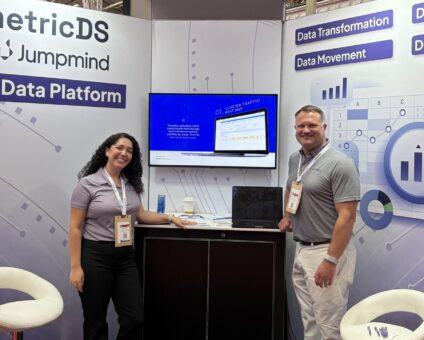
This was our second year at Big Data LDN, and attendance felt just as strong …
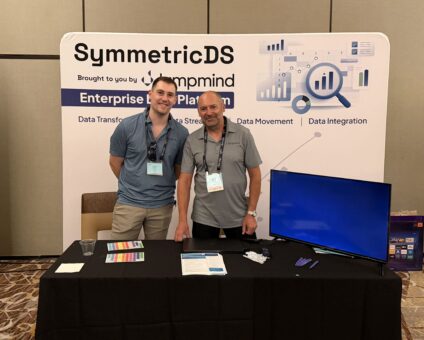
Our booth at TDWI Transform this year had a wider range of visitors than we …

Introduction In retail, POS updates have traditionally been quarterly events at best. From October through …

Jumpmind Powers Point of Sale and Promotions Execution for Landmark Retail, One of the Largest …
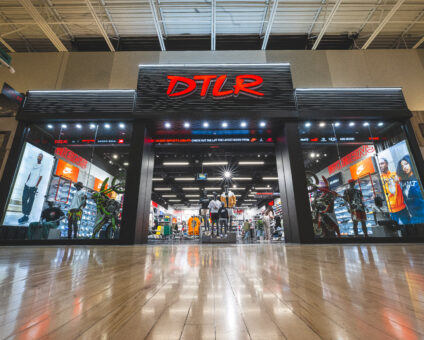
Retail Technology Leader Jumpmind to Enable Mobile Point of Sale and Inventory Management for DTLR/VILLA …
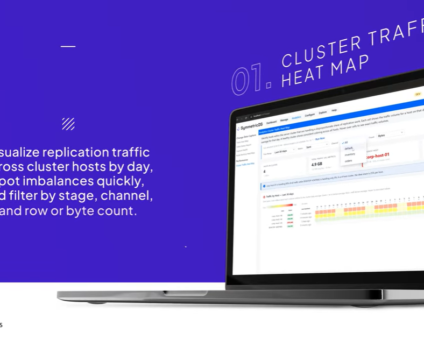
We built 3.18 because the question we kept hearing from customers changed. It used to …

The offering gives security teams a practical path to risk management and accountable AI COLUMBUS …

The insights have implications for retail technology in the store: it must help mind information …
Cloud-native POS platform for seamless omnichannel customer experience.
A single hub for all promotions campaigns.
A comprehensive solution designed to simplify and give you ownership of the inventory lifecycle.
A native post-transaction reconciliation module built into Jumpmind Commerce.
The most advanced synchronization solution for databases and file systems.
Data configuration and batch automation across different disparate systems and vendors.
Every cloud POS claims offline resilience. Almost none of them publish what it does.
That gap is the single most consequential thing a retail IT team cannot verify from a product page, because the difference between platforms only shows up on the day the link drops during peak trading. By then the contract is signed.
This guide covers the six levels of offline behavior, the ten questions that separate them, and what to require in writing.
Ask a vendor whether the POS works offline and the answer is yes. Ask which of these six it means and the conversation gets useful.
Level 1: read-only. The register can look up a price and nothing else. Selling stops.
Level 2: cash only. Transactions complete with cash tender. Cards wait for the connection.
Level 3: queued card payments. Card transactions are captured locally and submitted when connectivity returns, usually inside a defined window and with a per-transaction ceiling. Beyond that window or that value, the sale is declined.
Level 4: degraded function. Selling continues, but promotions do not resolve, loyalty is unavailable, and returns are blocked or require an override.
Level 5: full local function. The lane completes sales, applies promotions, resolves loyalty, and processes returns against locally held data, then reconciles when the link returns.
Level 6: full local function with automatic reconciliation. Level 5, plus conflicts resolve automatically on reconnect with no duplicate or orphaned transactions and no manual journal work.
Levels 1 through 4 are all honestly describable as “works offline.” Only 5 and 6 keep a busy store trading through a real outage.
Jumpmind Commerce is built for full offline support in store, with multiple deployment strategies so different store formats can be handled differently. The Paper Store’s Director of IT Operations described what that looks like in practice: “With our previous system, network outages meant immediate escalation to IT, frantic calls to vendors, and manual workarounds. With Jumpmind, the stores just keep running. We usually don’t even know there was an outage until we review the system logs.”
Not knowing there was an outage is the standard worth aiming for.
Offline capability is a property of architecture rather than a feature that can be added later.
Cloud-hosted usually means an existing application moved onto someone else’s infrastructure. It can still route every scan, price lookup and tender through a central instance, which makes the wide area network a dependency of checkout itself. Offline support gets bolted on as a cache, and a cache is why level 3 and level 4 exist.
Cloud-native means the software was designed to run distributed. Store nodes hold their own state, services deploy independently, and the lane is not waiting on a round trip to complete a sale.
Jumpmind Commerce is API-driven and cloud-native, deployable to any cloud or split between on-premise and cloud storage, with microservices that are encapsulated and reusable. Transactions execute locally, which is what makes level 5 the default rather than the upgrade.
Our breakdown of cloud-native versus legacy POS covers the structural differences in more depth.
Send these in writing and require written answers. A vendor who can answer all ten is telling you which level they actually deliver.
An untested runbook is a claim.
The single most useful thing you can do in a vendor evaluation takes ninety seconds.
Scan six items. Ask someone to pull the network cable. Watch the screen. Then complete the sale, process a return, look up a customer, and reconnect while you are standing there.
Do it during a promotion and do it on your own store network if you can, because store connectivity is rarely as clean as a demo environment.
If a vendor will not do this live, that is your answer.
An outage is not a ticket to a store team. It is a line of customers, a suspended sale, and no way to check whether the item exists in the back.
Our RSR study found 85% of retailers count on stores as their primary route to growth. An outage is an hour of that, concentrated into the worst possible hour, and the store team absorbs all of it.
What a store team needs during one is narrow and specific. Keep selling. Know that the transactions are safe. Not have to write anything on paper. Not have to explain to a customer that the system is down.
What they need after one is even narrower: nothing. No manual journal entries, no receipt matching on Monday morning, no reconciliation spreadsheet. The recovery should be invisible to the store, which is the difference between level 5 and level 6.
Store associates are already good at their jobs. During an outage the only question is whether the software lets them keep doing it.
Full local function is half the requirement. Getting the data back in step is the other half, and it is the half that decides whether Monday is quiet.
Replication is native to Jumpmind Commerce: multi-tier distribution to thousands of remote locations, high availability with load balancing for continuous data access, automatic queuing and recovery when a location goes offline, and data validation that detects and repairs discrepancies rather than reporting them. Live migration runs with no downtime during server replacements, storage upgrades and data center relocations.
That same layer is what lets a chain convert store by store during a rollout, with converted and unconverted stores holding the same pricing, inventory and transaction data while both are live.
Jumpmind Sales Audit closes the loop. It is a native post-transaction reconciliation module built into Jumpmind Commerce, reading transactions exactly as they were entered with no translation layer, with exception-based workflows that detect discrepancies and route them. After an interruption, somebody has to prove the day’s numbers balance, and this is where that happens.
Resilience belongs in the cost model, because leaving it out makes the cheapest quote look cheapest.
Price one hour of checkout downtime in a flagship store during peak. Then compare that number against the difference between two quotes. Our write-up on the true cost of POS downtime covers how to build it.
Also budget the network side: redundant connectivity, in-store wireless coverage including stockrooms, and failover testing. Offline capability reduces how much that matters. It does not remove it.
Jumpmind is built for retailers with real offline exposure: distributed store fleets, stores on connections you do not control, and peak trading days where an hour matters.
If your stores sit on reliable enterprise connectivity in a single market and peak volume is modest, offline behavior will not be your deciding criterion, and a platform chosen on other grounds may serve you well. We would rather say that than sell resilience to someone who does not need it.
For simpler specialty retail with a few dozen doors, Lightspeed or Shopify POS will be faster and cheaper to stand up.
The platforms that come up most often in enterprise POS evaluations are Jumpmind Commerce, Oracle Retail Xstore, Aptos, NCR Voyix, Manhattan Associates, Toshiba Global Commerce Solutions, Shopify POS and Lightspeed Retail. Every one of them publishes its own offline documentation. Get the specifics in writing for your store count rather than working from a category page.
Forrester named Jumpmind a Leader in The Forrester Wave™: Point-Of-Service Solutions, Q4 2024, with top scores including offline resiliency, practitioner UX and custom checkout flow. Every Jumpmind customer is referenceable, so ask us for names at your store count.
Does cloud POS work when the internet goes down? It depends entirely on the architecture. Six different behaviors get described as “works offline,” ranging from price lookup only to full local function with automatic reconciliation. Ask which one you are being sold and require a live demonstration.
What does offline-first mean? The lane keeps full function locally, including promotions, loyalty lookups and returns, then reconciles when the connection returns. It is a property of a distributed architecture rather than a cache added to a centralized one.
How long can a store keep selling offline? Ask for the number in writing, and ask what degrades first as the outage lengthens. The answer varies by platform and by deployment.
Can card payments be taken offline? Sometimes, within a defined window and often with a per-transaction ceiling set by the processor and card brands. Confirm the window, the ceiling, and what happens to a sale that exceeds either.
What happens to transactions when the network comes back? They should replay automatically with no duplicates and no orphaned records, with conflicts resolved by documented rules. Ask who owns the exceptions that cannot resolve automatically.
How do we test offline behavior in a demo? Scan six items, pull the network cable, then complete the sale, process a return and look up a customer before reconnecting. Do it on a handheld as well as a fixed lane, and during an active promotion.
What is the difference between cloud-native and cloud-hosted for offline? Cloud-hosted software often routes every scan and tender through a central instance, so offline support arrives as a cache. Cloud-native software runs distributed, with store nodes holding their own state, so the lane is not waiting on a round trip.
Should offline capability be in the cost model? Yes. Price one hour of checkout downtime in a flagship store at peak and compare it against the gap between quotes.
Offline resilience is the claim every vendor makes and almost none of them specify. Six behaviors share the word, and only two of them keep a busy store trading through a real outage.
Send the ten questions, require written answers, and ask for the cable test in front of you. The platform worth choosing is the one where nobody in the store notices the outage until somebody reads the logs.
Explore Jumpmind Commerce or schedule a demo and we will run the cable test on your own store network.