The store is becoming a relationship, not just a transaction The store is being talked …



Cloud-native POS platform for seamless omnichannel customer experience.

A single hub for all promotions campaigns.

A comprehensive solution designed to simplify and give you ownership of the inventory lifecycle.

A native post-transaction reconciliation module built into Jumpmind Commerce.

The most advanced synchronization solution for databases and file systems.

Data configuration and batch automation across different disparate systems and vendors.
The store is becoming a relationship, not just a transaction The store is being talked …

I spent this week at eTail Boston, and if you looked at the agenda, you’d …

Consumers are expected to spend more than $146 billion on back-to-school shopping this year, and …

Quick answer: Agentic AI systems need data that is current, consistent across systems, available even …
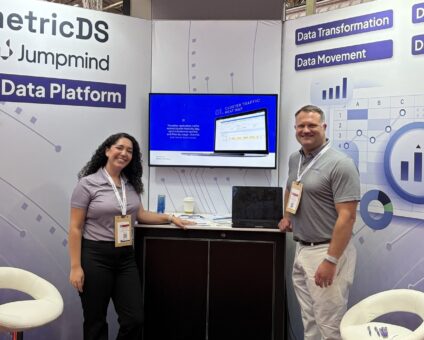
This was our second year at Big Data LDN, and attendance felt just as strong …
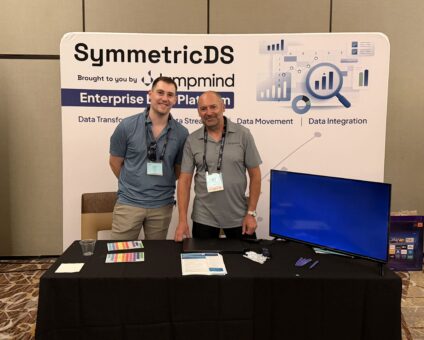
Our booth at TDWI Transform this year had a wider range of visitors than we …

Introduction In retail, POS updates have traditionally been quarterly events at best. From October through …

Jumpmind Powers Point of Sale and Promotions Execution for Landmark Retail, One of the Largest …
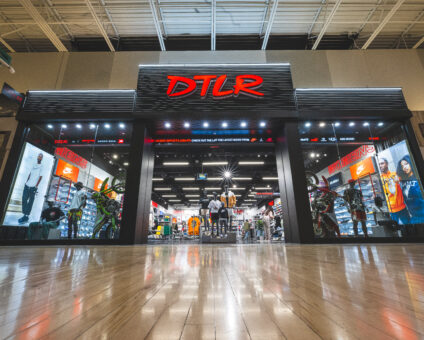
Retail Technology Leader Jumpmind to Enable Mobile Point of Sale and Inventory Management for DTLR/VILLA …
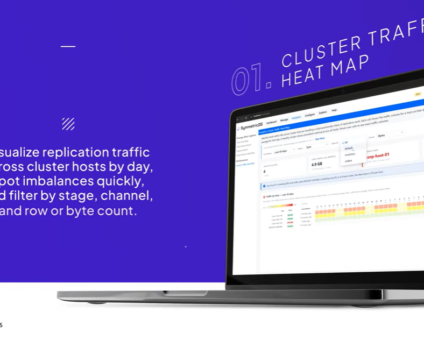
We built 3.18 because the question we kept hearing from customers changed. It used to …

The offering gives security teams a practical path to risk management and accountable AI COLUMBUS …

The insights have implications for retail technology in the store: it must help mind information …
Cloud-native POS platform for seamless omnichannel customer experience.
A single hub for all promotions campaigns.
A comprehensive solution designed to simplify and give you ownership of the inventory lifecycle.
A native post-transaction reconciliation module built into Jumpmind Commerce.
The most advanced synchronization solution for databases and file systems.
Data configuration and batch automation across different disparate systems and vendors.
You usually need retail inventory management software even when your POS already handles sales. A POS records what happens at the lane. It does not keep a stock truth that survives transfers, returns, receiving errors, and fulfillment picks across stores. Jumpmind Commerce closes that gap by bringing checkout, inventory, and fulfillment into one associate workflow.
Retail inventory management software is the shared record of what you can sell, where it sits, and how it moves across stores, distribution points, and digital channels. A POS captures the payment, which answers a different question. Inventory software answers the question behind the sale: what is actually available, and where is it?
The software tracks stock events that do not pass through checkout, including receiving, transfers, cycle counts, damages, returns, and picks for pickup or ship-from-store orders. Without that record, each store drifts toward its own version of the truth.
Jumpmind Commerce avoids that separate back-office screen. The associate stays in the checkout workflow while the system carries the inventory record on the same screen. Use the store inventory and fulfillment guide to verify what to check before you buy.
That split matters because the POS completes the sale while the inventory layer keeps the promise behind the sale, such as pickup availability or a cross-store transfer.
That split shows up most clearly in multi-store operations. A unit can be transferred, misplaced, damaged, returned to the wrong location, or picked for shipment without ever crossing a POS lane. The system of record drifts, and the shelf no longer matches the screen.
Seventy percent of retailers experience inventory-accuracy problems weekly or monthly, IHL Group’s The End of Good Enough report found in 2025. That means drift is a recurring outcome of separate transaction and inventory records. Inventory visibility ranked the second-highest technology priority among retailers in that research, behind personalization, so store-level count accuracy has become an operational priority.
For an associate, that drift shows up as an extra walk to the back room or an apology at the register. Customer choice follows the same issue. Thirty-seven percent of surveyed shoppers rank in-stock reliability among their top three reasons for choosing a retailer, McKinsey’s 2026 Shopping in the age of AI survey shows. The same survey finds shoppers increasingly expect immediate access to inventory and delivery-timing information.
These are the limits that retail inventory management software exists to close. Real-time inventory sync checks are the practical correction to those POS inventory limitations. They verify whether adjustments, transfers, and fulfillment events update the count at the same pace as the sale. Compare how systems handle that timing with real-time inventory sync checks.
Live inventory sync changes associate inventory workflows by removing the system switch between checkout and stock questions. Without that sync, an associate checks one system for the sale, switches to another for stock, and then walks to the back room to verify the shelf. Each extra step adds wait time and cognitive load.
With live sync, the current stock position sits next to the sale. The associate can answer whether another store has an item without turning away from the customer. The same screen can show store availability, open pickup orders, and ship-from-store options as part of the sale.
Petco uses Jumpmind Commerce at the point of sale to bring omnichannel order data into the lane. That means the associate sees pickup demand, such as an order about to consume a unit, while finishing the current purchase. The Petco omnichannel POS story shows that connection in a live store environment.
The effect is less swivel-chairing between systems and a shorter path from question to answer. Less training time follows when the associate uses one familiar screen instead of remembering which system holds which fact.
Store inventory accuracy is the base layer for omnichannel inventory visibility. A pickup promise, a ship-from-store decision, or a cross-store transfer is only as good as the store count behind it. When the record matches the shelf, the fulfillment system can commit stock with fewer exceptions. When it drifts, the same promise creates a cancellation or a manual override.
AI-based optimization depends on that same base. AI-enabled supply-chain management has reduced inventory costs by 10% to 20% and stockouts by up to 30% in retail applications, McKinsey’s 2026 Europe e-commerce agenda report estimates. Those gains assume the system can see an accurate starting position. Feeding a stale store count to a smart model automates a wrong answer faster.
A leading omnichannel retailer reduced stockouts by more than 25% while lowering working-capital requirements through AI-based demand and inventory optimization, the same 2026 McKinsey Europe e-commerce agenda report notes. That outcome means fewer missed sales and less cash tied up in inventory. The same retailer still needed store-level accuracy as the input.
Omnichannel inventory visibility depends on a store data project that starts at receiving, transfers, and the associate-facing screens where corrections get made.
Evaluate retail inventory management software as a layer beside your current POS, without treating it as a reason to replace it. The first question to ask a vendor is for live rollout evidence with a named retailer. Jumpmind’s work with DTLR brought 200 additional stores onto a new point of sale inside a 24-hour window, which shows an inventory project can move through a large store base without removing stores from service for days.
Jumpmind Commerce runs on the terminals and handhelds stores may already use, so a software project does not need a full hardware refresh before the inventory workflow improves.
Then measure the associate workflow. Count the steps between a customer’s question about another store and the answer on screen. The inventory software vs POS question comes down to how many screens sit between that question and the answer. A pilot on the devices you already run gives you a live comparison without committing the whole chain.
Most multi-store retailers do. A POS records sales at checkout. Retail inventory management software tracks stock across receiving, transfers, returns, and fulfillment, so the count stays useful between sales. Jumpmind Commerce keeps checkout and inventory in one associate workflow so you do not add a separate back-office login.
IHL Group’s 2025 report The End of Good Enough found that 70% of retailers experience inventory-accuracy problems weekly or monthly. That means most operations correct drift often, not once a quarter. Transfers, returns, and picks that never pass through the POS cause that drift.
No. You can keep the POS that already fits your stores. Inventory software sits beside it as the stock truth layer. Jumpmind Commerce runs on terminals and handhelds stores may already use, so the current checkout estate can stay while inventory and fulfillment join the workflow.
Correct the record at the point of sale, not in a separate back-office system later. The associate should be able to trigger a cycle count or adjustment from the same screen. Jumpmind Commerce keeps the correction on the same screen as checkout, so the customer does not wait while stock counts are reconciled.
Real-time inventory sync lets the pickup promise use the current store count. When an online order reserves a unit, the store sees that commitment and the shelf count drops. Jumpmind Commerce brings that order data into the lane, so a pickup order does not collide with a walk-in sale.
Start with current accuracy by store, exception rates from receiving and transfers, and the time associates spend checking counts across systems. Include pickup and ship-from-store exception rates in that baseline, because those orders expose where the store count has to work hardest. That baseline shows where the added software should reduce steps first.
Run a small pilot in a few stores on the devices already in use. Measure associate steps, stock accuracy, and fulfillment exceptions before and after. Jumpmind Commerce runs on terminals and handhelds stores may already have, so the pilot can start without a hardware reset. Start that pilot with Jumpmind on a floor walk at a few stores.