The store is becoming a relationship, not just a transaction The store is being talked …



Cloud-native POS platform for seamless omnichannel customer experience.

A single hub for all promotions campaigns.

A comprehensive solution designed to simplify and give you ownership of the inventory lifecycle.

A native post-transaction reconciliation module built into Jumpmind Commerce.

The most advanced synchronization solution for databases and file systems.

Data configuration and batch automation across different disparate systems and vendors.
The store is becoming a relationship, not just a transaction The store is being talked …

I spent this week at eTail Boston, and if you looked at the agenda, you’d …

Consumers are expected to spend more than $146 billion on back-to-school shopping this year, and …

Quick answer: Agentic AI systems need data that is current, consistent across systems, available even …
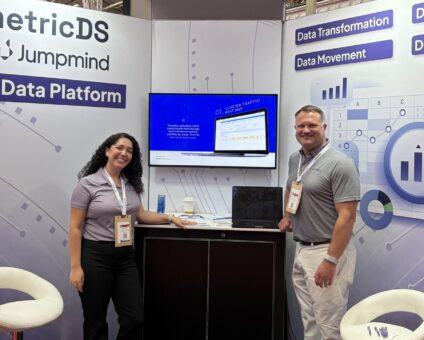
This was our second year at Big Data LDN, and attendance felt just as strong …
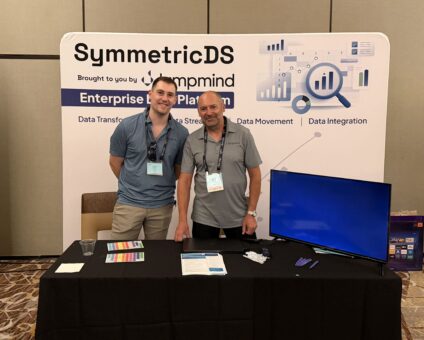
Our booth at TDWI Transform this year had a wider range of visitors than we …

Introduction In retail, POS updates have traditionally been quarterly events at best. From October through …

Jumpmind Powers Point of Sale and Promotions Execution for Landmark Retail, One of the Largest …
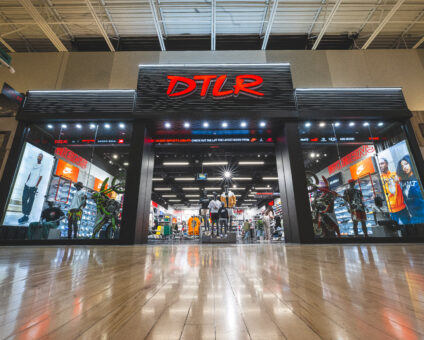
Retail Technology Leader Jumpmind to Enable Mobile Point of Sale and Inventory Management for DTLR/VILLA …
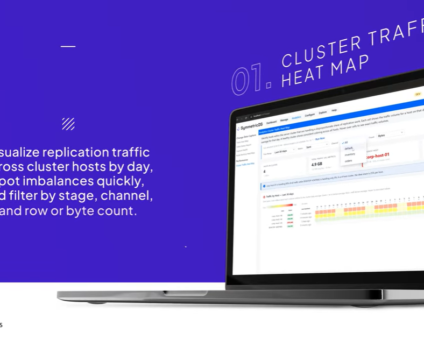
We built 3.18 because the question we kept hearing from customers changed. It used to …

The offering gives security teams a practical path to risk management and accountable AI COLUMBUS …

The insights have implications for retail technology in the store: it must help mind information …
Cloud-native POS platform for seamless omnichannel customer experience.
A single hub for all promotions campaigns.
A comprehensive solution designed to simplify and give you ownership of the inventory lifecycle.
A native post-transaction reconciliation module built into Jumpmind Commerce.
The most advanced synchronization solution for databases and file systems.
Data configuration and batch automation across different disparate systems and vendors.
Not every cloud POS keeps selling when the internet drops. That single difference separates the platforms built for a few locations from the ones built for a few hundred, and it should shape the evaluation before anyone compares feature lists or pricing.
Choosing cloud POS software for a large chain is an architecture decision. What you are choosing is how transactions, prices, inventory, and customer records move between hundreds of stores and the systems behind them.
This guide covers what enterprise requirements actually demand, who the main providers are, and what to verify before you sign.
A chain running hundreds of locations needs three things a smaller footprint does not.
The lane has to keep trading through a network outage, because a store with 40 lanes on the Saturday before a holiday cannot pause selling because a circuit flaps. Data has to replicate back to the enterprise cleanly, so head office is not reconciling two versions of the day by hand. And the screen has to stay learnable for a seasonal hire in December, when the person who needs it most has been there four days.
Add store count and those requirements compound rather than scale. An offline window that is a footnote in one store becomes a continuity plan across eight hundred.
Cloud-hosted and cloud-native are also not interchangeable. Hosting older software in someone else’s data center still leaves the register dependent on the link between them. Software designed to run distributed keeps the lane working locally and reconciles afterward.
Separating them makes every later question more honest.
Cloud-native means the software was designed to run distributed and update continuously. Services deploy independently, store nodes hold their own state, and releases ship without a store-by-store upgrade weekend.
Cloud-hosted usually means an existing application moved onto someone else’s infrastructure. It can still route every scan, price lookup, and tender through a central instance, which makes the wide area network a dependency of checkout itself.
Offline-first is the one enterprise buyers most often assume they are already getting. It means the lane keeps full function locally, including promotions, loyalty lookups, and returns, then reconciles when the link returns.
Ask which of the three you are being sold, then ask to see it.
The platforms that come up most often in cloud POS evaluations are Jumpmind Commerce, Oracle Retail Xstore, Aptos, NCR Voyix, Manhattan Associates, Toshiba Global Commerce Solutions, Shopify POS, Lightspeed Retail, Square, Clover, and Toast.
Every one of them publishes its own architecture, offline behavior, and integration documentation. Ask each vendor directly rather than working from a category page or a roundup, because the answers change by deployment and by contract, and a comparison written by somebody else was written for a different retailer.
Jumpmind is built for enterprise retail: distributed store fleets, real offline exposure, and legacy software to retire in stages. For simpler specialty retail with a few dozen doors, Lightspeed or Shopify POS will be faster and cheaper to stand up, and we would rather say so than win a project that does not fit.
“Real time” only means something once you define what moves. Ask each vendor to show sync behavior for all five inventory events: on-hand counts, transfers between stores, receipts from distribution, returns, and manual adjustments.
That last one matters most. A platform that updates at checkout but batches adjustments overnight will still send an associate to the back room for stock written off yesterday.
Sales data runs on a different clock for each consumer of it. Associates need a transaction visible for a return within seconds. Replenishment needs it before the next order cycle. Finance needs it complete rather than fast. Ask for target latency on each, and what those numbers become when a thousand stores post at once on the Saturday before Christmas.
The harder test is recovery. When a store drops off the network and comes back, does the platform resolve conflicting records automatically, or does a manager spend Monday morning matching receipts by hand? Ask for the conflict resolution rules in writing, then test latency against your own store network before you sign.
Jumpmind Inventory covers the store inventory lifecycle directly: receiving against ASNs, purchase orders and transfers, cycle counts, adjustments, ticket printing, and outbound movement through RTVs, RTWs and store-to-store transfers. It runs the same interface as POS, so there is one login and one thing to learn.
Six systems decide whether a store platform actually fits: ERP, accounting and the general ledger, inventory, promotions, loyalty, and the reporting layer. Everything else is secondary.
Connector counts in a marketplace tell you very little. A logo grid confirms a pipe exists, not that it carries the fields finance and merchandising need at the timing they need them. Ask four questions instead:
That last point is where implementations get expensive. Jumpmind Sales Audit is a native post-transaction reconciliation module built into Jumpmind Commerce, which keeps the handoff after the sale inside the same system that recorded it. Jumpmind Promote runs promotions campaigns from a single hub so store and digital prices execute from the same rules.
Three integrations you would otherwise build and maintain, and each one removed is a place data can no longer disagree.
Tap to Pay turned a phone into a card reader, which matters less at the register than it does thirty feet away next to the fitting room. Accepting contactless payment on the same device an associate already uses for lookups and transfers collapses several steps into one conversation, and it means the associate never has to say “let me go check.”
Before rollout, verify four things: role-based permissions on a device that leaves the counter, receipt and return flows that survive a mobile sale, offline behavior with a defined reconnection window, and PCI scope for personal versus corporate hardware.
Jumpmind builds mobile store and POS on the Go around the associate as the primary user, with device independence across iOS, Android, Windows, Linux and Mac so the hardware decision stays yours. Petco extended Jumpmind Commerce to its mobile veterinary and grooming services, with geolocation-based tax services that adjust as the mobile unit rolls.
Payment support changes frequently, so confirm current terms directly with any provider.
Three things get bundled together and should not be. Payment acceptance is how a card is read. PCI scope is which systems touch cardholder data and therefore fall under audit. Store-system security is everything else: device provisioning, identity, network segmentation, and patching across every location.
Moving card data off in-store servers can shrink the audit surface, but PCI DSS compliance stays shared. The vendor certifies its environment. You still own segmentation, device management, and store-level access control. Ask any provider for its current attestation of compliance and its documented responsibility matrix.
Then ask the outage questions. Where is the token stored while the store is disconnected, and for how long? What device controls apply if that hardware is lost mid-outage? How does the system reconcile offline sales against the journal after reconnect, and who owns the exceptions?
The system diagram leaves out the person at the counter with a line forming behind them. That person absorbs whatever the architecture gets wrong, and they absorb it every shift.
Our research with RSR found 45% of retailers believe their associates spend too much time answering customer service questions, and 42% say too much time goes to technology support and maintenance. Store teams are not the constraint. The software in their hands is.
So test the platform the way a store team will use it. Time a cross-channel return of a promotionally discounted item. Count the taps. Run a customer lookup that spans web and store history. Do it during a realistic shift with interruptions, and log the errors.
Training time is the measurable version of the same thing. Craig Hewitt, Chief Operating Officer of The Paper Store, reported that “Jumpmind Commerce’s modern, intuitive user interface has reduced our associated training requirements from 3 hours to 15 minutes,” across staff ranging from 16 to 80 years old. Multiply your own number by annual turnover across every store.
Build-A-Bear Workshop’s Chief Technology Officer, Dara Meath, framed the requirement this way: “Our Bear Builder store associates are a vital part of the Build-A-Bear Workshop experience. Our commitment to providing our associates with the most advanced in-store retail technology ensures they are not only given a 360-degree view of our guests, their previous interactions and preferences, but also can offer a shared interactive and personalized journey to enrich each guest’s visit.”
Subscription is the line item buyers see first and the one that predicts total cost worst. Model six buckets: subscription, implementation and integration, hardware and peripherals, support, payment processing, and network resilience including redundant connectivity and failover testing.
Cloud POS software is usually quoted per store or per device per month, which reads cleanly on a slide. The complexity moves rather than disappears. Connecting accounting, ERP, inventory, and replication is where the hours accumulate, and a rollout across hundreds of stores carries training and change management that no license schedule shows.
Ask whether the platform is processor agnostic before comparing headline payment rates, because large retailers usually hold negotiated acquirer relationships already.
Compared with on-premise, cloud moves spend from capital to operating expense and trades control of the release calendar for continuous updates. Price one hour of checkout downtime in a flagship store, then compare the quotes again.
Jumpmind Commerce is built for chains that need the lane to keep selling through an outage, data to replicate back to the enterprise cleanly, and a screen a seasonal hire can learn in a shift.
Build-A-Bear Workshop runs Jumpmind Commerce and Jumpmind CX Connect across more than 450 stores in the US, UK and Canada. The Paper Store went live on more than 800 Apple iPad and iPhone devices across 105 locations in four weeks. DTLR brought point of sale online across 200 additional City Gear stores in 24 hours with no on-site personnel, taking its total past 640 locations. Forrester named Jumpmind a Leader in The Forrester Wave™: Point-Of-Service Solutions, Q4 2024.
Enterprise architecture asks more of you up front. Store profiles, payment certification, ERP mapping, and rollout sequencing take planning that a lighter deployment skips. For simpler specialty retail with a few dozen doors, Lightspeed or Shopify POS will be faster and cheaper to stand up.
Jumpmind is also not a merchandising or order management suite, so those layers stay with your existing systems of record.
Every Jumpmind customer is referenceable. Not most of them. Ask us for names at your store count, and ask the same of everyone on your list.
Who are the top cloud POS providers? The platforms that come up most often are Jumpmind Commerce, Oracle Retail Xstore, Aptos, NCR Voyix, Manhattan Associates, Toshiba Global Commerce Solutions, Shopify POS, Lightspeed Retail, Square, Clover, and Toast. Confirm architecture, offline behavior and integration coverage with each vendor directly.
Which cloud POS vendor is best for enterprise retailers? The one that keeps trading offline, replicates cleanly at your store count, and trains fast. Score those three before features, and ask for measured numbers and named references on all three.
What is the most reliable cloud POS solution for syncing inventory in real time? Ask for latency in seconds and sync behavior across on-hand counts, transfers, receipts, returns, and adjustments, plus what happens at peak and how conflicts resolve after a store reconnects.
What cloud POS solution is best for businesses needing offline mode capability? Require full function at the lane while disconnected, including promotions, loyalty lookups, and returns, then automatic reconciliation on reconnect with no duplicate or orphaned transactions.
How much does cloud POS software cost? Usually quoted per store or per device per month. Model five years across subscription, implementation, hardware, support, processing, and network resilience.
Is cloud POS better than on-premise POS? Cloud moves spend to operating expense and ships updates continuously. On-premise keeps control and upgrade timing in-house, which in practice tends to mean later. The deciding factor is usually how fast you need to change.
Which cloud POS is most user-friendly for new staff? Ask for measured training time at a retailer your size. The Paper Store measured 15 minutes, down from 3 hours, across staff aged 16 to 80.
What is the best cloud POS for integrating with existing accounting software? Ask which objects the API exposes, whether writes are supported, and whether tender, tax, and journal data reach the general ledger without a manual step.
What is the most secure cloud POS option for processing payments? Ask for the current attestation of compliance and the shared responsibility matrix. The vendor certifies its environment, and you still own segmentation and device management.
Which cloud POS system handles high transaction volumes without lag? Ask for transactions per second per store and per chain at peak, plus incident reports from named deployments.
Which cloud POS can sync sales data across multiple devices quickly? Look at the replication architecture rather than the claim. Multi-tier distribution and multi-master both matter at scale.
What is the best cloud POS software for mobile payments? Ask whether the platform is processor agnostic, whether mobile runs the same workflow and promotion logic as the fixed lane, and how mobile sales reconcile after an outage.
Cloud POS at enterprise scale comes down to three things: whether the lane keeps selling when the link drops, whether data gets back to the enterprise clean, and whether the person at the counter can work faster than they did before.
Ask every vendor to demonstrate all three rather than describe them, and call two references at your store count.
Explore Jumpmind Commerce or schedule a demo to work through those three against your own store list.