The store is becoming a relationship, not just a transaction The store is being talked …



Cloud-native POS platform for seamless omnichannel customer experience.

A single hub for all promotions campaigns.

A comprehensive solution designed to simplify and give you ownership of the inventory lifecycle.

A native post-transaction reconciliation module built into Jumpmind Commerce.

The most advanced synchronization solution for databases and file systems.

Data configuration and batch automation across different disparate systems and vendors.
The store is becoming a relationship, not just a transaction The store is being talked …
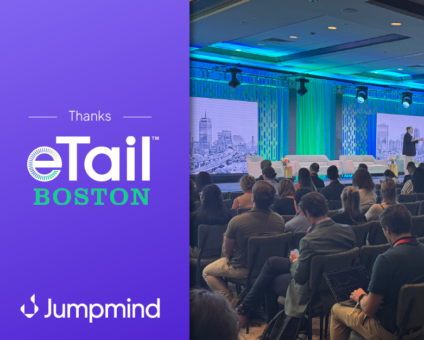
I spent this week at eTail Boston, and if you looked at the agenda, you’d …

Consumers are expected to spend more than $146 billion on back-to-school shopping this year, and …

Quick answer: Agentic AI systems need data that is current, consistent across systems, available even …
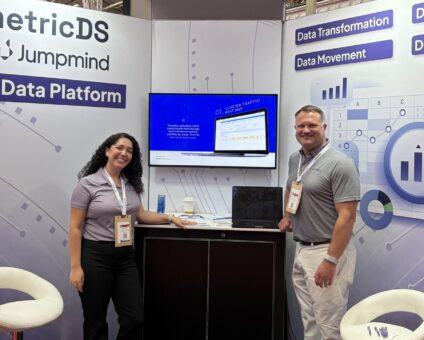
This was our second year at Big Data LDN, and attendance felt just as strong …
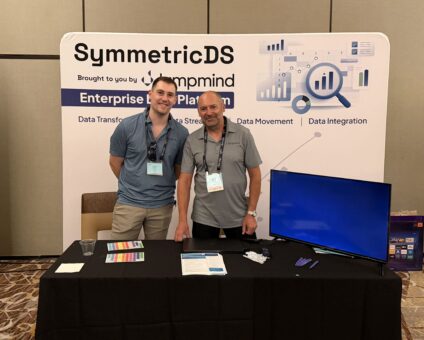
Our booth at TDWI Transform this year had a wider range of visitors than we …

Introduction In retail, POS updates have traditionally been quarterly events at best. From October through …
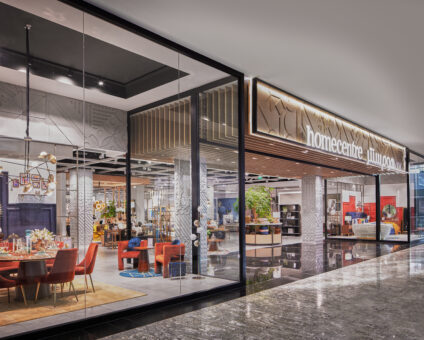
Jumpmind Powers Point of Sale and Promotions Execution for Landmark Retail, One of the Largest …
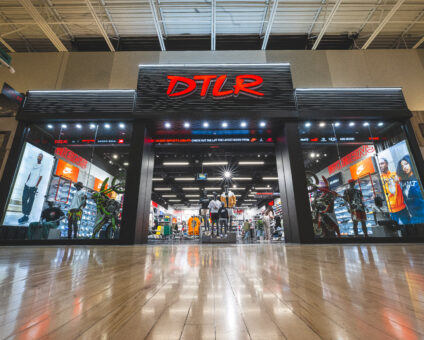
Retail Technology Leader Jumpmind to Enable Mobile Point of Sale and Inventory Management for DTLR/VILLA …
We built 3.18 because the question we kept hearing from customers changed. It used to …

The offering gives security teams a practical path to risk management and accountable AI COLUMBUS …

The insights have implications for retail technology in the store: it must help mind information …
Cloud-native POS platform for seamless omnichannel customer experience.
A single hub for all promotions campaigns.
A comprehensive solution designed to simplify and give you ownership of the inventory lifecycle.
A native post-transaction reconciliation module built into Jumpmind Commerce.
The most advanced synchronization solution for databases and file systems.
Data configuration and batch automation across different disparate systems and vendors.
In-store personalization runs on five tool categories: clienteling applications that give associates customer context, promotions engines that target offers by customer and location, customer data platforms that unify the profile, point of sale systems that surface all of it at the moment of transaction, and customer-facing displays that make the personalization visible to the shopper. Most enterprise retailers already own several of these. What usually breaks is access, because the data sits in systems the associate cannot reach while standing next to the customer.
In-store personalization is the practice of tailoring a physical shopping interaction to an individual customer using data the retailer already holds about them, including purchase history, loyalty status, online browsing, returns, and stated preferences.
That definition carries a constraint. Online personalization happens inside a system the customer is already using. In-store personalization has to travel through a person. An associate either has the customer’s context in hand during the conversation, or the personalization does not happen, however good the model behind it is.
Consumer demand for personalization is well established and has been for years. McKinsey’s widely cited pair, 71% of consumers expecting personalized interactions and 76% getting frustrated when it does not happen, comes from research published in November 2021 and restated by the firm in January 2025. Zebra Technologies reported in its 18th Annual Global Shopper Study, published in 2025, that 84% of shoppers want enhanced in-store personalized advertising, which speaks to offers rather than to service.
The execution data is more useful to an enterprise IT audience. Incisiv, in its 2025 Connected Retail Experience Study with Verizon Business and Cisco, found that only 13% of retailers are satisfied with their current personalization strategies. Research from Retail Systems Research that we sponsored, fielded in December 2024 and January 2025, found 85% of retailers naming stores as their primary growth channel while only 47% said their POS systems support innovative experiences.
Stores carry the growth expectation. The system at the center of the store frequently cannot deliver the experience the strategy assumes.
| Tool category | What it does | Where it sits | Common failure mode |
|---|---|---|---|
| Clienteling application | Gives associates customer history, preferences, and recommendations | Associate mobile device | Runs as a separate app the associate has to leave the sale to open |
| Promotions engine | Targets and validates offers by customer, product, and location | Central, executed at POS | Offers configured centrally that misfire at the register with no fast fix |
| Customer data platform | Unifies profile data across channels | Central | Profile is complete but never reaches the store in real time |
| Point of sale | Surfaces context and applies offers at the transaction | Store, every device | Built for a fixed register, so context arrives after the conversation ended |
| Customer-facing display | Shows the shopper their own basket, offers, and loyalty status | Checkout counter | Treated as a signage surface instead of part of the transaction |
These failure modes come from our own implementation experience and from what retailers describe when they move off a prior platform, so they are observations rather than measured findings. The pattern across them is consistent: each tool works, and the handoffs between them are where personalization degrades.
Clienteling is the category most directly associated with in-store personalization, and the one most often deployed as a standalone application. An associate opens a tablet app, looks up the customer, reads their history, closes the app, and returns to the conversation.
That sequence breaks personalization in practice. Our AX Insights study, published in June 2026, is qualitative research with store associates about their daily experience of retail technology. Two of its themes bear directly on clienteling. The first is an information gap, where associates lack the data needed to deliver personalized service at the moment they need it. The second is cognitive overwhelm, where technology complexity pulls attention away from the customer standing in front of them.
The design implication is specific. Customer context should be pre-generated and present when the associate opens the transaction, rather than requiring a retrieval step mid-conversation. Jumpmind Engage works that way, surfacing customer context and recommendations inside the point of sale workflow.
An associate who has to navigate to personalization will do it on a slow Tuesday and skip it on a busy Saturday. Andy Laudato, EVP and COO at The Vitamin Shoppe, framed the adoption test from the retailer’s side: “One of the best things about Jumpmind is that both our customers and Health Enthusiasts (Store Associates) love it.” The Vitamin Shoppe moved roughly 690 company-operated US stores from Aptos Store 6 and Aptos ONE to Jumpmind Commerce and Promote.
Targeted promotions are the most concrete form of in-store personalization and the easiest to measure. McKinsey reported in January 2025 that 65% of consumers cite targeted promotions as a top purchase motivator, and that targeted promotions delivered a 1% to 2% sales lift with a 1% to 3% margin improvement in the retail pricing work that study covers. Those figures describe promotion targeting specifically, not personalization programs generally.
The execution problem is usually organizational. Promotions get built in one system, validated in another, and applied in a third, so a stackability conflict or a location exclusion error surfaces at the register in front of a customer. Jumpmind Promote centralizes campaign building with reusable templates, configurable promotion types, stackability rules, location-based inclusions and exclusions, and a best-deal algorithm.
The capability we would point an operations leader at first is near-miss identification, which flags when a customer came close to qualifying for an offer so the associate can say so out loud. Most promotion personalization is decided before the customer arrives. Near-miss happens inside the conversation.
Any in-store personalization program eventually runs into a counter-level question: who asks the customer for their information, what exactly they say, and how long it adds to the transaction.
Research from The Trade Desk, an advertising technology company with a commercial interest in this finding, fielded with YouGov across 2,149 US adults in late 2023, found 74% would be willing to share personal information with brands and retailers when prompted, and 58% would do so if the only requirement was providing an email address. The top motivations were coupons and deals at 33% and product price at 30%.
Willingness in a survey is not the same as a repeatable counter interaction. The operational questions are whether identification happens before the transaction or at tender, whether the associate has to type anything, how consent is recorded and honored across channels, and what the shopper gets in return that is visible to them in that moment. A personalization roadmap that skips these will produce a high anonymous-transaction rate and very little to personalize with.
Personalization tools are frequently evaluated on their own, separate from POS. That works until the clienteling roadmap meets a POS platform that cannot support it.
The practical test is whether the POS runs wherever the associate is. Jumpmind Commerce runs cloud-native on any cloud, on Jumpmind Cloud, or on-premise, across iOS, Android, Windows, MacOS and Linux, with full offline operation. That last item shapes personalization more than it looks like it should, because a platform that loses customer context during a connectivity drop loses it during the peak-traffic hours when the store is busiest.
In the Forrester Wave: Point-Of-Service Solutions, Q4 2024, Jumpmind was named a Leader and received the highest possible scores in 13 criteria, including clienteling, store promotions, loyalty, endless aisle, practitioner UX, and offline resiliency. Forrester noted the vendor “clearly articulates a customer and associate-centric vision.” Forrester also reported that the reference customers it interviewed for Jumpmind all described implementations delivered on time, on or under budget, with more functionality than expected. Wave reference sets are small, so read that as a consistent signal rather than a fleet-wide statistic.
The same evaluation scored Oracle Xstore above Jumpmind on globalization and scalability. For a retailer whose hardest problem is multi-country tax and localization, that difference deserves real weight.
What is the difference between clienteling and personalization? Personalization is the outcome, meaning an interaction tailored to an individual customer. Clienteling is one method of achieving it, specifically equipping an associate with customer history and preferences so they can tailor the conversation. Targeted promotions, recommendations, and loyalty offers are other methods.
Do shoppers want to share data for in-store personalization? Survey research says most will, in exchange for something concrete. The Trade Desk, working with YouGov across 2,149 US adults in late 2023, found 74% willing to share personal information when prompted, with coupons and deals the leading motivation at 33%. The Trade Desk sells advertising technology, so weigh the finding accordingly. The harder problem is designing a counter interaction that captures consent without adding time to checkout.
Can we personalize in-store without replacing our POS? Partially. Clienteling and promotions tools can be layered onto an existing platform, and many retailers start there. The ceiling appears when the POS cannot run on associate-carried hardware or cannot surface context inside the transaction, at which point the personalization lives in a system the associate does not use during the sale.
How is in-store personalization measured? Common measures are attach rate on personalized recommendations, redemption rate among targeted customers, basket size for identified versus anonymous transactions, and repeat visit rate. Start with identified transaction rate, since personalization cannot be measured on customers the system never recognized.
Is AI required for in-store personalization? No. Rules-based targeted promotions and associate access to purchase history deliver meaningful personalization with no model involved. AI helps most with recommendation quality and with summarizing customer context so an associate can absorb it in a few seconds. Zebra Technologies reported in its 18th Annual Global Shopper Study, published in 2025, that 89% of associates agree AI helps increase their productivity, though that figure covers store technology broadly rather than personalization specifically.