The store is becoming a relationship, not just a transaction The store is being talked …



Cloud-native POS platform for seamless omnichannel customer experience.

A single hub for all promotions campaigns.

A comprehensive solution designed to simplify and give you ownership of the inventory lifecycle.

A native post-transaction reconciliation module built into Jumpmind Commerce.

The most advanced synchronization solution for databases and file systems.

Data configuration and batch automation across different disparate systems and vendors.
The store is becoming a relationship, not just a transaction The store is being talked …

I spent this week at eTail Boston, and if you looked at the agenda, you’d …
Consumers are expected to spend more than $146 billion on back-to-school shopping this year, and …
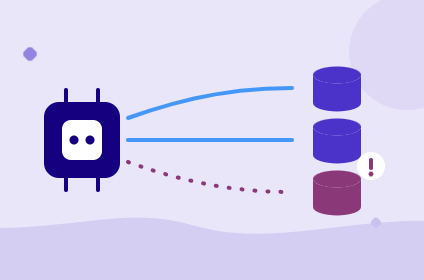
Quick answer: Agentic AI systems need data that is current, consistent across systems, available even …
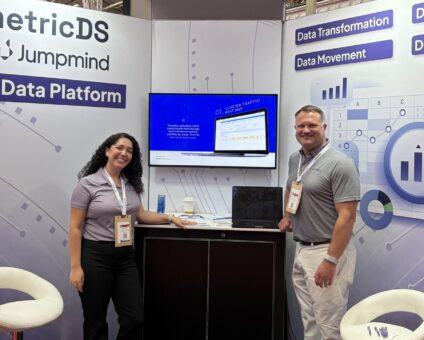
This was our second year at Big Data LDN, and attendance felt just as strong …
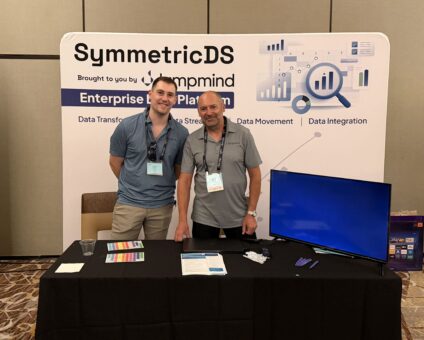
Our booth at TDWI Transform this year had a wider range of visitors than we …
Introduction In retail, POS updates have traditionally been quarterly events at best. From October through …

Jumpmind Powers Point of Sale and Promotions Execution for Landmark Retail, One of the Largest …
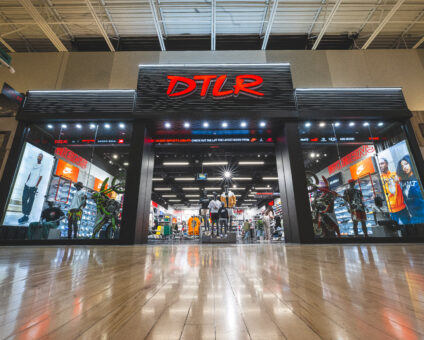
Retail Technology Leader Jumpmind to Enable Mobile Point of Sale and Inventory Management for DTLR/VILLA …
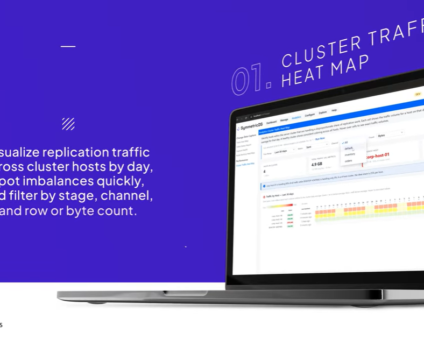
We built 3.18 because the question we kept hearing from customers changed. It used to …
The offering gives security teams a practical path to risk management and accountable AI COLUMBUS …

The insights have implications for retail technology in the store: it must help mind information …
Cloud-native POS platform for seamless omnichannel customer experience.
A single hub for all promotions campaigns.
A comprehensive solution designed to simplify and give you ownership of the inventory lifecycle.
A native post-transaction reconciliation module built into Jumpmind Commerce.
The most advanced synchronization solution for databases and file systems.
Data configuration and batch automation across different disparate systems and vendors.
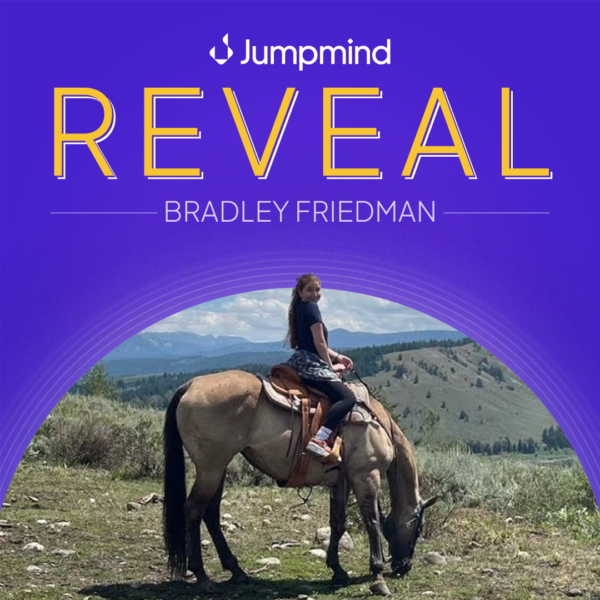
Welcome to Jumpmind Reveal, a blog series showcasing some of the talented folks we have here at Jumpmind. In today’s installment, we meet Bradley Friedman, a retail technology consultant, based in sunny San Diego, Calif., who joined Jumpmind in May 2026.
I was really excited about the opportunity to come work at Jumpmind because my previous background was as a sales associate on the floor. I thought it would be interesting to be on the other end of things and behind the scenes with the systems I was using every single day. It’s so fascinating to be on the back end of it now — knowing what capabilities could have been implemented. Day to day, I’m generally prospecting, doing outreach, looking at what’s out there in the market, comparing our product to different ones currently in use, and finding customers who’d be a good fit — whether they’re expanding, want more features, want to modernize, whatever the case may be.”
I have a degree in psychology, so I know how important it is for people to just feel like they are heard and valued and having seamless experiences in the store is a big part of valuing their time. Having a good POS system sets the sales associate up for success and to look like an expert on the floor. So many people are fearful that AI is going to replace what the associate does, but at the end of the day, human connection is going to be the basis of any interaction that you have. There are stores I have gone back to because I had a great experience with the person I was talking to; tech and human touch have to work together.
Wake surfing is a big passion of mine, and I like spending quality time with friends outdoors, whether it’s hiking or an ocean swim.
I also love singing. I grew up in New York and did quite a few Broadway auditions. And I auditioned for The Voice — but I never went on to the finale. I auditioned for the voice and got through the rounds! It was incredibly validating to hear that I was wanted for something that I hold so close to my heart. I ended up going abroad and also have a lot of stage fright, so it didn’t happen. But I’m really grateful for the experience and proud of for putting myself out there.

I went skydiving in Switzerland — which is funny, because I’m very much a rule follower. I don’t do anything out of the norm. But I really like doing things that challenge me — things I never would have thought I could do. So, on a whim I told my friends: “We should go skydiving!” (I had always heard that Switzerland is the best place to do that.) To my surprise, everyone agreed, and I was like, “Oh gosh, I didn’t really mean it — now we’re locked in.” Going up in the plane was somewhat terrifying, and you can’t turn around at that point, you just have to go. It’s so metaphorical and symbolic of leaping into the unknown. But once I made the jump …. I can’t even describe the feeling. I would do it again in a heartbeat.

There’s not really a story. My sister’s name is Miller and my younger brother’s name is Beckett; my mom just liked gender-neutral names.
Over the years, it’s had some pretty interesting effects though. For example, when I was a kid going to sleep-away camp, my luggage was always dropped off on the boys’ side, as opposed to the girls’ side!!! But I like that it’s different.