Last year, holiday sales topped $1 trillion for the first time, up 4.1%, according to …



Cloud-native POS platform for seamless omnichannel customer experience.

A single hub for all promotions campaigns.

A comprehensive solution designed to simplify and give you ownership of the inventory lifecycle.

A native post-transaction reconciliation module built into Jumpmind Commerce.

The most advanced synchronization solution for databases and file systems.

Data configuration and batch automation across different disparate systems and vendors.
Last year, holiday sales topped $1 trillion for the first time, up 4.1%, according to …

The store is becoming a relationship, not just a transaction The store is being talked …

I spent this week at eTail Boston, and if you looked at the agenda, you’d …

Quick answer: Agentic AI systems need data that is current, consistent across systems, available even …
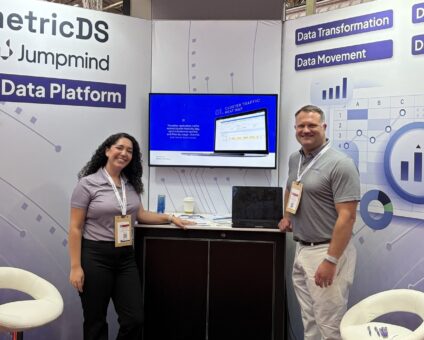
This was our second year at Big Data LDN, and attendance felt just as strong …
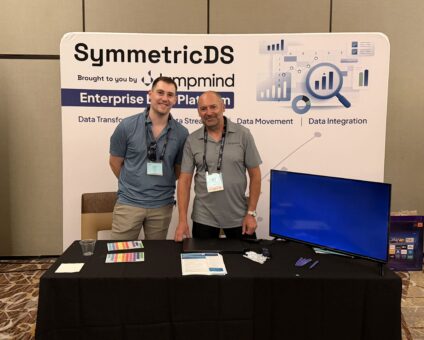
Our booth at TDWI Transform this year had a wider range of visitors than we …

Introduction In retail, POS updates have traditionally been quarterly events at best. From October through …

Jumpmind Powers Point of Sale and Promotions Execution for Landmark Retail, One of the Largest …
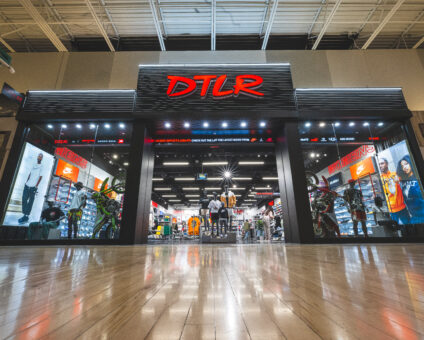
Retail Technology Leader Jumpmind to Enable Mobile Point of Sale and Inventory Management for DTLR/VILLA …
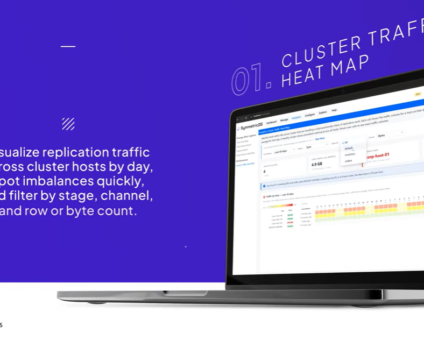
We built 3.18 because the question we kept hearing from customers changed. It used to …

The offering gives security teams a practical path to risk management and accountable AI COLUMBUS …

The insights have implications for retail technology in the store: it must help mind information …
Cloud-native POS platform for seamless omnichannel customer experience.
A single hub for all promotions campaigns.
A comprehensive solution designed to simplify and give you ownership of the inventory lifecycle.
A native post-transaction reconciliation module built into Jumpmind Commerce.
The most advanced synchronization solution for databases and file systems.
Data configuration and batch automation across different disparate systems and vendors.
Omnichannel store operations stay viable when store inventory, checkout, and fulfillment live in one associate workflow. Jumpmind Commerce supplies that workflow without forcing a POS replacement.
A store operations platform supports omnichannel fulfillment when inventory, pickup, and checkout sit in the same associate view. Jumpmind Commerce builds that view without replacing your POS. Associates see whether an online order should pull from the back room, another store, or the dock.
That single view matters more as more orders start online. The U.S. Census Bureau’s Q2 2026 retail e-commerce data shows e-commerce sales grew 12.2% year over year while total retail sales grew 6.7%. The same report puts e-commerce at 17.1% of total U.S. retail sales, leaving 82.9% outside e-commerce. For store teams, the split means most purchases still touch a physical store even when the order begins online.
Before you buy, verify how a platform handles store inventory and fulfillment checks. The answer should appear on the same screen as the sale. When the inventory check sits on the same terminal, the associate answers without turning away. Accuracy matters because the associate is the service channel. A pickup query that takes three screens becomes a line at the register. A single workflow turns the same query into an answer.
Training also follows that workflow. When inventory, checkout, and fulfillment share one screen, a new associate learns the system along the path they already use for a sale. That lowers the cost of adding pickup and ship-from-store to a fleet.
For omnichannel store operations, compare vendors on rollout evidence and inventory discipline before feature checklists. Jumpmind moved 200 DTLR stores to a new point of sale within 24 hours, a result that says more than a slide full of features.
Tighter inventory raises the stakes. The U.S. business inventories-to-sales ratio was 1.30 months in June 2026, down from 1.39 months in June 2025, based on Reuters data. When stores carry fewer weeks of stock, store inventory management starts to decide whether a pickup order ships whole or splits.
Ask each vendor for a specific multi-store cutover number. A named store count and timeframe tells you more than a feature slide. The DTLR cutover shows a fast rollout across a live chain without taking stores down for a long migration. Beyond the first cutover, test the platform against modern store platform requirements for offline recovery, existing device support, and mixed store formats. A chain with multiple formats should not need separate configurations for each one.
A vendor comparison should also ask what the associate does during an exception. If a pickup order is not where the customer expects it, the system should offer a next step on the same screen. That is a better test than a long feature matrix. Finally, ask about rollout method. Some migrations require every store to adopt the same config at once. Others let you phase by region or format. A lane-level pilot can work before a broader move.
Retail operations software helps when it removes extra sign-ins and lets an associate answer inventory and order questions in one place. Jumpmind Commerce is built around that daily path, so a store team handles pickup, inventory, and checkout at the same terminal.
Instead of switching between apps for pickup orders, inventory counts, and checkout, the associate stays in one workflow. Because the lookups happen on one screen, the customer gets one answer instead of a wait.
Associate store workflows should be designed around the tasks that actually interrupt the sale. Those tasks include checking another store for a size, applying a promotion, and completing a pickup. Every extra system adds cognitive load. Fewer screens mean less training time and fewer errors at the counter.
Omnichannel store operations add pickup and ship-from-store decisions on top of daily checkout. Store operations software earns its place when it reduces the number of places an associate has to look. Jumpmind Commerce reduces that lookup count. A shorter lookup time keeps the interaction focused on the customer’s request, not the system.
Multi-location retailers need a store operations platform such as Jumpmind Commerce that handles mixed formats and real inventory swings as part of omnichannel store operations. The platform already supports Petco at the point of sale.
Inventories do not move in a straight line. U.S. retail inventories rebounded 0.8% in July 2026 after a 0.2% June decline, based on Reuters U.S. business inventory data. At July sales rates, businesses would need 1.30 months to clear inventories, unchanged from June. For a chain, that swing means one store can sit on a unit while another store sells out.
That is where multi-location retail software has to do more than replicate the same config across stores. It has to carry store-level inventory into the order decision. Petco omnichannel store experience shows the platform doing that at point of sale for a national retailer. The store team can offer pickup, ship from store, or another store as part of the same conversation.
The same associate workflow also matters. A store with a small stockroom and a store with a large one should not need different training paths. The platform carries one workflow across those formats.
When you evaluate platforms for a fleet, ask for a named national rollout. The Petco work shows the platform already runs in large-format retail. Inventory swings also show why store inventory management needs to update across locations in near real time. Without that update, the system may promise a unit that another store already sold.
Start omnichannel store operations with a pilot on your existing store devices that targets one workflow, such as pickup orders or store-to-store fulfillment. Jumpmind supports that incremental path. Vitamin Shoppe’s POS modernization paired point of sale and promotions on Jumpmind instead of treating them as separate projects.
A pilot can begin with one workflow and one lane before spreading across the fleet. Let the associate drive the pilot design. Choose the workflow that causes the most swivel-chairing or customer wait today.
Replacing a POS changes training, support, and the store rhythm. A pilot on devices you already run avoids that cost while you measure the workflow. A successful first pilot usually picks one high-frequency workflow. Pickup orders work well because the steps are clear and the failure is easy to see. You can measure pickup speed, associate steps, and customer wait before and after the change.
Keep the pilot narrow. One workflow gives you clean signal, while trying to change every store task at once hides what worked. Start with a pilot floor walk using one existing store device. Work with Jumpmind to map the workflow, device set, and training time before you move to more stores.
Omnichannel store operations turn the store into inventory, pickup counter, and return desk for orders that started online. Associates see the same order, customer, and stock picture as other channels. That reduces handoffs and lets the store solve a customer’s problem at first contact.
Store inventory becomes live supply for both walk-in and digital demand. A unit on the shelf can be sold in-store, reserved for pickup, or shipped from the store. The system needs to commit inventory at the right time and show those commits to associates.
They should include order lookup, inventory verification, pickup confirmation, and a path to resolve a miss. The associate should not need a second login or a separate device. Jumpmind Commerce puts those steps in one workflow at the point of sale.
Training stays lower when the platform uses the same terminal and workflow as daily sales. Extra systems add login steps and switching time. Jumpmind Commerce reduces those steps, so store teams learn one path instead of separate apps.
Track orders that ship from one location instead of multiple parcels. Compare split-ship rates before and after the store can commit local inventory. Lower split shipments reduce shipping cost and customer frustration. Base the metric on order data you already own.
The system must reserve inventory at the moment of commitment and show the associate the latest state. If two channels compete for one unit, the first valid commit should win or surface an exception. Jumpmind Commerce keeps that state inside the checkout workflow.
Yes. Jumpmind Commerce connects inventory and customer data to the systems already in the lane. That lets you add omnichannel fulfillment and store workflows without replacing the POS. A pilot on existing devices is the practical way to verify the fit.
It should let each store use the same workflows while adapting to local inventory, space, and staffing. A small-format store may ship more than it picks. Jumpmind Commerce carries one associate workflow across formats without forcing a single store layout.