The store is becoming a relationship, not just a transaction The store is being talked …



Cloud-native POS platform for seamless omnichannel customer experience.

A single hub for all promotions campaigns.

A comprehensive solution designed to simplify and give you ownership of the inventory lifecycle.

A native post-transaction reconciliation module built into Jumpmind Commerce.

The most advanced synchronization solution for databases and file systems.

Data configuration and batch automation across different disparate systems and vendors.
The store is becoming a relationship, not just a transaction The store is being talked …

I spent this week at eTail Boston, and if you looked at the agenda, you’d …

Consumers are expected to spend more than $146 billion on back-to-school shopping this year, and …

Quick answer: Agentic AI systems need data that is current, consistent across systems, available even …
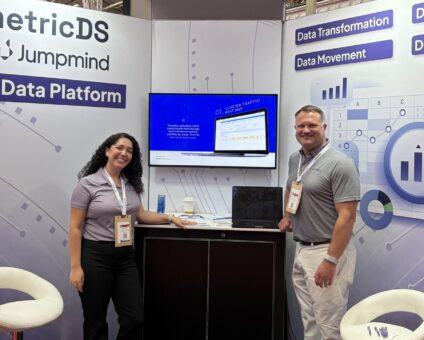
This was our second year at Big Data LDN, and attendance felt just as strong …
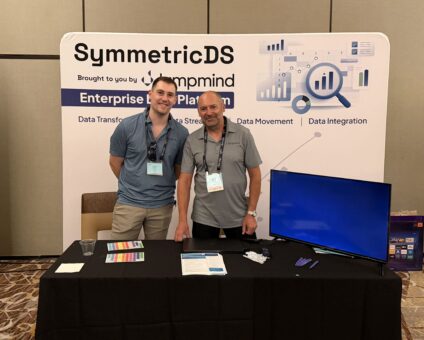
Our booth at TDWI Transform this year had a wider range of visitors than we …

Introduction In retail, POS updates have traditionally been quarterly events at best. From October through …
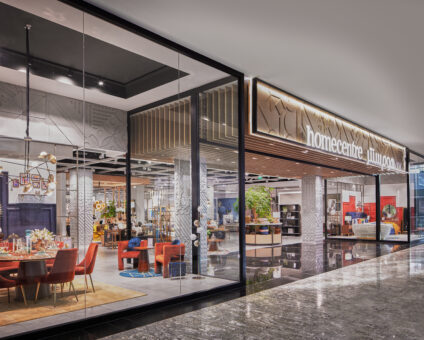
Jumpmind Powers Point of Sale and Promotions Execution for Landmark Retail, One of the Largest …
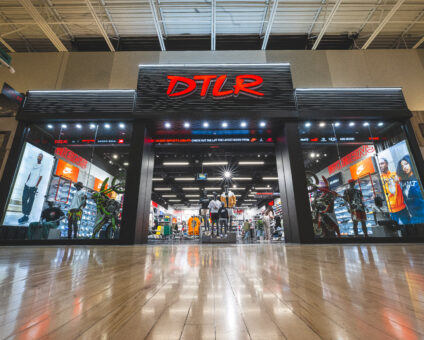
Retail Technology Leader Jumpmind to Enable Mobile Point of Sale and Inventory Management for DTLR/VILLA …
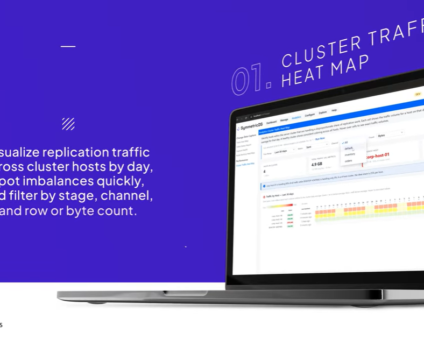
We built 3.18 because the question we kept hearing from customers changed. It used to …

The offering gives security teams a practical path to risk management and accountable AI COLUMBUS …

The insights have implications for retail technology in the store: it must help mind information …
Cloud-native POS platform for seamless omnichannel customer experience.
A single hub for all promotions campaigns.
A comprehensive solution designed to simplify and give you ownership of the inventory lifecycle.
A native post-transaction reconciliation module built into Jumpmind Commerce.
The most advanced synchronization solution for databases and file systems.
Data configuration and batch automation across different disparate systems and vendors.
Five technologies measurably reduce checkout wait times in physical retail: mobile point of sale carried by associates, self-checkout, queue management and virtual queuing, customer-facing displays with integrated payments, and offline-capable transaction processing. Which one produces the largest effect depends on store format and basket composition. In grocery and convenience, self-checkout usually wins. In specialty, apparel, and mid-format stores, mobile POS usually does. We build mobile POS, so treat our read on that second category as an interested one and check it against your own transaction data.
No single technology solves checkout. Each one addresses a different source of delay, and most enterprise retailers run three or four together.
Coresight Research puts industry norm checkout times at roughly two to four minutes in its 2025 study Reinventing Store Checkout, with best practice under two minutes. That range covers scanning, tender, promotion application, loyalty lookup, receipt, and any exception the associate resolves mid-transaction.
Exceptions are where enterprise checkout time concentrates. A price override, a locked case, a return blended into a sale, a promotion that should have applied and did not, a gift card balance check. Each one sends the associate somewhere other than the customer in front of them. Trimming a few seconds off scan speed will not move the number much when the exception path still runs ninety seconds.
The cost of getting this wrong is documented. In a survey of 401 US consumers fielded in August 2025, Coresight Research found that 66% had left a store without purchasing in the prior six months, and 29% named long checkout lines as a reason. A companion survey of 394 retail decision-makers in March 2025 put average lost gross sales from in-store inefficiencies at 5.5% across 2025. Both studies were sponsored by Diebold Nixdorf, which sells self-checkout hardware. The walkout finding is broadly consistent with Zebra Technologies’ 18th Annual Global Shopper Study, published in 2025, where 52% of shoppers reported leaving stores without everything they came for.
| Technology | Primary effect | Best fit | Main limitation |
|---|---|---|---|
| Mobile POS | Adds checkout capacity anywhere in the store | Specialty, apparel, mid-format, event and pop-up retail | Needs a POS built for mobile hardware, plus a device charging and accountability program |
| Self-checkout | Diverts small baskets from staffed lanes | Grocery, convenience, high-volume low-complexity | Requires associate support nearby; poor implementations shift labor to the customer |
| Queue management / virtual queuing | Improves perceived wait and store visibility | Service counters, pharmacy, appointment-driven formats | Does not reduce transaction time; adds a system to run |
| Customer-facing display with integrated payments | Removes handoff and confirmation friction | Any format where tender is the slow step | Value depends on payment integration depth |
| Offline-capable processing | Prevents total checkout failure during outages | Every enterprise fleet | Only as good as the sync and conflict resolution behind it |
The harder question is which platform can support three or four of these together without four separate integrations to maintain.
Mobile POS moves checkout capacity to wherever the associate is standing. It does not eliminate the wrap desk. Cash tender, EAS tag detachers, bagging for larger baskets, and secured payment device custody still live at fixed points, and peak capacity is still bounded by scheduled labor hours rather than by device count. A retailer whose constraint is hours on the floor will get less from mobile POS than one whose constraint is lane count.
Where the constraint is lane count, the effect is measurable.
American Eagle Outfitters started with Jumpmind Commerce on a single iPad in one pilot store, expanded to 20 stores for the 2022 holiday season, then replaced its legacy POS across the fleet. The deployment now covers more than 40,000 associates on more than 7,000 mobile devices. Transaction time dropped by roughly one minute per transaction, and the range of in-store transaction times narrowed by 21%. Stores went from seven or eight fixed registers to as many as 15 mobile devices during peak traffic.
The range figure is the more operationally useful of the two. Average transaction time describes a typical day. Narrowing the range means the slowest transactions moved closer to the fastest, which is the specific condition that keeps a line from building on a December Saturday.
Michael Rector, Director of Product at AEO, put it this way: “Lines moved faster than we had ever seen before.”
This is one retailer, in one format, with baskets that fit that format. A grocery chain running 40-item baskets would see something different.
Running 15 devices at peak also creates work that does not exist with fixed lanes. Batteries need a charging rotation. Devices need to be accounted for at close. Those are solvable, and any vendor who tells you they are not a factor has not run a fleet.
Checkout speed is usually framed as a customer experience issue. It is also a labor issue, and the two connect.
US Bureau of Labor Statistics JOLTS data recorded 472,000 quits in retail trade in July 2026, a 3.1% monthly quits rate. Every departure takes with it hard-won knowledge about how to handle the exception cases that slow checkout down. A platform that takes three weeks to learn never finishes being learned, because the population learning it keeps changing.
Research from Retail Systems Research, which we sponsored and which was fielded in December 2024 and January 2025, found that 65% of retailers say their current technology cannot support modern shopping experiences, and only 47% say their POS systems support innovative experiences. Sixty-three percent ranked mobile associate devices as high value.
Our AX Insights study, published in June 2026, is qualitative research with store associates about how retail technology feels to use. It surfaced a theme worth naming here: cognitive overwhelm. When software adds steps, the associate’s attention moves from the customer to the screen. Checkout time rises and the interaction gets worse at once. Software should absorb complexity instead of handing it to the person holding the device.
We wrote this list, and it reflects what we built toward. Read it with that in mind and add your own.
It is worth naming where other platforms are stronger. In the Forrester Wave: Point-Of-Service Solutions, Q4 2024, Oracle Xstore scored above Jumpmind on globalization and scalability. For a retailer whose hardest checkout problem is multi-country tax and localization complexity, that difference deserves real weight.
How long will shoppers wait in a checkout line before leaving? There is no reliable current figure. The numbers circulating online trace to Omnico’s 2014 UK study and Adyen’s 2018 US survey. The better current data point is Coresight Research’s August 2025 finding that 29% of US consumers who walked out of a store without purchasing cited long checkout lines as a reason.
Does self-checkout reduce wait times? It can, in formats with small baskets and simple transactions. Zebra Technologies’ 2024 study found 78% of shoppers agree self-checkout improves the customer experience, up 14 points since 2020. The common failure is deploying self-checkout without nearby associate support, which converts a short wait into a stuck transaction.
Is mobile POS only for small retailers? No. American Eagle Outfitters runs it across more than 7,000 devices and 40,000 associates. Petco runs Jumpmind Commerce, Metl and SymmetricDS across more than 1,500 stores and 25,000 employees. The constraint is architectural rather than a matter of retailer size, since a POS designed for a fixed register does not become mobile by running on a tablet.
Do we have to replatform to get mobile checkout? Not necessarily. Several retailers have moved to mobile POS as a phased migration. American Eagle began on one device in one store and expanded from there. Phasing lets you validate throughput gains before committing the fleet.
What is the difference between queue management and line busting? Queue management organizes the line that exists, through virtual queuing, appointment scheduling, or digital signage. Line busting removes the need for the line by moving checkout to the associate on the floor. The two address different problems and are often deployed together.