The store is becoming a relationship, not just a transaction The store is being talked …



Cloud-native POS platform for seamless omnichannel customer experience.

A single hub for all promotions campaigns.

A comprehensive solution designed to simplify and give you ownership of the inventory lifecycle.

A native post-transaction reconciliation module built into Jumpmind Commerce.

The most advanced synchronization solution for databases and file systems.

Data configuration and batch automation across different disparate systems and vendors.
The store is becoming a relationship, not just a transaction The store is being talked …

I spent this week at eTail Boston, and if you looked at the agenda, you’d …

Consumers are expected to spend more than $146 billion on back-to-school shopping this year, and …
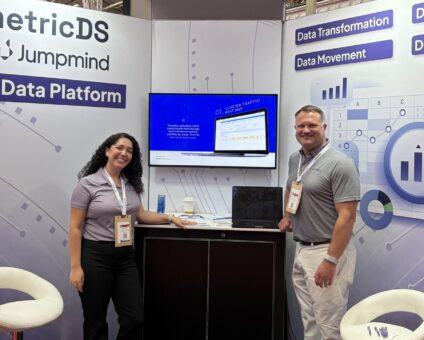
This was our second year at Big Data LDN, and attendance felt just as strong …
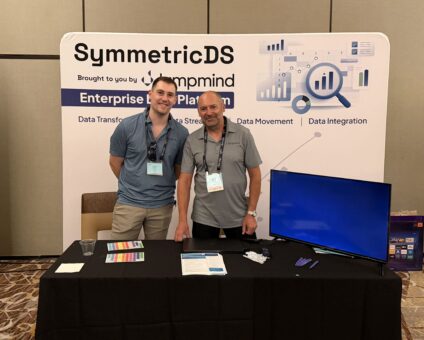
Our booth at TDWI Transform this year had a wider range of visitors than we …

Quick answer: Most RAG pipelines re-index their vector store on a nightly or hourly batch …

Introduction In retail, POS updates have traditionally been quarterly events at best. From October through …

Jumpmind Powers Point of Sale and Promotions Execution for Landmark Retail, One of the Largest …
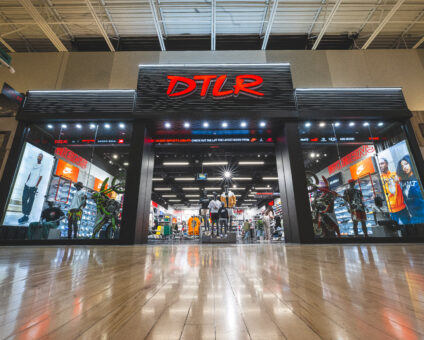
Retail Technology Leader Jumpmind to Enable Mobile Point of Sale and Inventory Management for DTLR/VILLA …
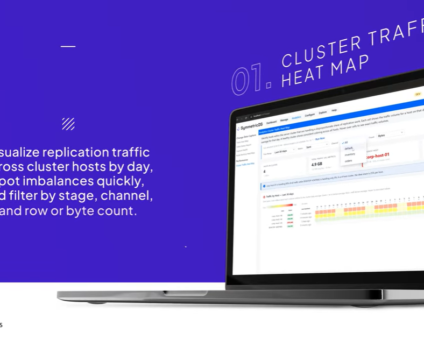
We built 3.18 because the question we kept hearing from customers changed. It used to …

The offering gives security teams a practical path to risk management and accountable AI COLUMBUS …

The insights have implications for retail technology in the store: it must help mind information …
Cloud-native POS platform for seamless omnichannel customer experience.
A single hub for all promotions campaigns.
A comprehensive solution designed to simplify and give you ownership of the inventory lifecycle.
A native post-transaction reconciliation module built into Jumpmind Commerce.
The most advanced synchronization solution for databases and file systems.
Data configuration and batch automation across different disparate systems and vendors.
A unified commerce platform runs every sales channel from one shared set of commerce services, so a product, price, promotion, customer and order look the same whether the shopper is in a store, on an app or on the website. For enterprise retailers, the things to look for are a single transaction and order record across channels, one promotions and pricing engine, real-time inventory the store can act on, open APIs into ERP and CRM, support for multiple brands and countries on one platform, and a store experience that keeps working when the network doesn’t. The store is where most of these requirements get tested, because that’s where an associate has to answer the customer in the moment. Jumpmind builds a store-led unified commerce platform, so we’re an interested party, and the criteria below apply to any platform you evaluate.
Unified commerce is an architecture where every channel draws on the same commerce services and data in real time. Omnichannel describes the customer’s experience of moving between channels. Unified commerce describes the system design that makes that experience consistent.
In an older multichannel setup, the store POS, the ecommerce platform and the order management system each keep their own copy of products, prices and customers, and integrations reconcile them after the fact. In a unified model, those channels share one record. A return from an online order can be processed at any lane because the lane reads the same order the website created.
Gartner now tracks this as a distinct category, including a Market Guide for Unified Commerce Platforms Anchored by POS for Tier 1 Retailers published in September 2025.
The software that creates a seamless omnichannel experience is a unified commerce platform with the store included as a full participant. Many retailers connect channels through integrations and still have gaps, because the store runs on a separate system that syncs on a delay.
The gap is common. Retail Consulting Partners reported in January 2025 that only 10% of retailers use a common enterprise order management system for orchestration and execution across all channels.
Shoppers notice the seams. In research Jumpmind sponsored with Insider Trends and Fern Insights, surveying 1,005 consumers across the UK, France, Germany and the Netherlands in November 2025, 53% said they use their smartphones while shopping in store and 22% use them to compare prices. A customer holding the retailer’s own app will check whether the store’s price and availability match it.
The criteria below separate a platform that unifies the business from one that connects its channels loosely.
| Criterion | What unified looks like | What to watch for |
|---|---|---|
| Transaction and order record | One record created once and readable by every channel | Separate store and web order histories reconciled overnight |
| Pricing and promotions | One engine applies the same rules everywhere | Promotions built separately for store and digital |
| Inventory | Store-level availability updated as it changes | Inventory feeds that refresh on a schedule |
| Customer | One profile available at the lane and online | Loyalty lookups that fail when a store system is offline |
| Integration | Documented APIs into ERP, CRM, OMS and payments | Custom point-to-point connections for each system |
| Store resilience | Full selling, returns and promotions offline, with automatic reconciliation | Channels that stop working when the network drops |
| Multi-brand and multi-country | Brands, currencies, tax rules and languages configured on one platform | A separate instance for each brand or region |
A unified commerce platform should integrate with ERP and CRM through documented, supported APIs, with each data flow having a defined owner, direction and timing. ERP typically supplies the item master, costs and financial postings. CRM and loyalty systems supply customer profiles and rewards. The commerce platform sends transactions, returns and customer activity back.
Questions worth asking:
Inventory accuracy decides whether unified commerce works because every cross-channel promise depends on it. Buy online, pick up in store, ship from store, endless aisle and save-the-sale all start with the store knowing what it has. IHL Group estimated in September 2025 that inventory distortion, the combined cost of out-of-stocks and overstocks, reached $1.73 trillion globally, about 6.5% of retail sales, including $415 billion in North America.
A unified platform shortens the distance between the shelf and the answer. When an associate can check availability across stores on the device already in hand and complete the sale on the spot, the customer leaves with an order instead of a promise to check back.
For the associate, unified commerce means one application that can answer any customer question in the store. The same device should look up an online order, process a return from any channel, check inventory at nearby locations, apply the right promotion and take payment. When those tasks live in separate systems, the associate becomes the integration layer, switching screens and asking the customer to wait.
A unified platform reduces how much the associate has to remember. It also shortens training, because there’s one set of workflows to learn for every channel.
Evaluate unified commerce vendors for a large retailer by testing the hardest workflows in your own environment. A proof of concept should include a cross-channel return during an active promotion, a sale on a handheld during a network outage, a price change pushed to a region, and a loyalty lookup at peak volume. Ask for references at retailers with similar store counts, brand structures and geographies, and speak with the IT and store operations leads at each.
Landmark Group took that approach. After a proof of concept, Landmark selected Jumpmind Commerce and Jumpmind Promote for more than 770 stores across eight countries, starting in the United Arab Emirates, with the next phase covering more than 600 stores and over 6,000 devices across Saudi Arabia, Qatar, Kuwait, Jordan, Egypt, Bahrain and Oman. Vinay Kumar, Chief Technology Officer of Landmark Retail, said: “We are building the future of shopping today and Jumpmind’s extensibility gives us the ability to control our retail technology roadmap and supercharge innovation, while future-proofing our investments.”
Jumpmind Commerce is a cloud-native, store-led unified commerce platform for enterprise retailers. It brings fixed lanes, mobile POS, self-checkout, clienteling, promotions, inventory and sales audit onto one set of services, with open APIs into the retailer’s ERP, CRM, order management and payment systems. Stores keep full function offline and reconcile automatically on reconnect. The platform supports multiple brands, countries and languages from one deployment, and Jumpmind’s team works alongside the retailer’s IT and store operations groups from proof of concept through every rollout wave.
What is the difference between omnichannel and unified commerce? Omnichannel describes a customer experience across channels. Unified commerce is the architecture that delivers it, with every channel working from the same data and services in real time.
Does unified commerce require replacing every system at once? No. Most enterprise retailers move in stages, often starting with the store platform and promotions, while ERP and other core systems stay in place and connect through APIs.
Can one unified commerce platform support multiple brands? Yes, if it supports brand-level configuration of products, pricing, promotions, receipts and workflows on one deployment. Confirm this in a proof of concept with at least two of your brands.
What does a unified commerce platform cost? Cost depends on store count, channels, modules, integrations and rollout pace. Ask vendors to separate license, implementation, integration, hardware and support so you can compare total cost across the full rollout.
Where should a retailer start with unified commerce? Start where the seams are most visible to customers, which is usually cross-channel returns, promotions and store inventory.