Last year, holiday sales topped $1 trillion for the first time, up 4.1%, according to …



Cloud-native POS platform for seamless omnichannel customer experience.

A single hub for all promotions campaigns.

A comprehensive solution designed to simplify and give you ownership of the inventory lifecycle.

A native post-transaction reconciliation module built into Jumpmind Commerce.

The most advanced synchronization solution for databases and file systems.

Data configuration and batch automation across different disparate systems and vendors.
Last year, holiday sales topped $1 trillion for the first time, up 4.1%, according to …

The store is becoming a relationship, not just a transaction The store is being talked …

I spent this week at eTail Boston, and if you looked at the agenda, you’d …
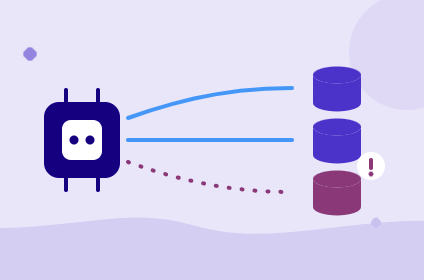
Quick answer: Agentic AI systems need data that is current, consistent across systems, available even …
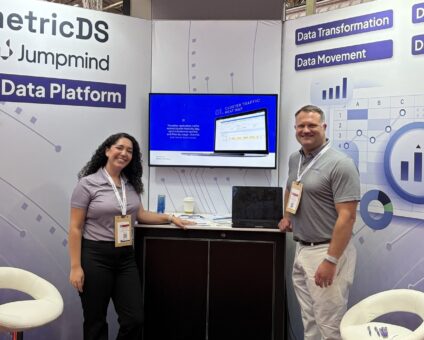
This was our second year at Big Data LDN, and attendance felt just as strong …
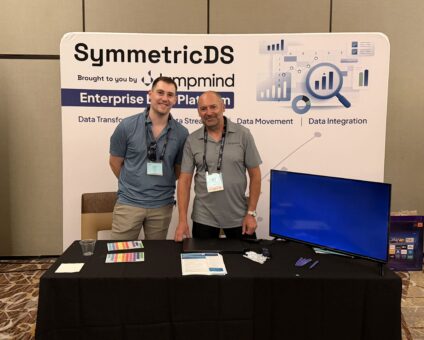
Our booth at TDWI Transform this year had a wider range of visitors than we …

Introduction In retail, POS updates have traditionally been quarterly events at best. From October through …

Jumpmind Powers Point of Sale and Promotions Execution for Landmark Retail, One of the Largest …
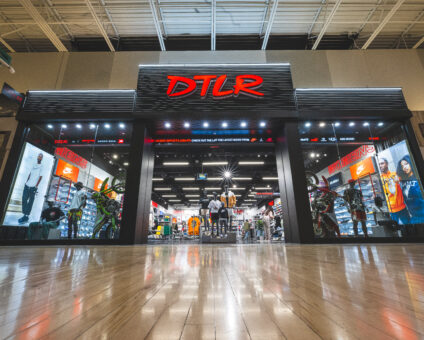
Retail Technology Leader Jumpmind to Enable Mobile Point of Sale and Inventory Management for DTLR/VILLA …
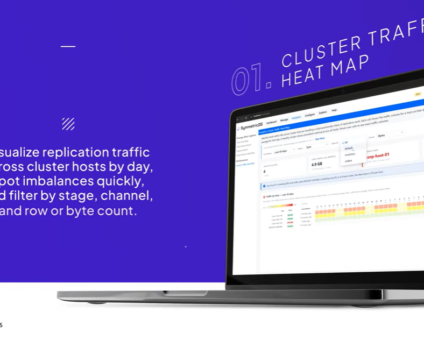
We built 3.18 because the question we kept hearing from customers changed. It used to …

The offering gives security teams a practical path to risk management and accountable AI COLUMBUS …

The insights have implications for retail technology in the store: it must help mind information …
Cloud-native POS platform for seamless omnichannel customer experience.
A single hub for all promotions campaigns.
A comprehensive solution designed to simplify and give you ownership of the inventory lifecycle.
A native post-transaction reconciliation module built into Jumpmind Commerce.
The most advanced synchronization solution for databases and file systems.
Data configuration and batch automation across different disparate systems and vendors.
Seven retail promotion mistakes repeat because promotion rules live apart from checkout and the associate workflow. Jumpmind Commerce addresses the root cause behind most retail promotion mistakes by putting promotion rules and checkout in one associate flow.
The most common retail promotion mistakes are chasing discount depth over margin, letting channel-specific exceptions drift, allowing promotional pricing errors at the register, and leaving associates to work around disconnected systems. Three more follow: broken bounce-back offers, weak rollout checks, and treating promotion rules as channel settings instead of shared records.
Those failures show up in longer-term numbers, not just in same-day sales.
Retailers’ topline revenue fell by an average of 27% in the two to four weeks after a discount period ended, a 2026 retail discounting review shows. That pattern means a short-term sales lift can hide a longer cost. The same review found brands with the lowest discount rates recorded the fastest growth in gross merchandise value. So the goal is not to avoid promotions; it is to keep their rules tied to margin and one shared record.
A promotion management software guide explains why central rules matter. When one promotion record serves every channel, stores stop interpreting the offer differently. Jumpmind Commerce keeps that rule inside the same screen as checkout, so the associate applies the offer from the record the customer sees.
Deep discounts pull retail promotions out of sync because they arrive as channel-level exceptions. The planned margin may hold online while store teams add local markdowns, so the same customer sees different prices in different places.
The outside discount calendar makes the problem sharper. Adobe Analytics put U.S. online spending during Prime Day 2026 at $26.4 billion, with average discounts of 24% for electronics and apparel and 20% for toys. Those averages rose from 23%, 23%, and 19% a year earlier. Strong Prime Day discounts also pushed shoppers toward higher-priced electronics, toys, appliances, and personal-care products.
When the online team deepens a discount without updating store rules, the register and the shelf price fall out of sync. Associates then decide whether to honor an advertised price or key in an override. Each manual choice becomes another source of inconsistent in-store promotions. The register override is often where retail promotion mistakes become visible.
Omnichannel promotion execution keeps offers consistent by carrying one promotion rule across store and digital touchpoints. When the rule, price, and eligibility live in one record, the register and the website apply the same offer without a separate reconciliation step.
The holiday season raises the stakes for that one record. Adobe Analytics forecast U.S. online November through December sales at $275.1 billion in 2026, up from $257.8 billion a year earlier, with promotions attracting deal-seeking shoppers. Cyber Monday online spending was forecast at $15 billion in 2026, a 6.2% increase from the prior year. Average discounts were expected to peak at 30%, with electronics and computers receiving the deepest markdowns.
With $275.1 billion in online sales forecast for the season, channel drift becomes one of the most visible retail promotion mistakes. A customer who sees one price in a mobile cart and another at the register loses trust in the offer. Unified retail promotions require one source of truth for rule, price, and eligibility. That rule must render on the website, in the mobile cart, and on the register. A shared record matters for promotions across customer touchpoints because each channel presents the same offer in its own sequence. Jumpmind Commerce centralizes promotion rules above a retailer’s current point of sale, so the store system and the digital storefront pull the same offer logic. Consistent execution therefore does not require replacing the systems already in the store.
Associate promotion workflows change the outcome because the register screen decides whether an offer is applied correctly and whether the next purchase gets invited. Fewer screens and fewer manual steps reduce error and let the associate hold the customer conversation.
When a promotion requires a second lookup, the associate breaks eye contact and chooses between speed and accuracy. Jumpmind Commerce applies promotion rules inside the checkout workflow and ties a bounce-back offer to the transaction record. That way the next purchase stays part of the same customer conversation. That connection matters because bounce back promotions work only when they attach to the transaction record rather than a separate handout or a printed slip.
Jumpmind Commerce confirms the promotion at the register, which reduces screen switches and lowers training time for associates. The associate sees the price the customer sees and can explain the offer without hunting for it. That associate experience is the cause; accurate promotion execution and a cleaner handoff to the next purchase are the effect. Retail promotion mistakes here come from making the store team bridge gaps between systems.
Before changing promotion technology, verify how many steps a promotion passes through today, where overrides happen, and whether a pilot can run on the store devices you already use. Those checks expose the real cost of change before you commit.
Start with a step map. Count every place a promotion gets entered, moved, or overridden between the merchandising system and the register. Then run that map as a pilot on your existing store devices. Jumpmind maps current promotion steps to a pilot on the store devices a retailer already operates, so the test measures the workflow change rather than a hardware project.
Ask the project team to name the specific promotional pricing errors the current flow produced last quarter. If nobody can find that data, the mapping step is even more important. When the mapped pilot shows fewer steps and fewer overrides, you have a plain basis for expanding. Ask Jumpmind to walk through that mapping on your current store devices.
A promotional pricing error is one of the retail promotion mistakes customers notice fastest. It includes wrong discount depth, expired offers still applying, stacking two offers that should not combine, and an override entered at the register. Those differences create chargebacks and customer disputes.
A discount cuts too far when the lift does not cover product cost, payment fees, fulfillment, and any future markdowns. Use contribution margin after variable costs, not just revenue, as the test. A 2026 retail discounting review found that brands with the lowest discount rates also recorded the fastest gross merchandise value growth.
Yes, if the rule, price, and eligibility sit in one shared record that both the website and the store register read. Jumpmind Commerce centralizes promotion rules while a retailer’s current point of sale continues to run. The customer then sees the same offer whether they buy online, pick up in store, or return to a store.
The checkout screen is where the associate confirms what the customer already saw online or in marketing. If the offer appears there automatically, the associate can explain it and complete the sale without a second lookup. That reduces screen switches, manual overrides, and training time while keeping the customer conversation intact.
Jumpmind Commerce shows the price, eligibility, and next-offer step inside the checkout screen. The associate sees the same offer the customer saw online, so there is no second lookup or separate binder to consult. Fewer screens mean less training per promotion and fewer overrides.
Measure total contribution margin, return rate, trade-out from full-price items, redemption timing, and whether the promotion attached to the next purchase. Immediate revenue and conversion alone miss long-term effects. A 2026 retail discounting review found that topline revenue fell by an average of 27% in the weeks after discount periods ended.
Use one shared promotion rule that maps each banner’s register and digital storefront to the same offer logic. Jumpmind Commerce can sit above multiple store systems, so a newly acquired brand does not force a separate promotion process. That keeps customer-facing prices aligned while each store technology transition happens on its own timeline.