The store is becoming a relationship, not just a transaction The store is being talked …



Cloud-native POS platform for seamless omnichannel customer experience.

A single hub for all promotions campaigns.

A comprehensive solution designed to simplify and give you ownership of the inventory lifecycle.

A native post-transaction reconciliation module built into Jumpmind Commerce.

The most advanced synchronization solution for databases and file systems.

Data configuration and batch automation across different disparate systems and vendors.
The store is becoming a relationship, not just a transaction The store is being talked …

I spent this week at eTail Boston, and if you looked at the agenda, you’d …

Consumers are expected to spend more than $146 billion on back-to-school shopping this year, and …
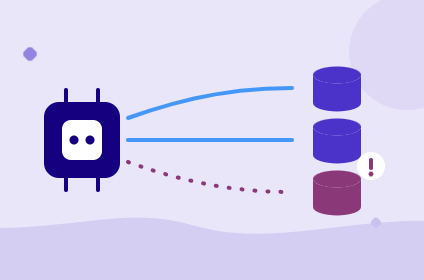
Quick answer: Agentic AI systems need data that is current, consistent across systems, available even …
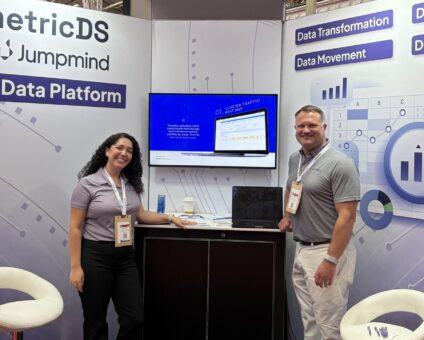
This was our second year at Big Data LDN, and attendance felt just as strong …
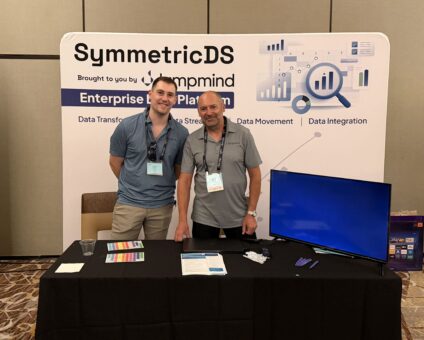
Our booth at TDWI Transform this year had a wider range of visitors than we …

Introduction In retail, POS updates have traditionally been quarterly events at best. From October through …

Jumpmind Powers Point of Sale and Promotions Execution for Landmark Retail, One of the Largest …
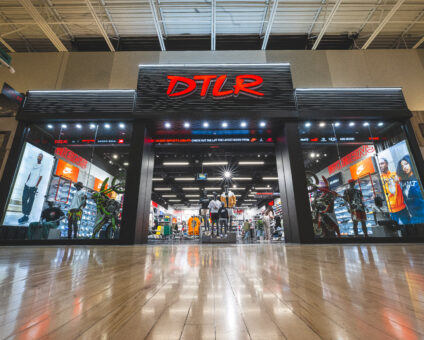
Retail Technology Leader Jumpmind to Enable Mobile Point of Sale and Inventory Management for DTLR/VILLA …
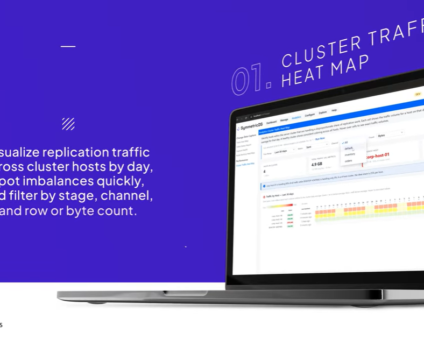
We built 3.18 because the question we kept hearing from customers changed. It used to …

The offering gives security teams a practical path to risk management and accountable AI COLUMBUS …

The insights have implications for retail technology in the store: it must help mind information …
Cloud-native POS platform for seamless omnichannel customer experience.
A single hub for all promotions campaigns.
A comprehensive solution designed to simplify and give you ownership of the inventory lifecycle.
A native post-transaction reconciliation module built into Jumpmind Commerce.
The most advanced synchronization solution for databases and file systems.
Data configuration and batch automation across different disparate systems and vendors.
Almost nobody publishes this. Search for mobile POS pricing at enterprise scale and you get per-device monthly rates aimed at a single location, or a contact form. Neither helps a team building a five-year model for eight hundred stores.
We cannot publish your number, because it depends on store count, device mix, integration surface and how much of your current setup stays. What we can do is name every bucket that belongs in the model, including the ones that usually surface after signature.
This guide covers eight cost categories, the three that get underestimated most, and what to ask a vendor to put in writing.
Model all eight across the full contract term rather than year one. A quote that wins on year one and loses on year four is common and avoidable.
| Bucket | What sits inside it | Where it hides |
|---|---|---|
| Software subscription | Per store, per device, or per lane, depending on the vendor | Whether mobile devices are priced the same as fixed lanes |
| Implementation and integration | Discovery, configuration, ERP and order management connections, testing environments | Interfaces you own and maintain after go-live |
| Hardware | Devices, sleds, printers, payment terminals, charging, spares | Refresh cycle length, and whether a software choice forces new hardware |
| Payment acceptance | Processing rates, terminal certification, key injection, gateway fees | Whether the platform is processor agnostic or bundled |
| Network readiness | Store connectivity, redundant links, in-store wireless coverage, failover testing | Wireless coverage in stockrooms and fitting rooms |
| Training and change management | Initial training, materials, per-wave floor support | It repeats with every hire, forever |
| Support | Tiers, response times, escalation, peak coverage | Who answers at 6am on Black Friday |
| Migration and parallel run | Data conversion, dual-run period, rollback capacity, reconciliation across two systems | Length of the parallel period |
Training, because it recurs. Every other bucket is mostly a one-time or annual number. Training is a per-hire number multiplied by turnover across every store, every year. That is why measured training time belongs in the cost model rather than the benefits slide.
Craig Hewitt, Chief Operating Officer of The Paper Store, reported that “Jumpmind Commerce’s modern, intuitive user interface has reduced our associated training requirements from 3 hours to 15 minutes,” across staff ranging from 16 to 80 years old. Take your own current number, subtract a realistic target, multiply by annual hires across the fleet, and put the result in the model. For most large chains it is a larger line than the hardware refresh.
Integrations you own. A connector that exists is not a connector somebody maintains. Ask, per interface, who owns it after go-live, what happens when your ERP upgrades, and what the change costs. Interfaces are the line item that grows quietly across five years.
Three of them disappear when capability is native rather than connected. Jumpmind Promote runs all promotions campaigns from a single hub. Jumpmind Inventory covers the store inventory lifecycle. Jumpmind Sales Audit is a native post-transaction reconciliation module built into Jumpmind Commerce. Each one removed is an integration you neither build nor maintain.
Hardware, when software dictates it. The expensive version of a POS decision is the one where working lanes get replaced because the software only runs on certain equipment. Ask which devices and operating systems are supported in production today and confirm the list covers what you already own.
There is a recurring cost hiding next to it. Every software update that needs a technician in a store is travel, labor and a scheduling problem, repeated for the life of the platform. Jumpmind removes that line by delivering software to every store device from the cloud, with zero-touch updates, verified installs, automatic rollback on failure, and updates schedulable after hours so no store loses selling time. Ask any vendor what a version change costs you per store, and whether the answer involves anybody travelling.
Jumpmind Commerce runs across iOS, Android, Windows, Linux and Mac, and device independence means hardware refresh phases on its own schedule rather than the software’s. It is common for customers to run a mix of hardware and operating systems side by side, fit for purpose.
Most cost models leave out the revenue side of resilience, which makes the cheapest quote look cheapest.
Price one hour of checkout downtime in a flagship store during peak. Then ask each vendor what a lane does when the network drops mid-basket, how long a store can keep trading disconnected, and how transactions reconcile on reconnect. A platform that stops selling during an outage is carrying a cost that never appears on its quote.
Our write-up on the true cost of POS downtime covers how to build that number.
The comparison that gets skipped is against doing nothing, which is never actually free.
In our RSR study, 53% of retailers running a POS five years or older said the system is holding them back. Those costs are real and already being paid: in field visits to push a pricing change, in associate time lost to workarounds, in omnichannel work the store cannot support.
Put a number on your current annual spend before you compare quotes. Licenses, support, hardware refresh, and the store labor consumed by upgrades and workarounds. That baseline is what any proposal has to beat.
Model three numbers, not one: the pilot, the first fifty stores, and the full fleet.
Per-store cost drops as a rollout matures, because the runbook stabilizes, the integration work is done once, and floor support thins out. A single blended average hides that curve and makes early waves look worse and later waves look better than they are.
It also gives you a decision point. If the pilot number holds through fifty stores, the model is real. If it does not, you have learned that before committing the fleet.
Every Jumpmind customer is referenceable. Not most of them. Ask us for names at your store count, and ask the same of everyone on your list.
Jumpmind Commerce is built for large distributed fleets, and the honest version of the cost story is that enterprise architecture asks more of you up front. Store profiles, payment certification, ERP mapping and rollout sequencing take planning a lighter deployment skips.
For simpler specialty retail with a few dozen doors, Lightspeed or Shopify POS will be faster and cheaper to stand up, and we would rather say so than win a project that does not fit.
Jumpmind is also not a merchandising or order management suite, so those layers and their costs stay with your existing systems of record.
How much does mobile POS cost per store? It is usually quoted per store, per device, or per lane per month, and the headline rate is the smallest part of a five-year number. Model all eight buckets: subscription, implementation and integration, hardware, payment acceptance, network readiness, training, support, and migration.
What is the biggest hidden cost in a POS project? Training, because it repeats with every hire across every store, every year. Integrations you own after go-live are second, and hardware forced by a software choice is third.
Does a cheaper license mean a cheaper platform? Not reliably. A low subscription that requires a hardware swap across every lane, or leaves you maintaining six interfaces, costs more by year three. Compare five-year totals.
Should downtime be in the cost model? Yes. Price one hour of checkout downtime in a flagship store at peak, then ask each vendor what happens at the lane when the network drops. A platform that stops selling is carrying an unpriced cost.
How do we compare against not replacing anything? Baseline your current annual spend on licenses, support, hardware refresh, and the store labor consumed by upgrades and workarounds. Standing still is a number, not a zero.
Why price the pilot separately from the fleet? Per-store cost drops as the runbook stabilizes. A blended average hides that curve and removes your decision point after the pilot.
Is Jumpmind processor agnostic? Ask us directly and get it in writing, as you should with any vendor. Large retailers usually hold negotiated acquirer relationships already, which makes this question worth more than a headline rate comparison.
The cheapest quote and the lowest-risk quote are rarely the same document. Build the model across all eight buckets, price the pilot separately from the fleet, put a number on downtime, and baseline against what standing still already costs you.
Then ask every vendor to commit their numbers in writing, with a reference at your store count who will take the call.
Explore Jumpmind Commerce or schedule a demo and we will work through the model with your store list.