The store is becoming a relationship, not just a transaction The store is being talked …



Cloud-native POS platform for seamless omnichannel customer experience.

A single hub for all promotions campaigns.

A comprehensive solution designed to simplify and give you ownership of the inventory lifecycle.

A native post-transaction reconciliation module built into Jumpmind Commerce.

The most advanced synchronization solution for databases and file systems.

Data configuration and batch automation across different disparate systems and vendors.
The store is becoming a relationship, not just a transaction The store is being talked …

I spent this week at eTail Boston, and if you looked at the agenda, you’d …

Consumers are expected to spend more than $146 billion on back-to-school shopping this year, and …
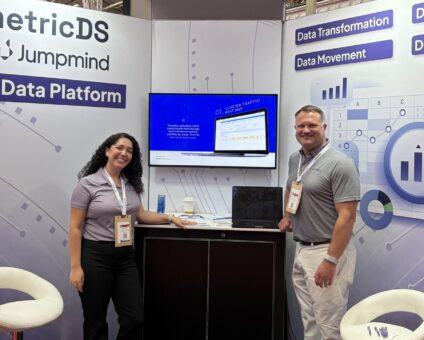
This was our second year at Big Data LDN, and attendance felt just as strong …
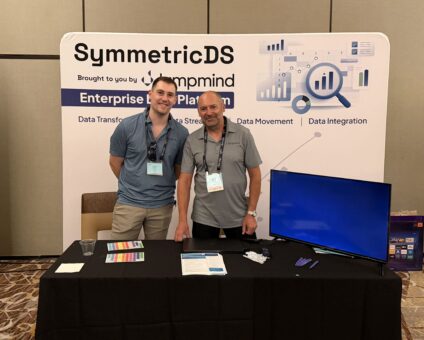
Our booth at TDWI Transform this year had a wider range of visitors than we …

Quick answer: Most RAG pipelines re-index their vector store on a nightly or hourly batch …

Introduction In retail, POS updates have traditionally been quarterly events at best. From October through …

Jumpmind Powers Point of Sale and Promotions Execution for Landmark Retail, One of the Largest …
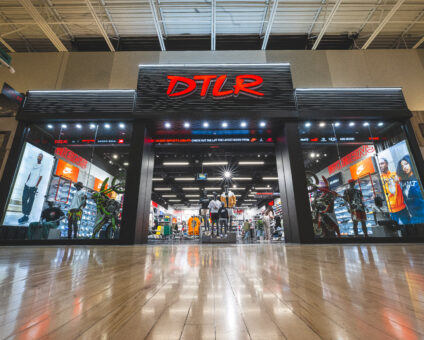
Retail Technology Leader Jumpmind to Enable Mobile Point of Sale and Inventory Management for DTLR/VILLA …
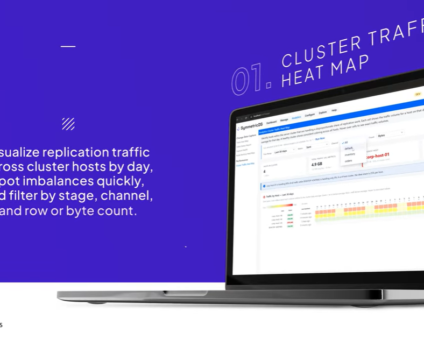
We built 3.18 because the question we kept hearing from customers changed. It used to …

The offering gives security teams a practical path to risk management and accountable AI COLUMBUS …

The insights have implications for retail technology in the store: it must help mind information …
Cloud-native POS platform for seamless omnichannel customer experience.
A single hub for all promotions campaigns.
A comprehensive solution designed to simplify and give you ownership of the inventory lifecycle.
A native post-transaction reconciliation module built into Jumpmind Commerce.
The most advanced synchronization solution for databases and file systems.
Data configuration and batch automation across different disparate systems and vendors.
Retail sales audit is the process of checking every store transaction for accuracy and completeness before the data moves into finance, merchandising and loss prevention systems. It confirms that tenders balance against what was deposited, that discounts and returns followed policy, that no transactions are missing, and that the totals finance books match what the stores actually sold. Sales audit software automates those checks, flags the exceptions that need a person to review them, and sends clean data downstream. For an enterprise retailer with hundreds of stores, it is the step that turns millions of register events into a record the CFO can sign off on. Jumpmind offers a sales audit module inside its point of sale platform, so we have a stake in this category, and this guide covers how sales audit works regardless of which system runs it.
Retail sales audit is the reconciliation layer between the point of sale and the rest of the business. Every transaction a store creates, from a simple cash sale to a cross-channel return with a partial gift card refund, passes through it before it reaches the general ledger, the merchandising system or the loss prevention team.
The term sometimes gets confused with store audits, which are physical inspections of merchandising, cleanliness or compliance. Sales audit is about the transaction data. It asks whether the numbers are right, complete and explainable.
Sales audit software checks each transaction and each store day against a set of rules. The core checks are consistent across most retailers:
| Check | What it looks for | Who usually owns the follow-up |
|---|---|---|
| Completeness | Missing transaction numbers, registers that didn’t close, stores that didn’t report | Store operations and IT |
| Tender balancing | Cash, card, gift card and other tenders against deposits and processor settlements | Finance and treasury |
| Discount and price override review | Overrides, manual discounts and promotions outside policy | Loss prevention and merchandising |
| Returns review | Returns without receipts, refunds above thresholds, refunds to a different tender | Loss prevention |
| Data validation | Invalid item codes, tax errors, transactions that don’t total correctly | Finance and merchandising |
| Employee activity | Voids, no-sales and discounts concentrated on one associate or lane | Loss prevention and store leadership |
Clean transactions pass straight through. Everything else becomes an exception that a person reviews, corrects or escalates.
Retailers need sales audit software because the volume and variety of store transactions have outgrown any manual review process. A large chain can generate millions of transactions a week across dozens of tender types, promotions and return paths. Without automated rules, errors reach the general ledger and patterns of loss go unseen.
Three pressures have made this more pressing:
Returns have grown into a finance problem. The National Retail Federation projected that consumers would return nearly $850 billion in merchandise in 2025, about 15.8% of sales, and estimated that 9% of all returns are fraudulent. Every return is a transaction sales audit has to validate.
Shrink is harder to explain. NRF’s most recent National Retail Security Survey put the average shrink rate at 1.6% in fiscal 2022, representing $112.1 billion in losses. Some of that is external theft. Some shows up in the transaction data as voids, overrides and refunds, which is where sales audit can find it.
Internal fraud takes too long to find. The Association of Certified Fraud Examiners’ 2024 Report to the Nations, based on 1,921 cases, estimated that organizations lose 5% of revenue to fraud each year, and found that 43% of frauds are detected through tips. A typical fraud ran about 12 months before anyone caught it. Automated exception rules shorten that window by surfacing unusual patterns as they happen.
Sales audit sits between the store and every system that depends on accurate sales data. Finance uses it to close the books. Merchandising uses it to trust sell-through and markdown results. Loss prevention uses it to investigate patterns. Store leadership uses it to see which locations and lanes produce the most exceptions.
When sales audit is slow, every one of those teams works from yesterday’s numbers or older. When it’s accurate but disconnected from the POS, a translation layer between the two can introduce its own errors.
Every exception in sales audit starts with a moment at the register. An associate keys an override because a promotion didn’t apply. A manager approves a return without a receipt because the customer bought online and the lane couldn’t find the order. A shift closes short because a gift card tender posted twice.
Good sales audit treats those exceptions as information about the store, as well as potential loss. If one location generates twice the override volume of its peers, the first question is whether the associates there have the tools they need. Retailers that feed exception trends back to store operations fix the cause instead of auditing the same problem every week.
Traditional sales audit runs in batch. Stores close, polling collects the day’s transactions overnight, and auditors work exceptions the next morning. That model is dependable and well understood, and it leaves a gap of a day or more between a problem and its discovery.
Real-time sales audit captures each transaction as it closes and applies rules continuously. Exceptions appear during the trading day, while the store team can still explain them.
| Approach | When exceptions appear | Typical data path | Best suited to |
|---|---|---|---|
| Batch, separate system | Next business day or later | POS to polling to audit system | Stable operations with established overnight processes |
| Batch, integrated feed | Next business day | POS to integration layer to audit system | Retailers modernizing in stages |
| Real-time, native to POS | During the trading day | Audit reads the POS record directly | Retailers who want finance and store teams working from the same live record |
Look for rules you can configure without a developer, exception workflows that route to the right team, and a record that matches the POS exactly. Specific questions worth asking in an evaluation:
Retail sales audit software cost depends on store count, transaction volume, the number of integrations and whether the module is part of the POS platform or a separate system. Standalone systems usually carry their own license, integration build and ongoing maintenance of the data feed from the POS. Modules native to the POS platform typically reduce the integration cost because they read the transaction data directly. Ask any vendor to separate license, implementation, integration and support costs so you can compare them line by line.
Jumpmind Sales Audit is a post-transaction reconciliation module built into Jumpmind Commerce. It captures transactions the moment they close across every store, applies configurable audit rules, and routes discrepancies through exception-based workflows to the teams that own them. Because it reads transactions exactly as the store entered them, there’s no translation layer between the lane and the audit record. It’s built for high transaction volume across store networks from 50 to more than 500 locations, with a consolidated view of daily sales activity across the fleet. As the product page puts it, “The record your finance team reviews is the same record the store created.”
What is the difference between sales audit and store audit? Sales audit validates transaction data from the point of sale. Store audit is a physical inspection of a location’s merchandising, operations or compliance.
Who uses sales audit software? Finance, treasury, loss prevention, merchandising and store operations. Each team relies on a different set of exceptions.
How often should sales audit run? At minimum, daily. Real-time audit lets exceptions surface during the trading day, while the store team can still explain them.
Can sales audit help reduce shrink? Yes, for the portion of shrink that appears in transaction data, such as voids, refunds and overrides. Physical theft that never touches a register is outside its view.
Is sales audit software only for large retailers? Any retailer with multiple stores and tender types benefits. The need grows quickly with store count, return volume and promotional complexity.